


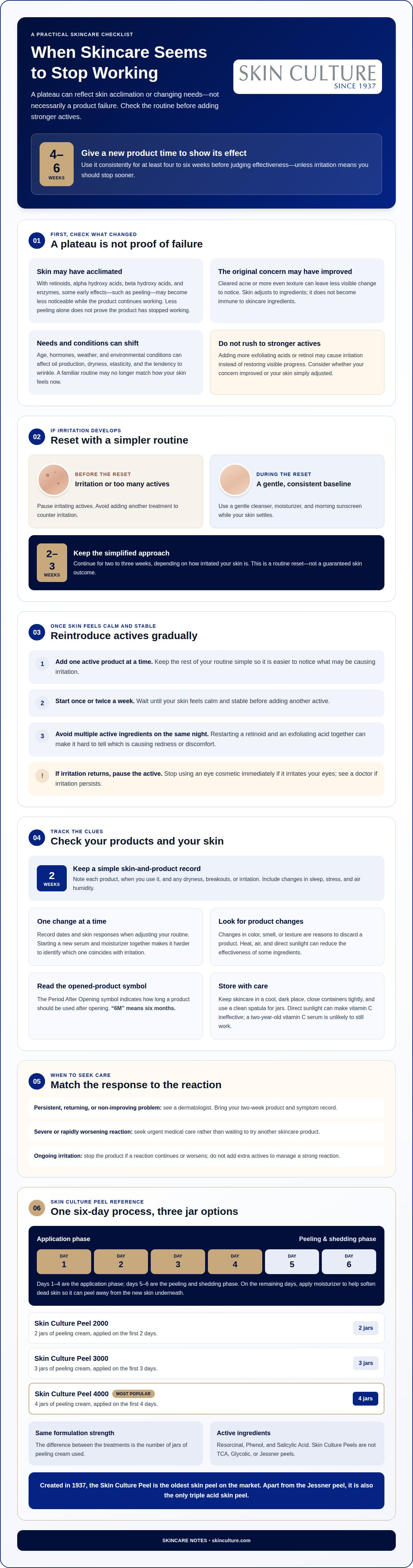
A skincare product can seem to stop working even when it hasn’t. If you’re wondering what to do when your skin stops responding to products, use a new product consistently for at least four to six weeks before judging its effectiveness, unless irritation means you need to stop sooner. A plateau may also mean your skin’s concern has improved or that your skin has adjusted, not that the formula has stopped working.
It’s frustrating when a familiar routine no longer delivers visible change, but switching products too quickly makes it harder to tell what’s helping. This guide explains why results may level off, how long to try a product, and when a simpler routine may be more appropriate. You’ll also learn how changes in your skin, product storage, and irritation can affect the way your skincare performs.
Key Takeaways
- Give a new skincare product consistent use for at least four to six weeks before assessing its effectiveness, unless irritation means you should stop sooner.
- A plateau doesn’t always mean a product has stopped working; skin may have adapted, or the original concern may have improved.
- If irritation develops, simplifying your routine can help you focus on gentle cleansing, moisturizing, and sunscreen while your skin settles.
- Changing skin needs, product storage, and the way active ingredients are used can all affect visible results.
- Created in 1937, the Skin Culture Peel is the oldest skin peel on the market. Apart from the Jessner peel, it is also the only triple acid skin peel.
Can your skin build a tolerance to skincare products?
Skin can acclimate to some active ingredients, so their visible effects may become less noticeable over time. That doesn’t mean your skin has become immune or that every product has stopped working.
Tolerance and Skin Acclimation
Skin acclimation means your skin adjusts to an active ingredient. Some initial effects, such as peeling, may subside while the product continues working. This can happen with retinoids, alpha hydroxy acids, beta hydroxy acids, and enzymes. Skin doesn’t become immune to skincare ingredients in the way it can with certain medications or antibiotics. Less peeling alone doesn’t prove that a product has lost effectiveness.
Before switching to a stronger formula, consider whether the original concern has improved or your skin has simply adjusted. Adding more exfoliating acids or retinol may cause irritation instead of restoring visible progress. A product’s condition matters, too: changes in color, smell, or texture are reasons to discard it. Heat, air, and direct sunlight can also reduce the effectiveness of some ingredients.
Reintroducing Actives Gradually
After a skincare reset, reintroduce one active product at a time, starting once or twice a week. Wait until your skin feels calm and stable before adding another active, and avoid using multiple active ingredients on the same night. This gradual approach makes it easier to identify which ingredient causes irritation and reduces the risk of overwhelming your routine.
For example, restarting a retinoid and an exfoliating acid together makes it difficult to tell which is causing redness or discomfort. Keep the rest of your routine simple while reintroducing the first product. If irritation returns, pause the active instead of adding another treatment to counter it. Stop using an eye cosmetic immediately if it irritates your eyes, and see a doctor if the irritation persists.
Product age and storage can also explain weaker results. The Period After Opening symbol shows how long a product should be used after opening; a “6M” symbol means six months. Store skincare in a cool, dark place, close containers tightly, and use a clean spatula for jars. Direct sunlight can make vitamin C ineffective, and a two-year-old vitamin C serum is unlikely to still work.
In the United States, the cost of seeing a dermatologist for persistent skin problems varies with insurance coverage, location, and the evaluation or care involved. Those factors determine the visit’s cost, so there isn’t one price that applies to every patient.
Do Skincare Products Ever Just Stop Working?
A product can seem less effective when your skin’s needs or environment change. A routine that worked before may no longer match your current concerns.
Shifting Skin Needs
Age, hormones, and environmental conditions can affect oil production, elasticity, and the tendency to wrinkle. A familiar treatment may then feel less effective, even if its active ingredients haven’t changed. For example, a routine that once suited oily skin may feel drying if your skin becomes drier. When acne clears or texture evens out, there may also be less visible change to notice.
Hormonal changes can coincide with returning breakouts, while age-related changes may affect dryness or elasticity. These shifts don’t automatically mean a product has failed. Consider what has changed before switching products or adding another active. If retinoids or other ingredients still suit your skin, a plateau in visible results may simply mean your skin has improved or adjusted.
Tracking Products and Skin Changes
A simple record can help connect skincare changes with what your skin is doing. For two weeks, note each product, when you use it, and any dryness, breakouts, or irritation. Include changes in sleep, stress, and air humidity, since these can affect skin from day to day. Your notes can reveal whether a change followed a new product or a shift in conditions.
Change only one product at a time when adjusting your routine. If you start a new serum and moisturizer together, for example, it’s harder to identify which one coincides with irritation. Record the dates and your skin’s response, then use that pattern to decide whether the product still fits. A plateau after acne clears is different from a worsening breakout.
Stopping Products and Seeking Care
Stop using a product if it causes irritation or a reaction that continues or worsens. See a dermatologist if a skin problem persists, keeps returning, or doesn’t improve with routine adjustments. Bring your two-week product and symptom record to help explain what changed and when.
Seek urgent medical care for a severe or rapidly worsening reaction rather than waiting to see whether another skincare product helps. Don’t add extra active ingredients to manage a strong reaction. Ongoing discomfort deserves attention, not a stronger layer of treatment. Stop using an eye cosmetic immediately if irritation occurs, and see a doctor if it persists.
Weather can change what feels comfortable on your skin. Cold, dry winter conditions may leave skin feeling drier, while humidity can coincide with increased oiliness. Allow time for skin to adjust to a weather change before switching moisturizers, unless irritation or a worsening concern calls for a different response. If you’re considering a broader approach to skincare, explore Skin Culture’s skincare information.
A gentle cleanser, moisturizer, and sunscreen routine
Reset your routine by pausing irritating actives and keeping cleansing, moisturizing, and morning sunscreen consistent. Keep that simplified approach for 2-3 weeks, depending on how irritated your skin is.
Starting a Simple, Consistent Routine
A simple routine uses a gentle cleanser, moisturizer, and sunscreen to support daily care without layering multiple treatments. Cleanse, apply any necessary medication, moisturize, then apply makeup last. Keep sunscreen in your morning routine during a reset. Using the same basic products consistently makes it easier to notice whether dryness or irritation is settling, rather than guessing which new serum caused a change.
For the first 30 days of a starter routine, avoid adding other products. That means setting aside exfoliating acids, retinoids, strong acne treatments, layered serums, harsh scrubs, and aggressive cleansers during a reset. Devices that exfoliate or provide intensive treatments should also wait until the skin barrier is fully restored. A smaller routine reduces the number of potential irritants.
How Long to Simplify Your Routine
A skincare reset typically lasts 2-3 weeks, with the exact duration depending on irritation. During that period, prioritize gentle cleansing, moisturizer, and morning sunscreen instead of testing several new formulas. If dryness or irritation continues, adding another active may make it harder to identify what is affecting your skin. The purpose is a calm, stable baseline, not an abrupt switch between elaborate routines.
Keep your routine consistent rather than rotating products every few months to “shock” your skin. Note changes such as tightness after cleansing or increased dryness after applying a product. These observations help distinguish a routine that feels too harsh from one that simply needs time. If a product changes color, smell, or texture, discard it instead of using it during the reset.
Building a Routine After the Reset
Once your skin feels calm and stable, add one active product at a time. Start using it once or twice a week, and avoid pairing multiple active ingredients on the same night. This measured return helps identify which formula your skin tolerates and makes it easier to trace irritation if it appears again. Keep your cleanser, moisturizer, and sunscreen steady as you assess the new addition.
Give each adjustment a clear purpose, such as addressing breakouts or uneven tone, rather than adding products because your routine feels incomplete. Healthy-looking skin may need less intervention, and a plateau in visible results can be acceptable. Maintain your basic routine while observing your skin’s response. If the concern returns or irritation develops, pause the newest active instead of immediately adding another treatment.
Why skincare products may not work for everyone
A product’s visible results depend on its ingredients, condition, and fit with your current skin needs. Seasonal changes, product degradation, and exfoliating devices can all affect how a routine feels.
Start by looking at the formula. If an active ingredient appears outside the top five ingredients, the product may not contain enough to produce the results you expect. Ingredient order alone doesn’t tell the whole story, but it can prompt a closer look at whether the product targets your concern. For example, a moisturizer may ease dryness without treating post-breakout dark spots.
Skin needs can shift with the seasons. In winter, cold weather can increase dryness, so a thicker moisturizer or serum may feel more suitable. A hydrating layer can support your routine during colder months. In summer, humidity may increase sebum production, making an oil-balancing cleanser or lighter moisturizer a better fit. Adjust to the concern you notice rather than changing every product at once.
Match targeted care to what has changed. After a breakout, a dark-spot treatment may address lingering marks, while a lighter moisturizer may feel more comfortable in humid weather. In winter, dryness may call for an added hydrating layer. These are seasonal options, not a reason to switch routines by the calendar. Keep products that still suit your skin, and make changes one at a time.
Devices can complicate a reset. Pause tools that exfoliate or provide intensive treatments until your skin barrier is fully restored. Using an exfoliating device alongside strong acne treatments or layered serums may add irritation and make it harder to identify the cause. During a reset, keep your routine simple instead of introducing another device-based treatment.
Product condition is another reason results can change. Heat, air, and direct sunlight can degrade some active ingredients, while products used past their expiration date may become less effective. Retinoids, sunscreen, peptides, and growth factors may lose potency when exposed to heat, sunlight, or air. Store containers away from direct sunlight, close them tightly, and follow the Period After Opening symbol.
Notice how your skin responds before making a broad switch. If winter dryness appears, adjust hydration first; if summer oiliness becomes more noticeable, consider a lighter texture. If a product’s color, smell, or texture changes, discard it. A consistent routine with one deliberate adjustment makes it easier to see whether the change addressed dryness or another concern. Skin Culture’s skincare products and guidance can help you explore routine options.
How long to try a skin care product
Use a new product consistently before deciding it has failed. The right assessment period depends on the product, the concern, and whether irritation develops.
Use 30 days as an initial checkpoint, not a guarantee of visible change. Dermatologist Jessica Garelik recommends using a skin care product consistently for at least four to six weeks to assess its effectiveness. Apply it as directed and keep the rest of your routine stable. If you change several products at once, you can’t tell which one helped or caused a problem.
A useful starting point for what to do when your skin stops responding to products is to define the concern you want to address. A product may change how your skin feels before it visibly improves breakouts or uneven tone. Compare the same concern over time instead of judging from one morning’s appearance. A brief record of product use and skin changes can help show whether its effects are steady or irritation is developing.
Retinoids often need a longer assessment period than a short trial. Many people see peak benefits from retinoids between 6 and 12 months. That longer timeline doesn’t mean you should ignore a reaction. Dryness or purging can happen when someone first starts retinol, and those effects alone don’t mean the product isn’t working. Track whether symptoms are mild and settling or becoming more uncomfortable.
If you’re deciding what to do when your skin stops responding to products, don’t increase an active ingredient’s strength simply because results seem slow. First consider whether you’ve used it consistently for the recommended period and whether the formula still suits your concern. If you want stronger effects from retinol or exfoliating acids, a dermatologist can help assess whether gradually increasing the percentage or frequency is appropriate for your skin.
Seasonal shifts can complicate comparisons. Summer humidity may increase oiliness, for example, while a change in weather can make skin feel drier. Note these conditions alongside product use so you don’t mistake a seasonal change for treatment failure. If a product causes persistent irritation or your concern worsens during the trial, stop treating it as an ordinary slow result and seek professional guidance.
For a clear evaluation, keep one new product in focus, follow its directions, and record changes throughout the trial. Explore skincare guidance and routines as you consider what belongs in your next step.
Skin Culture Home Skin Peel
Skin Culture Home Skin Peel offers home peeling treatments for concerns such as acne scars, fine lines, and sun damage. If your routine has plateaued and your skin is stable, Skin Peel 4000, the most popular peel, Skin Peel 3000, and Skin Peel 2000 are options to consider as a different approach to skin renewal.
The Skin Culture Peels use Resorcinal, Phenol, and Salicylic Acid, and follow a six-day process. Days 1-4 are the application phase; days 5-6 are the peeling and shedding phase, with moisturizer helping soften dead skin as it separates from the new skin underneath. Created in 1937, the Skin Culture Peel is the oldest skin peel on the market. Apart from the Jessner peel, it is also the only triple acid skin peel.
Contact Skin Culture Home Skin Peel to discuss which option may suit your skincare goals.
Choose your next skincare step with intention
When deciding what to do when your skin stops responding to products, focus on the concern you want to address rather than chasing a quick change. A measured next step gives you clearer direction and helps keep your routine purposeful. If you’re considering a home peel, first make sure your skin is calm and the approach aligns with your skincare goals. Skin Culture’s at-home peels are a structured option for facial skin concerns.
Skin Culture Home Skin Peel offers Skin Peel 4000, the most popular peel, Skin Peel 3000, and Skin Peel 2000. Explore whether one of these options suits the next stage of your routine, and start a conversation with Skin Culture Home Skin Peel if you’d like to discuss your goals.
Pay attention to how your skin responds, and give your next choice the care and consistency it deserves. A thoughtful routine can be a positive step toward skin that looks and feels its best.
Frequently Asked Questions
Can Your Hair and Skin Become Used to a Product?
Hair doesn’t develop tolerance in the same way skin can acclimate to skincare actives. Hair can look dull when residue builds up, while scalp irritation may affect how it feels. If buildup or irritation seems linked to hair products, a clarifying product or a change of shampoo and conditioner may help. For skin, reduced peeling from an active ingredient doesn’t necessarily mean it has stopped working.
How long should I give a product before deciding it does not work?
Use a product consistently for at least four to six weeks before assessing its effectiveness, unless irritation means you need to stop sooner. Keep other routine changes to a minimum during that trial. For example, don’t introduce a new cleanser and serum together, since you won’t know which change affected your skin. Retinoids can take longer to show peak benefits than a short trial allows.
Is it normal for my skin to peel or feel tight when I start something new?
Mild dryness or purging can occur when starting retinol, and doesn’t automatically mean it isn’t working. Tightness or peeling that becomes painful, persistent, or increasingly uncomfortable calls for a different response. Pause the new product and simplify your routine instead of layering another active ingredient over it. If symptoms worsen or concern you, seek medical advice rather than trying to push through.
Should you switch up your skincare routine?
Switch only when a clear change in your skin or its needs gives you a reason. Weather, humidity, and dryness can affect how a routine feels, but changing several products at once makes reactions harder to trace. Keep products that remain comfortable, then adjust one item at a time. If your skin looks healthy and the original concern has improved, a plateau alone may not call for a new routine.
Why might skincare products stop working or cause a plateau?
A plateau can reflect improved skin, adjustment to an active ingredient, or a change in your needs rather than product failure. For example, cleared acne leaves fewer visible breakouts for a treatment to address. A formula may also lose effectiveness after exposure to heat or air, or when used past its expiration date. Consider the product’s condition and your current concern before replacing a routine that still feels comfortable.
How can you tell if your skin is irritated, sensitized, or having an allergic reaction?
These reactions can overlap, so appearance alone may not identify the cause. Irritation may appear where a product was applied, while sensitivity may recur with particular products. An allergic reaction can also involve itching or a spreading rash. Stop the suspected product if symptoms develop. Seek urgent care for a severe or rapidly worsening reaction, especially if breathing or the eye area is affected.
How long should you use a skincare product before deciding it is not working?
For many products, assess consistent use after at least four to six weeks, judging each formula against its intended concern. A moisturizer may ease dryness sooner than a product changes uneven tone, so define what improvement would look like before starting. Retinoids may take longer to reach peak benefits. Stop sooner if irritation persists or worsens rather than extending the trial.
Can skin build tolerance to retinol, acids, or other active ingredients?
Skin can acclimate to retinoids and exfoliating acids, but it doesn’t become immune to them. Peeling may lessen as skin adjusts, for instance, even while an active continues working. Don’t assume you need a stronger percentage just because an early side effect fades. If you’re seeking stronger effects, discuss a gradual change in concentration or frequency with a dermatologist.
Disclaimer
Testimonials are the individual experiences of those who have used our skin peels. Individual results may vary.