


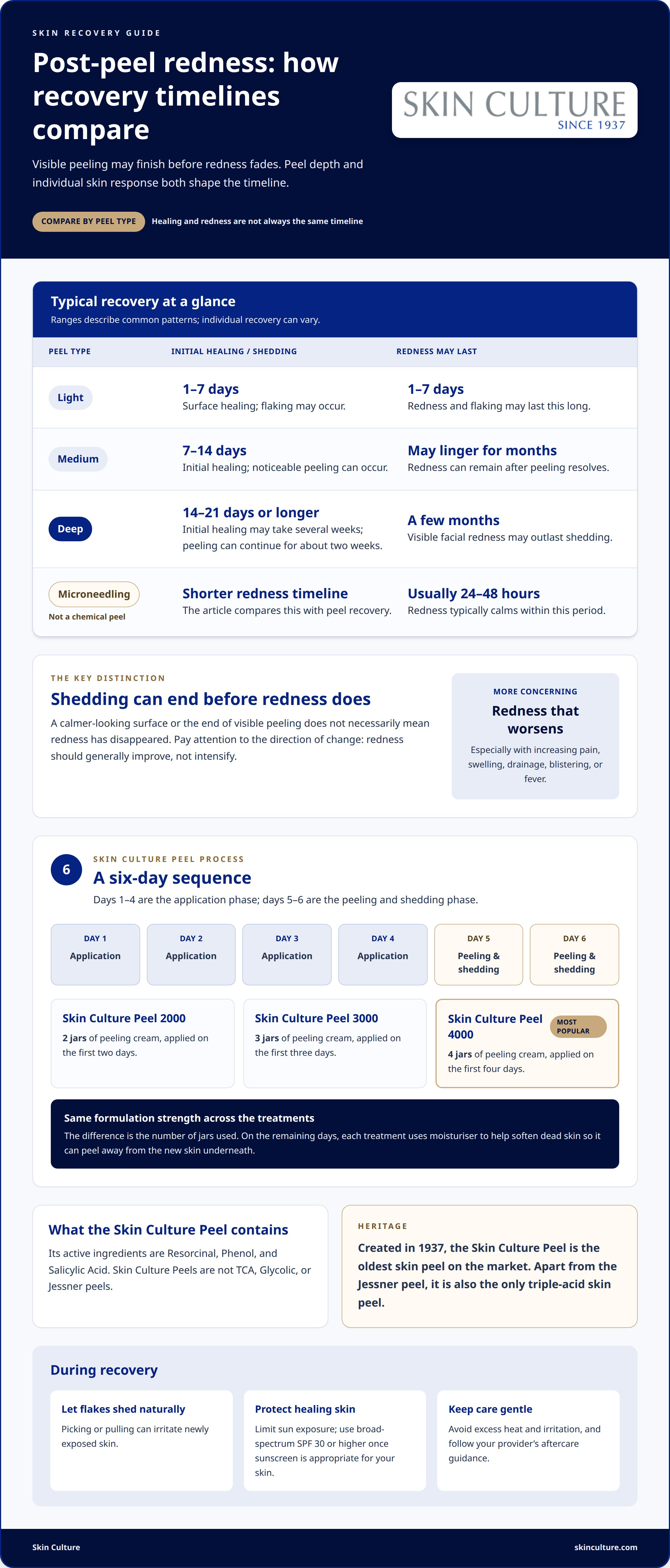
Redness that worsens is more concerning than redness that gradually fades. If you're wondering how long post-peel redness lasts, the answer depends largely on peel depth: after a light peel, redness may last one to seven days; after a medium peel, healing commonly takes seven to 14 days, though redness can linger for months. Deep peels can leave visible redness for a few months.
Some pinkness, tightness, warmth, dryness, or flaking can be part of healing, and visible peeling may finish before redness settles. That can feel unsettling, especially when your skin still looks different after shedding stops. The direction of change matters: redness should generally improve, not intensify.
This article explains how redness and peeling can look as skin heals, why recovery varies, and when symptoms may need prompt medical attention. You’ll also learn how the Skin Culture Peel’s six-day process is structured, so you can understand what to expect during application and peeling.
Key Takeaways
- Peel depth and individual skin response shape recovery; visible shedding may end before lingering redness has fully faded.
- Protect healing skin from sun exposure, and use broad-spectrum SPF 30 or higher once sunscreen is appropriate for your skin.
- Let peeling skin shed naturally. Picking or pulling at flakes can irritate newly exposed skin.
- Seek prompt medical advice if redness worsens or comes with increasing pain, swelling, drainage, blistering, or fever.
- Created in 1937, the Skin Culture Peel is the oldest skin peel on the market and, apart from the Jessner peel, the only triple-acid skin peel. Its six-day process includes an application phase followed by peeling and shedding.
How Long Until Redness Goes Away After a Chemical Peel?
How long does post-peel redness last? After a light peel, redness and flaking may last one to seven days. Medium or deep chemical peels can leave redness for weeks or months.
The timeline depends on peel depth, the treated area, individual skin response, and aftercare. Visible peeling can end before residual redness fades, so shedding alone doesn’t mean recovery is complete.
Typical Light-to-Medium Peel Recovery
A light chemical peel generally heals in one to seven days; a medium peel usually takes seven to 14 days. Redness, dryness, tightness, and flaking may appear during this period, with medium peels often causing more noticeable shedding. Some redness after medium peels can remain for months, even after initial healing. These ranges help set expectations, but the end of peeling doesn’t necessarily mean redness has disappeared.
Skin Type and Peel Depth
Peel depth is a key factor in recovery: lighter treatments affect the skin’s surface, while deeper treatments involve more extensive healing. A deep peel may leave redness for a few months. Individual skin response and the size of the treated area also influence how long redness remains visible. Skin type alone can’t establish a precise recovery date; the treatment depth and how your skin responds both matter when assessing progress.
Environmental Effects on Recovery
Sun exposure, heat, irritation, and aftercare can affect how long redness remains. Recently treated skin can be more vulnerable to sun-related irritation and uneven pigmentation. Limit sun exposure during recovery, and use broad-spectrum sunscreen with SPF 30 or higher once your provider says it’s appropriate. Avoiding excess heat and irritation also helps protect healing skin. In humid weather, keep the routine gentle and avoid activities that leave the skin overheated or excessively sweaty.
Microneedling Redness Is Different
Microneedling isn’t a chemical peel, and its typical redness timeline is shorter. Redness after microneedling usually calms within 24 to 48 hours. That comparison can help distinguish recovery patterns, but it doesn’t predict how your skin will respond to a peel. Chemical peel depth remains a more relevant guide: a deep peel can involve much longer-lasting redness than microneedling.
The question “how long does post-peel redness last” has no single answer for every peel. During recovery, don’t pick or pull at peeling skin. Let flakes shed naturally, since picking can irritate the treated area and interfere with healing. Track whether redness gradually fades alongside dryness or flaking, rather than judging recovery by peeling alone. If redness intensifies instead of improving, that change matters more than the amount of visible shedding.
How Long Does Facial Redness Last After a Deep Phenol Peel?
Peel depth shapes the healing timeline. Light peels usually heal faster, while redness after a deep phenol peel may persist for months.
Light peels: Surface healing generally takes one to seven days. Mild redness, dryness, or flaking can occur during that period, and scaling may last three to seven days. This typical timeline is not a reason to scrub or pull away flakes. Fresh skin still needs gentle care as it settles.
Medium peels: Treated areas generally heal in seven to 14 days. Redness, swelling, crusting, and noticeable peeling can occur as the skin repairs. The initial healing period and the time redness remains aren’t always the same: pinkness may last for months after the peeling resolves. Patients should follow their provider’s aftercare instructions and use sunscreen when approved for their healing stage.
Deep-Peel Healing Time
A deep chemical peel reaches deeper skin layers, so initial healing may take several weeks. Treated areas can take 14 to 21 days or longer to heal, while facial redness may remain visible for months. Peeling can continue for about two weeks, yet residual pinkness may fade more gradually. This difference matters when planning work, social activities, and sun protection. Healing progress is better understood by considering both the skin’s surface and its lingering color. For individuals considering medical-grade resurfacing and surgical-level rejuvenation, aesthetic practices such as Chirurgie Plastique Dr. Arie Benchetrit provide expert consultations on procedural depth and recovery expectations.
Day-by-Day Healing Changes
The first day may bring redness, warmth, and tightness. During days two to four, dryness and peeling can emerge; deep-peel skin repair may begin around days three to four. Flaking after lighter peels often starts around days two to three, then peaks around days three to five. By days five to seven, flaky patches may remain. This sequence explains why appearance changes over time rather than improving in a straight line.
Medium-peel shedding may continue for seven to 14 days. In the second week, peeling may ease and skin may feel calmer, even if some redness remains. Deep-peel redness can outlast the visible shedding by a much wider margin. Follow the treating provider’s wound-care directions, avoid picking, and wait for approval before applying sunscreen or makeup to treated skin.
For an overview of skin peel treatment information, explore the available guidance.
Fresh skin appearing pink and sensitive
Fresh skin may look pink and feel sensitive as light-to-medium peeling ends around days 5-7. Use a gentle cleanser and moisturizer, avoid picking and irritating products, and protect healing skin from sun.
Moisturizing and Skin-Barrier Care
Moisturizing can support comfort as the treated surface sheds and new skin appears. Use a moisturizer recommended for recovery, alongside a gentle cleanser, rather than adding unfamiliar products. A simple routine matters because freshly exposed skin can feel tight, dry, or sensitive. Pause retinoids, exfoliating acids, scrubs, and other irritating products until your provider clears them.
Reducing Redness Safely
Safe redness care means calming irritation without disrupting healing skin. Avoid picking, rubbing, or scrubbing flakes, and follow the treatment’s aftercare directions. During the first day or two, a clean cloth wrapped around an ice pack may ease discomfort; don’t place ice directly on treated skin. Limit sun exposure, and use broad-spectrum sunscreen with SPF 30 or higher once your provider says it’s appropriate.
Pinkness can remain after visible peeling has finished. The surface may look newly revealed yet still feel delicate, especially when touched or exposed to products that previously felt comfortable. That contrast is why appearance alone can’t show whether your skin is ready for a normal routine. Give it time to settle, and keep cleansing and moisturizing gentle.
Sensitivity can make everyday choices noticeable. For example, a cleanser or exfoliant that felt mild before treatment may sting on freshly peeled skin. Don’t test multiple active ingredients to find a quick fix. Instead, pause retinoids and exfoliants, and use only products recommended for this stage. Resume stronger products only when your provider has cleared them.
Picking at loose edges can turn a small flaky patch into an irritated, raw spot. Pulling skin away may prolong redness and contribute to pigment marks, infection, or scarring. Let flakes detach on their own, even if they catch on clothing or look uneven. A moisturizer can soften dry, shedding skin without forcing it off before it’s ready.
Wait until treated skin feels comfortable and has healed sufficiently before applying makeup. Cosmetics over active peeling or tender areas can add friction and irritation. If your skin remains sensitive, keep your routine minimal instead of covering redness. Watch the overall pattern: gradually calming skin differs from redness that intensifies or develops new symptoms.
Chemical Peel Healing Process: What Happens Day by Day?
Recovery changes as treated skin moves from irritation to dryness, flaking, and repair. Peel depth and aftercare shape how those changes appear.
Aftercare for Healing Skin
Aftercare protects skin while its surface repairs and sheds. Cleanse gently, then apply the recommended moisturizer to ease dryness without forcing flakes away. Avoid scrubs, exfoliating acids, retinoids, and other irritating products until your provider clears them. These steps matter because newly exposed skin can react differently to products that felt comfortable before treatment.
Sun Protection During Healing
Sun protection helps limit irritation and uneven pigmentation in freshly treated skin. Reduce direct sun exposure during recovery, and use broad-spectrum sunscreen once your provider says it’s suitable. Follow the aftercare instructions on when and how to apply it. A hat and shade can also reduce direct exposure outdoors, especially while flaking or tenderness remains.
Healing isn’t perfectly even, but common changes can provide context:
- Day one: Redness, warmth, or tightness may appear. Skin can also look slightly shiny.
- Days two to four: Dryness and peeling may become more visible. Flaking often begins around days two to three.
- Days three to five: Flaking may become more pronounced. Don’t scrub or pull at loose skin.
- Days five to seven: Light-to-medium peeling may finish, while the fresh surface can remain pink and sensitive.
That timeline is a guide, not a reason to accelerate shedding. Pulling flakes can leave raw spots, prolong redness, and contribute to pigment marks or scarring. Let loose skin detach naturally, and keep moisturizer within your recommended routine. If a patch feels tight, resist adding an exfoliant to smooth it; irritation can make recovery harder to assess.
As the surface settles, keep care simple and consistent. Use only the cleanser, moisturizer, or ointment approved for your healing stage, and pause makeup until skin feels comfortable and healed. For deeper peels, follow the treating provider’s specific wound-care directions rather than applying a routine designed for a light peel. Treatment depth changes what your skin needs.
Sun protection remains important after visible flaking stops. Newly revealed skin can still be vulnerable to irritation and uneven pigmentation from sun exposure. Continue limiting direct exposure and follow your provider’s instructions about sunscreen and active ingredients. Avoid restarting exfoliating acids or retinoids until your skin has fully healed and your provider has cleared them.
When post-peel redness may signal a problem
Redness should generally ease as healing progresses. A change in direction matters: after a peel, redness that worsens after day three is a reason to contact your treating dermatologist, especially if other symptoms appear.
Expected pinkness and concerning inflammation are different. A medium or deep peel can leave residual redness after the surface heals, sometimes for months. But worsening redness, increasing pain, or swelling signals a different pattern. Track whether symptoms are improving, stable, or intensifying, and follow the aftercare instructions for your specific peel. For individuals seeking expert clinical oversight during recovery, comprehensive dermatology practices like Quttainah Medical Center help evaluate persistent inflammation and ensure optimal skin healing.
Contact your treating dermatologist promptly if redness increases or appears with any of these signs:
- Increasing pain, marked warmth, or severe swelling.
- Drainage, blistering, or crusting that looks wet or oozing.
- Fever, skin breakdown, or a treated area that becomes increasingly tender.
- Redness that intensifies after the first few days rather than settling.
These signs matter after superficial and deeper treatments alike. For example, mild pinkness after peeling differs from a blister that leaks fluid or an area where skin is breaking down. Don’t try to address concerning symptoms with exfoliants, retinoids, or unapproved creams. Those products can add irritation and make the skin’s texture harder to assess.
Timing helps, but it doesn’t replace considering the symptom pattern. Redness that worsens after day three deserves prompt attention. Inflammation that persists beyond two weeks is also described as a warning sign. Interpret that timeframe alongside peel depth: lingering color after a medium or deep peel can last longer, while increasing pain, swelling, or drainage calls for attention sooner.
Write down when redness changed and note any new symptoms, such as warmth or oozing. Follow the treating provider’s instructions, and share those observations promptly if symptoms worsen. Avoid picking at crusts or flakes; disturbing the surface can cause further irritation and complicate healing. If you’re unsure whether a change is expected, contact the professional responsible for your treatment rather than applying a new active product.
Protecting the skin remains important while symptoms are assessed. Limit sun exposure, avoid irritating products, and use sunscreen only when appropriate for your healing stage. These steps don’t replace medical attention when warning signs are present. For practical information on skin peel recovery and care, explore the available guidance.
Skin Culture Home Skin Peel
Skin Culture Home Skin Peel offers Skin Peel 4000, Skin Peel 3000, and Skin Peel 2000 as at-home treatments. Skin Peel 4000 is the most popular option. Each treatment follows a six-day process, with peeling cream applied during the application phase and moisturizer used on the remaining days to soften dead skin for shedding.
This information can help you understand the process and set expectations, but it doesn’t replace care for a concerning reaction. If redness worsens or comes with increasing pain, swelling, or drainage, seek medical advice rather than starting a peel. For questions about the process or choosing an option for your needs, contact Skin Culture about its home skin peel kits.
Make Your Next Skin Decision With Confidence
Knowing how long post-peel redness lasts is useful, but your next step should also reflect your skin’s current condition and the care you can maintain during recovery. Before choosing a treatment, note your skin concerns, current routine, and any products that have caused irritation. This gives you a clearer starting point for deciding whether a peel fits your goals.
Keep your approach measured. Let healing skin settle before making changes, and treat unexpected or worsening symptoms as a reason to seek medical advice. A considered plan supports a more comfortable recovery and helps you focus on gradual skin improvement rather than rushing visible change.
If you’re ready to explore a home peel, take the next step with Skin Culture Home Skin Peel. A thoughtful choice and consistent care can help you move forward with greater confidence.
Frequently Asked Questions
How Long Does Chemical Peel Flaking Last?
Flaking after a light peel often lasts 3 to 7 days, while medium-peel shedding may take 7 to 14 days. Peeling after a deep treatment can continue for about 2 weeks. These periods describe visible shedding, not necessarily the time until redness or sensitivity settles. For example, flakes may be gone while skin still looks pink. Let shedding happen naturally instead of using a scrub to speed it up.
When can I restart retinol or exfoliating acids?
Wait until your skin is fully healed and your treating provider clears retinol or exfoliating acids. The end of visible peeling doesn’t necessarily mean your skin is ready for strong active ingredients. Restarting too soon can add irritation and make redness harder to assess. Until you’re cleared, stick with the routine recommended for your healing stage, and don’t use exfoliants to try to smooth newly exposed skin.
Can I speed up the peeling?
No. Don’t try to accelerate shedding by scrubbing, picking, or pulling at flakes. Those actions can irritate the treated area and may cause raw spots, pigment marks, infection, or scarring. Use only the moisturizer recommended for your peel; in the Skin Culture Peel process, Normalizer Cream is part of the treatment after the Peel Cream phase. If flaking seems unusual, follow your treatment’s aftercare guidance rather than adding an exfoliant.
Does more redness mean the peel worked better?
No. The amount or duration of redness isn’t a reliable way to judge a phenol peel’s result. Redness reflects the skin’s response, not a score for treatment effectiveness. Visible flaking also isn’t a reliable measure of results. For a more considered assessment, allow time for healing and evaluate changes in tone and texture later, rather than comparing how red your skin looks with someone else’s recovery.
Is it normal for dark spots to look darker first?
A darker appearance during peeling can occur, but a dark spot changing in color by itself can’t confirm what is happening beneath the surface. In the Skin Culture Peel timeline, skin may look darker and slightly wrinkled on day 3. Protect healing skin from sun exposure, which can contribute to uneven pigmentation. If a spot continues to worsen or concerns you, discuss the change with your treating provider.
Is it normal to still be red several weeks after a deep phenol peel?
Yes, redness may remain for several weeks or even a few months after a deep phenol peel, although initial healing takes several weeks. The surface can finish shedding before residual pinkness fades. Pay attention to the direction of change: gradually fading redness differs from redness that intensifies or comes with increasing pain, swelling, or drainage. Contact your treating dermatologist promptly if those symptoms appear.
Should I worry if my redness suddenly gets worse?
Suddenly worsening redness deserves prompt attention, particularly if it intensifies after the first few days. Contact your treating dermatologist if it comes with increasing pain, warmth, severe swelling, drainage, blistering, fever, or skin breakdown. Don’t try to mask the change with exfoliants or unapproved creams. Note when the worsening began and any accompanying symptoms, then share those details when seeking medical advice.
How long does redness last after a light chemical peel?
Redness after a light chemical peel may last one to seven days. Mild dryness, irritation, or flaking can occur during the same recovery window, and visible scaling may last three to seven days. Those signs can overlap, but they don’t always end together. Follow your treatment’s aftercare instructions and avoid judging healing only by flakes; skin color may take longer to settle.
Disclaimer
Testimonials are the individual experiences of those who have used our skin peels. Individual results may vary.