


Sandpaper-like skin often results from dryness or keratosis pilaris, when keratin builds up and plugs hair follicles. If my skin feels like sandpaper and I notice small bumps, keratosis pilaris is one possibility, especially on the upper arms, thighs, or buttocks. Gentle care matters: harsh scrubbing can irritate skin instead of smoothing it.
Rough, bumpy skin can be frustrating, particularly when it doesn’t improve overnight. This article explains how keratosis pilaris creates that texture, how it differs from simple dryness, and what to expect from gradual skin care. You’ll also learn why consistent, gentle care is more useful than aggressive exfoliation, and when persistent texture may warrant an assessment.
Key Takeaways
- Rough, bumpy texture can have different causes; keratosis pilaris is linked to keratin plugging hair follicles.
- Notice where the bumps appear and whether dryness or seasonal changes affect the texture to better understand what may be contributing.
- Gentle, consistent skin care is preferable to harsh scrubbing, which can aggravate irritation.
- Exfoliating treatments may take several weeks to improve texture, and ongoing care can matter because roughness may return when treatment stops.
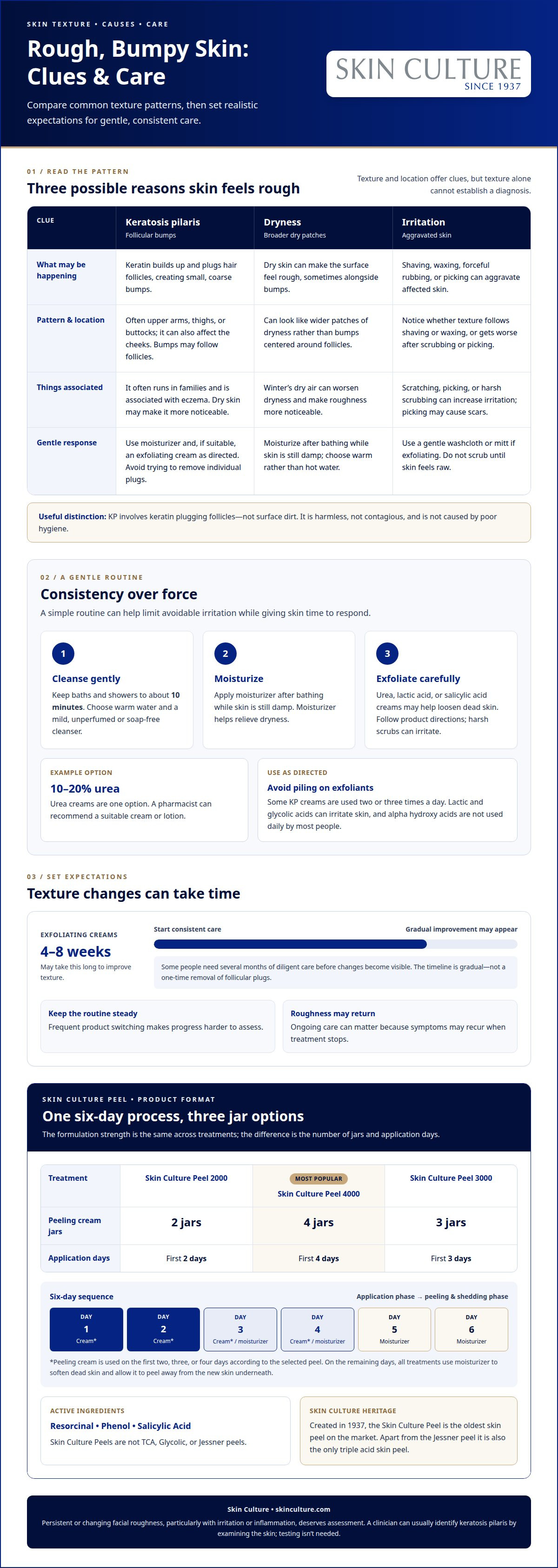
- Created in 1937, the Skin Culture Peel is the oldest skin peel on the market. Apart from the Jessner peel, it is also the only triple acid skin peel.
What Causes Rough Skin Texture?
Roughness can stem from dryness, follicular buildup, or irritation. The location and pattern of bumps can help distinguish these possible causes.
Causes and Risk Factors
Keratosis pilaris develops when keratin builds up and plugs hair follicles. The resulting small bumps can make skin feel coarse. This harmless condition often runs in families, so genetic factors may play a part. Dry skin and eczema are also associated with it. Recognizing these patterns can help explain persistent roughness.
Dry air can make the condition more noticeable, especially in winter. Shaving and waxing may also worsen keratosis pilaris by irritating affected areas. Roughness isn’t evidence of poor hygiene or diet, and there’s no evidence linking gluten to keratosis pilaris. Knowing this can help prevent unnecessary cleansing or dietary changes.
Common Causes of Uneven Texture
Uneven texture describes a surface that feels or looks inconsistent, such as dry patches alongside small bumps. Keratosis pilaris is one possible cause, but ordinary dryness can also make skin feel rough. The distinction matters because repeated scrubbing may aggravate irritation instead of addressing its cause.
Winter conditions can reduce moisture in the air and worsen dryness or existing bumps. Shaving and waxing may add irritation in areas already affected by keratosis pilaris. Picking at bumps can cause scarring, making the surface less even. Notice whether the texture is concentrated around follicles or appears as broader dry patches.
Causes of Rough Facial Skin
Facial roughness may stem from dryness, irritation, or keratosis pilaris. The condition can sometimes affect the cheeks, as well as the arms and thighs. Small, skin-colored bumps around cheek follicles may feel different from a broad dry patch. Location and appearance offer useful clues, but texture alone can’t establish a diagnosis.
Facial skin can also become rough when shaving or waxing irritates an area affected by keratosis pilaris. Scratching, picking, or forceful rubbing can increase inflammation and may leave scars. If my skin feels like sandpaper across my cheeks, I can note whether bumps follow individual follicles or dryness covers a wider area. That pattern helps describe the concern clearly.
Different causes can overlap. For example, someone with genetically influenced keratosis pilaris may also experience dry skin in winter. Focus on the pattern, location, and triggers rather than assuming every rough patch has the same cause. A clinician can usually identify keratosis pilaris by examining the skin; testing isn’t needed. Persistent or changing facial roughness deserves assessment, particularly if irritation or inflammation accompanies it.
What Is Keratosis Pilaris?
Keratosis pilaris (KP) is a harmless condition that creates small, rough bumps. Keratin, a protein in the outer skin, builds up and plugs hair follicles. These plugs interrupt the smooth surface, creating a grainy feel on areas such as the upper arms, thighs, or cheeks. KP isn’t contagious, and poor hygiene doesn’t cause it. A doctor can usually identify KP by examining the skin; testing isn’t needed.
Why the Follicles Become Bumpy
KP can affect people of any age, though it often begins before age 2 or around the teenage years. It affects up to 80% of children and teens, and about 40% of adults experience it at some point in adulthood. The condition often runs in families and is associated with eczema. These details help explain why regular washing alone doesn’t remove the bumps: the issue involves keratin inside follicles, not surface dirt.
Moisturizers and Exfoliating Ingredients
Moisturizer helps relieve dryness, while exfoliating ingredients loosen accumulated dead skin. Creams containing urea, lactic acid, or salicylic acid may help smooth KP when used consistently. Urea creams with 10-20% urea are one option. Exfoliating creams can take 4-8 weeks to improve texture, so frequent switching makes progress harder to assess. A pharmacist can recommend a suitable cream or lotion.
Apply moisturizer after bathing while your skin is still damp. For example, smooth it over rough upper arms or thighs before the skin dries fully. Some KP creams are used two or three times a day, but follow the product directions. Lactic and glycolic acids can irritate skin, and alpha hydroxy acids aren’t used daily by most people. Harsh scrubs can increase irritation rather than help dead skin shed.
Bathing and Gentle Exfoliation
Keep baths and showers to about 10 minutes, and choose warm rather than hot water. Mild, unperfumed or soap-free cleansers can reduce avoidable irritation. If you exfoliate, use a washcloth or exfoliating mitt gently. Don’t scrub until the skin feels raw. Scratching, picking, or rubbing bumps can worsen irritation and may cause scars, so avoid trying to remove individual plugs.
Consistency matters more than force. A simple routine combines gentle cleansing and moisturizer, then adds a suitable exfoliating cream as directed. Keratosis pilaris may improve in summer and worsen in winter, so dryness can affect how rough the skin feels. The condition can last for years, although symptoms often ease with age. NHS guidance notes that it may eventually clear by itself.
Treatment timelines and realistic expectations
Keratosis pilaris rarely smooths overnight. Exfoliating treatments may take 4-8 weeks to improve texture, while diligent care can take several months before changes become visible. These timelines describe gradual improvement, not a one-time removal of follicular plugs. The skin’s response depends on consistent use and how much dryness or irritation the routine causes.
What to Expect from Home Treatments
Creams with urea, lactic acid, or salicylic acid help loosen dead skin when used consistently. Some people notice texture changes within 4-8 weeks, while others need several months of diligent care. Apply products as directed and keep moisturizing, since dry skin can make bumps feel rougher. Adding several exfoliating ingredients at once can increase irritation and make it harder to identify what helps.
Improvement may not last after treatment stops. Keratosis pilaris generally returns quickly when care is discontinued because follicular buildup can recur. Think of the goal as maintaining smoother, more comfortable skin, rather than achieving a permanent cure. The NHS notes that most people have keratosis pilaris for years, though it may eventually clear by itself.
When Redness Needs a Different Approach
Texture and redness are related concerns, but they aren’t the same treatment target. Mild cortisone may be used for keratosis pilaris redness or itching. Persistent redness deserves attention as a symptom in its own right, especially if irritation is increasing. Laser treatment is a separate option people may ask about for redness; it shouldn’t be presented as a routine way to clear follicular bumps.
Before pursuing laser treatment, clarify whether the main concern is redness, roughness, or both. A treatment aimed at visible redness may not address the keratin plugs behind a bumpy surface. Gentle skin care remains important while assessing persistent symptoms. Avoid harsh scrubbing, which can worsen irritation and make redness more noticeable.
When to Reassess the Routine
Give a consistent home-care routine time to work, but don’t continue indefinitely without reassessing. Seek a dermatologist if home care has not helped after 6-8 weeks. Another recommendation is to seek an assessment if texture hasn’t improved after 8-12 weeks of consistent care. These are useful points to review the routine, symptoms, and whether another condition could explain the roughness.
Track changes with practical observations: note whether bumps feel flatter, redness has eased, or irritation has increased. A weekly note about the same area, such as an upper arm, can make gradual changes easier to notice. If a product causes burning or worsening irritation, stop using it and seek medical advice. Slow progress can still matter, but persistent symptoms deserve careful review.
Rough, sandpaper-like skin and small bumps
Keratosis pilaris often feels like fine grit because bumps form around hair follicles. Each bump is usually 1 mm or smaller, so clusters may feel more noticeable than they look. The surface can feel dry, uneven, or prickly beneath your fingertips. This texture reflects follicular buildup, not dirt sitting on the skin. Gentle touch reveals the pattern more reliably than forceful rubbing, which can irritate the area.
Consider the distribution as well as the texture. Keratosis pilaris commonly appears on the backs of the upper arms, thighs, buttocks, and back. It sometimes affects the cheeks, too. It can occur almost anywhere except the palms and soles. Small bumps in these areas can be skin-colored, red on white skin, or darker on brown or black skin. Color varies, so the bumps don’t have one universal appearance.
Seasonal changes can affect how roughness feels. Keratosis pilaris symptoms often worsen in winter and improve in summer, especially when skin is dry. Some people notice itching, although the condition is generally harmless and doesn’t usually hurt. This distinction matters: mild roughness without pain can fit the typical pattern, while intense discomfort or persistent inflammation calls for medical attention.
Other skin conditions can also cause rough patches or small bumps. The pattern alone can’t identify every cause, so note whether bumps cluster around follicles or appear as broader areas. A doctor can diagnose keratosis pilaris by examining the skin; testing isn’t needed. For example, a doctor can assess bumps across the thighs alongside dryness, redness, and itching, rather than treating texture as a diagnosis.
Resist squeezing or popping individual bumps. Picking at keratosis pilaris can cause scarring, leaving marks after the original bump settles. Scratching may also increase irritation and make the surface feel more inflamed. If itching occurs, avoid rubbing the area with a towel or exfoliating tool. A gentle moisturizer can support dry skin without trying to force plugs out of follicles.
Keratosis pilaris can last for years, then gradually improve. There is no cure, and the bumps may clear without treatment. Retinoids are among the ingredients used in some keratolytic creams, but that’s no reason to scrub harder or layer several strong products. The clearest takeaway is to assess texture by its location, follicular pattern, and changes over time, not by touch alone.
A simple skincare routine for texture
A steady routine can reduce dryness and limit avoidable irritation. Keep the steps simple: cleanse gently, moisturize, and introduce exfoliating ingredients gradually. For example, someone with rough upper arms may need a different product schedule from someone treating oily facial pores. Avoid adding several active ingredients at once. A simple routine makes it easier to spot irritation and understand which step is helping.
Morning: Protect and Moisturize
In the morning, cleanse gently or rinse with lukewarm water. Apply moisturizer to dry areas, such as the cheeks or upper arms. Use broad-spectrum sunscreen every morning as a basic skin-care step. Sun protection helps protect exposed skin while your routine continues. Choose mild, fragrance-free cleansing products if scented formulas seem irritating.
Evening: Add One Exfoliating Step
At night, wash with a gentle, soap-free cleanser and pat skin dry. For congestion or oily pores, salicylic acid may be used 2-3 times per week. For roughness or dullness, an alpha hydroxy acid may be used 1-2 times per week. These schedules aren’t a reason to combine both ingredients immediately. Start with the concern that matters most, then observe how the skin responds.
Moisturize after cleansing, especially if an exfoliant leaves your skin feeling tight. Applying moisturizer to damp skin helps support dry areas. Keep exfoliation gentle. A washcloth can remove loose surface flakes, but harsh scrubbing or picking at bumps can worsen irritation. If redness, stinging, or itching increases after adding an active ingredient, pause that step rather than layering on another product.
Make Changes Slowly
Introduce a retinoid gradually, rather than starting it alongside acids and frequent scrubbing. A gradual routine makes it easier to trace irritation to its cause. Keep notes on the product, application day, and skin response. For example, record whether your cheeks become dry after an exfoliating night. Change one part of the routine at a time so the effect of each change remains clear.
Give a consistent routine time to show whether it helps. Exfoliating treatments for keratosis pilaris may take 4-8 weeks to improve texture, and diligent care can take several months. Avoid judging progress after a single application. Compare the same area under similar lighting, and note changes in roughness, dryness, or redness. If home care has not helped after 6-8 weeks, seek a dermatologist’s assessment.
If you’re considering a more structured approach to skin texture, explore skin peel options as a separate treatment path.
Skin Culture Home Skin Peel
Skin Culture Home Skin Peel offers a structured home peel option for people seeking to refresh the appearance of rough, uneven skin. Created in 1937, the Skin Culture Peel is the oldest skin peel on the market. Apart from the Jessner peel, it is also the only triple acid skin peel. Its active ingredients are Resorcinal, Phenol, and Salicylic Acid.
The six-day process has an application phase on days 1-4, followed by peeling and shedding on days 5-6. Skin Peel 2000 includes 2 jars of peeling cream for the first two days; Skin Peel 3000 includes 3 jars for the first three days; Skin Peel 4000 includes 4 jars for the first four days. The formulation strength is the same across all three. On the remaining days, apply moisturizer to soften dead skin as it sheds. Skin Peel 4000 is the most popular option.
Contact Skin Culture to discuss which home peel option suits your skin-care goals.
Choose a next step that fits your skin
The next step isn’t automatically stronger exfoliation. Decide whether your main concern is persistent bumps, irritation, or uneven texture. If symptoms continue or worsen, a dermatologist can assess your skin and help distinguish keratosis pilaris from other conditions. That assessment can guide care more effectively than adding several active products at once.
If you find yourself thinking, “my skin feels like sandpaper,” note what you want to change and where the roughness appears. Clear priorities make it easier to choose an appropriate approach and track whether it’s helping. Pay attention to comfort as well as appearance. Skin that becomes increasingly irritated needs a different response from texture alone.
For a home peel option, Skin Culture Home Skin Peel offers Skin Peel 4000, Skin Peel 3000, and Skin Peel 2000. Explore the options in light of your skin goals, and take the next step at a pace that feels considered.
Contact Skin Culture Home Skin Peel to discuss your next step. Thoughtful care can help you move forward with confidence.
Frequently Asked Questions
Can dietary factors influence skin texture?
Keratosis pilaris isn’t caused by diet, and there’s no evidence linking it to gluten. Changing what you eat is therefore unlikely to clear follicular bumps. If you suspect a particular food affects another skin symptom, record what you ate and when symptoms appeared. Discuss persistent concerns with a healthcare professional before restricting foods, especially if the change would affect your usual diet.
Could It Be Something Else?
Yes. Dryness and other skin conditions can also create rough patches, so texture alone can’t identify the cause. Consider whether the area is a broad dry patch or a cluster of bumps around follicles. Keratosis pilaris is commonly associated with eczema. A doctor can examine the skin and distinguish possible causes based on its pattern and symptoms.
First: What does “texture” really mean?
Skin texture describes how the surface looks and feels, including bumps, rough patches, or uneven areas. For example, a cheek can appear smooth from a distance but feel grainy to the touch. Note whether a change is visible, tactile, or both, and whether it affects one area or several. Those details make it easier to describe the concern during an assessment.
How common is it?
Keratosis pilaris is common across age groups. It affects up to 80% of children and teens, and about 40% of adults experience it at some point in adulthood. It can begin before age 2 or around the teenage years, and it often runs in families. These figures describe how frequently it occurs, not whether a particular person’s bumps are keratosis pilaris.
How does aging specifically affect skin texture?
Keratosis pilaris symptoms improve with age for many people. The condition may begin easing in a person’s 20s and often improves significantly by age 30. Changes aren’t necessarily immediate, and bumps can persist. Compare the same area over time rather than judging from a single day. A gradual change in roughness may be easier to recognize through consistent observations.
When Should You See a Doctor?
See a dermatologist if home care hasn’t helped after 6-8 weeks, or if texture remains unchanged after 8-12 weeks of consistent care. Arrange an assessment sooner if the area becomes painful, very itchy, or increasingly irritated. Before the appointment, note where bumps occur, when they began, and which products affect them. These details help clarify the pattern and guide next steps.
Why does my skin feel like sandpaper?
If my skin feels like sandpaper, dryness or small follicular bumps may be contributing. Keratosis pilaris creates a grainy feel when keratin accumulates around hair follicles. Consider where the roughness occurs and whether individual bumps are visible. For instance, clustered bumps on the thighs suggest a different pattern from a broad dry patch. That distinction can help guide an assessment.
What causes skin to feel rough or like sandpaper?
Roughness can result from dry skin, keratin buildup in follicles, or irritation. Winter’s drier air may make existing roughness more noticeable, while shaving or waxing can aggravate affected areas. These factors can overlap: someone may have follicular bumps and dryness at the same time. Notice changes in location, season, and skin-care habits to understand what may be affecting the skin’s surface.
Disclaimer
Testimonials are the individual experiences of those who have used our skin peels. Individual results may vary.