


Fillers aren’t the only option for softening marionette lines. If you’re exploring how to get rid of marionette lines without fillers, microneedling and consistent skin care may improve their appearance, but won’t erase them completely. The right approach depends on how pronounced the lines are and what contributes to them.
Marionette lines run from the corners of the mouth toward the chin and can make the lower face look downturned. It’s understandable to feel frustrated when they persist, especially because they can reflect both changes in skin structure and repeated facial movement. Understanding what may be affecting your skin is the first step in learning how to get rid of marionette lines without fillers.
This article explains what marionette lines are, why they develop, and how microneedling may support collagen and elastin production. It also covers how to get rid of marionette lines without fillers through daily skin care, including sun protection, and what to expect from non-filler approaches so you can make an informed decision.
Key Takeaways
- Marionette lines run from the corners of the mouth toward the chin, and their appearance can reflect genetics, facial movement, and changes in skin support.
- Daily sunscreen with SPF 30 can help limit ultraviolet-related collagen loss and prevent lines from worsening.
- Microneedling may support collagen and elastin production, while facial exercises and massage have limits for persistent creases.
- Skin Culture’s home peel approach focuses on skin texture and renewal, rather than replacing lost facial volume.
- Identifying whether your concern is skin texture, a crease, or a change in facial contour can help guide your next step.
What are marionette lines?
Marionette lines are creases that descend from the corners of the mouth toward the chin. Their name refers to a puppet’s hinged lower jaw, which moves as the mouth opens. Unlike nasolabial folds, which run from the nose toward the mouth, marionette lines shape the lower face. They may appear as shallow folds, deeper creases, or shadows beside the chin.
Several factors can contribute to nasolabial folds and marionette lines. Genetics influence facial structure and how skin changes over time. Repeated expressions move the skin around the mouth, while gradual reductions in collagen and elastin affect firmness. Age-related facial volume loss can also reduce support beneath the skin, making creases more visible.
Facial muscles play a role, too. Smiling and speaking repeatedly fold the skin around the mouth; as elasticity declines, those folds may remain visible when the face is at rest. Changes in the cheeks can affect the lower face as well: reduced volume above the mouth may make the area around marionette lines look less supported. The combination varies from person to person.
Chin wrinkles can appear alongside marionette lines, but they are different features. A crease running down from the mouth corner is not the same as fine lines across the chin. Repeated movement, skin texture, and changes in underlying facial volume can all affect their appearance. For example, a downward crease may become more noticeable when the mouth is at rest.
Some people notice subtle marionette lines in their 20s or 30s, while they typically appear around age 40. These ages describe common patterns, not a deadline. Cleveland Clinic advises that lines cannot be completely prevented because they develop naturally with age. Daily skin care may support skin quality, but creams cannot replace lost facial volume or erase every established crease.
In the United States, the cost of non-filler treatments depends on the approach, treatment area, and session plan. Creams, microneedling, and energy-based procedures are different categories, and the total varies with the method and number of sessions. These factors help frame questions about how to get rid of marionette lines without fillers without treating every option as the same service.
Consider seeing a dermatologist or plastic surgeon if the lines persist, concern you, or lead you to consider a procedure. A professional assessment can distinguish skin texture from deeper folds and facial-volume changes. This distinction matters: a treatment designed to smooth surface wrinkles may not address the structural cause of a pronounced crease. Identifying the feature you want to address is a useful starting point for considering how to get rid of marionette lines without fillers.
Before choosing a treatment, note where each line begins and how it looks when your face is relaxed. Compare the mouth corners, chin, and nasolabial folds rather than treating every crease as the same concern. This simple observation can clarify whether your priority is surface texture, visible folds, or the overall contour of the lower face.
Sunscreen, retinoids, and hydration
Daily sun protection helps address one cause of visible skin aging: ultraviolet exposure. Cleveland Clinic recommends sunscreen with SPF 30 every day to help prevent wrinkles from worsening. Regular protection also helps limit ultraviolet-related collagen loss, which can contribute to deeper facial lines over time. Apply sunscreen across the face, including the skin around the mouth and the corners of the lips. A consistent morning step matters more than using sunscreen only on bright, sunny days.
Follow the product label for application and reapplication, especially during extended time outdoors. A daytime product with SPF can also support year-round protection, provided it covers all areas exposed to daylight. Sunscreen helps protect skin quality, but it does not replace lost facial volume or immediately smooth an established crease. Think of it as a preventive part of your routine, not a stand-alone treatment for marionette lines.
Retinoids are ingredients found in topical skin-care products and are often used in routines targeting skin texture and the appearance of fine wrinkles. Their role differs from cosmetic treatments that target deeper dermal structures: a cream works at the skin surface and cannot restore underlying volume. Follow the product directions when introducing a retinoid, and avoid layering several active products at once. For example, keep the rest of your routine simple when adding a retinoid so you can observe how your skin responds.
Hydration supports a comfortable, supple skin surface. Moisturizer can ease the dry, tight feeling that makes fine lines look more pronounced. Apply it after cleansing, then use sunscreen during the day. This keeps the routine simple: cleanse, moisturize, protect. Drinking water supports normal hydration, but does not directly rebuild collagen or lift the mouth corners. Surface softness and structural change are different effects.
For a practical routine, start with a gentle cleanser, a moisturizer, and SPF 30 sunscreen each morning. Add a retinoid as a separate step only when it suits your existing routine and product directions. Keep track of dryness or sensitivity as you introduce it. Avoid treating redness or irritation as proof that a product is working; a comfortable routine is easier to maintain consistently.
These daily steps support skin quality and help limit preventable sun-related damage, but they have limits. They won’t have the same effect as treatments that address deeper folds or changes in facial volume. Results from topical care depend on regular use, skin condition, and the causes of the lines. Treat skin care as the foundation: cosmetic treatments may address other concerns, while sunscreen and hydration support a consistent routine.
What marionette lines are and where they appear
Marionette lines are creases that descend from each corner of the mouth toward the chin. Their name comes from marionette puppets, whose hinged jaws create a visible line around the lower mouth. On a face, these folds may look like short shadows or deeper grooves. They can make the mouth appear downturned, even when a person is relaxed.
To locate marionette lines, look beside the chin, not at the crease beside the nose. Nasolabial folds extend from the sides of the nose toward the mouth; marionette lines begin lower, near the mouth corners. Facial expression can temporarily deepen either line. Smiling, speaking, or pursing the lips changes how the folds look, so compare your face at rest and in motion.
Marionette lines typically appear around age 40, though subtle lines may be noticed earlier. They reflect several changes in facial support rather than one isolated skin crease. Reduced collagen and elastin can affect firmness, while age-related volume loss can change the contour between the cheeks, mouth, and chin. Genetics and repeated expressions also influence how the lower face develops over time.
It helps to distinguish a surface wrinkle from a deeper fold. Fine lines may show mainly in certain lighting or during expression. A more pronounced crease can remain visible when the face is relaxed, sometimes casting a shadow beside the chin. This distinction matters because a surface-focused treatment may improve texture but cannot replace lost volume beneath the skin.
Different approaches target different structures. Microneedling creates tiny channels in the dermis and stimulates the body’s healing response, including collagen and elastin production. For relatively superficial lines, a series of 3-6 treatments is typically recommended. This approach supports skin texture; it does not reposition facial volume or guarantee that a deep crease will disappear.
Other cosmetic treatments work in different ways. Dermal filler injections can restore some lost volume and soften folds, with temporary results. Neurotoxin injections may relax muscles that pull the mouth downward, but are typically not used alone in these areas. Laser resurfacing and chemical peels can improve the appearance of skin, rather than directly restoring underlying facial support.
That distinction explains why one treatment may smooth a fine crease but leave a deeper shadow. A dermatologist or cosmetic surgeon may assess the line’s depth, its position at rest, the surrounding skin texture, and facial volume. They may use a five-point rating scale to describe severity. These observations help match a treatment’s mechanism to the feature being addressed.
Marionette lines cannot be completely prevented because they develop as part of natural aging. A realistic goal is to soften their appearance or improve nearby skin texture, rather than erase every fold. Understanding whether the concern is a temporary expression line, a persistent crease, or a volume-related shadow helps clarify which non-filler options may be relevant.
Do facial exercises, massage, or gua sha improve marionette lines?
Facial exercises may engage or strengthen lower-face muscles, but they cannot reliably remove a fixed crease. A physician notes that tightening the lower face and jawline may also improve marionette lines. The distinction matters: muscle activity may influence facial contour, while a persistent fold can also reflect skin changes or lost support beneath it.
One suggested facial yoga exercise uses a short hold, then repetition. Hold the exercise for about 10-15 seconds and repeat it 5 times. These figures describe the exercise’s timing, not a proven treatment dose for marionette lines. Keep the movement controlled rather than forcing the mouth or jaw into a strained position.
Research on muscle stimulation offers a related, but limited, comparison. A trial involving 108 women who used daily muscle stimulation for twelve weeks measured an 18.6% increase in cheek-muscle thickness. Researchers also found a clear difference from the untreated group at six weeks. The result concerns cheek muscle thickness, not the depth of marionette lines or the effect of facial exercises.
That distinction cautions against jumping to conclusions. Increased cheek-muscle thickness does not show that a crease beside the mouth will disappear. The trial examined muscle stimulation, not massage or gua sha, and did not establish an effect on marionette lines. No trial has tested a device specifically on these lines. Interpret evidence on facial exercises according to what was actually measured.
Massage and gua sha involve moving a tool or fingers across facial skin. They may temporarily change how the skin looks through pressure and movement, but they do not restore lost facial volume. Use light pressure around the mouth and jaw rather than repeatedly pulling the skin. Forceful strokes cannot substitute for treatment aimed at deeper structural changes.
For a gentle facial massage, apply a suitable moisturizer first to reduce friction. Use clean hands and move lightly over the lower cheek and jaw without pressing hard on the mouth corners. Stop if your skin becomes uncomfortable or irritated. This can make a routine feel soothing, but it should not be presented as a lasting way to lift a pronounced fold.
Choose a method that fits your goal. If you want a brief, relaxing facial routine, gentle massage or gua sha may suit that purpose. If you’re concerned about a persistent crease, muscle exercises alone may not address its cause. A dermatologist or cosmetic surgeon can assess whether skin texture, muscle pull, or facial volume contributes most to its appearance.
What are the risks and recovery times of non-filler marionette-line treatments?
Recovery depends on the treatment, since each method affects skin differently. Microneedling can cause redness and swelling, which generally fade quickly. This short-term response is different from the gradual collagen changes the treatment aims to stimulate. Plan for visible redness immediately afterward rather than expecting your skin to look unchanged.
Laser resurfacing has a specific aftercare concern: treated skin becomes more sensitive to light. Protect it from direct sunlight after treatment. This matters even when treatment is limited to the lower face, as sunlight can reach the skin around the mouth during everyday activities. Follow the treatment’s aftercare directions while sensitivity remains.
Chemical peels also require careful sun protection. Skin can be very sensitive to sunlight in the weeks after a peel, so protect the treated area during this period. This is different from microneedling’s temporary redness and swelling. Expected peeling and sensitivity depend on the treatment, so follow recovery guidance for the specific procedure rather than a general schedule.
Energy-based treatments have a different consideration. A physician cautions that radiofrequency devices used on the face may cause fat loss, which can make marionette lines look worse six months after treatment. This matters because reduced facial volume near the mouth may deepen the shadow beside a crease. The potential effect is not simply a matter of redness or downtime; it relates to changes in facial support.
Before choosing a treatment, consider what it targets and what recovery involves. Microneedling works through controlled channels in the skin. Laser resurfacing and peels affect the skin’s surface, while radiofrequency can affect deeper tissue. These mechanisms have different aftercare considerations. A treatment intended to improve texture may not address volume, while a procedure affecting deeper tissue may have a different risk profile.
Factor the expected recovery period into your decision. Ask how the treated area may look, what sun protection is needed, and which changes warrant follow-up. For example, protecting skin from direct sunlight is central after laser treatment, while sensitivity needs attention in the weeks following a peel. Clear, treatment-specific aftercare helps you understand what to expect as your skin recovers.
Non-filler treatments can involve temporary effects as well as risks that influence the appearance of the lower face. Weigh the intended benefit against the method’s specific recovery needs, especially when treating delicate skin around the mouth. To explore a focused at-home approach to skin care, view skin-care options.
Skin Culture Home Skin Peel
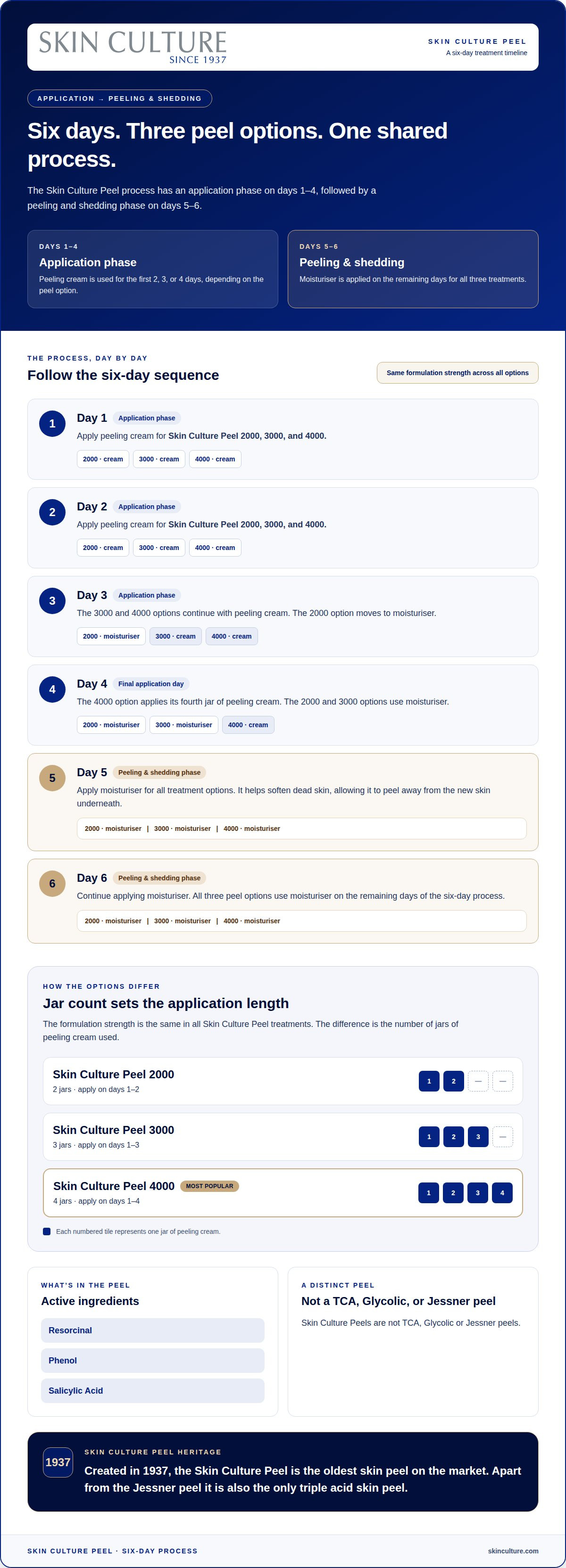
Skin Culture Home Skin Peel offers a home peeling approach for people seeking to improve skin appearance without fillers. Skin Peel 2000 includes 2 jars of peeling cream for days 1-2, Skin Peel 3000 includes 3 jars for days 1-3, and Skin Peel 4000 includes 4 jars for days 1-4. The formulation strength is the same across all three. The six-day process includes application during days 1-4; on each treatment’s remaining days, apply moisturizer to soften dead skin so it can peel away from the new skin underneath.
Created in 1937, the Skin Culture Home Skin Peel is the oldest skin peel on the market. A skin peel may be an option for people looking to improve skin texture and appearance. A peel may suit someone focused on overall skin texture and renewal, but it does not replace lost facial volume or promise to erase a deeper marionette line. Contact Skin Culture Home Skin Peel to discuss whether this home peel approach fits your skin-care goals.
Choose a Skin-Care Path That Fits Your Goals
If you’re considering how to get rid of marionette lines without fillers, start by defining what you want to change. Skin texture, fine lines, and deeper folds are different concerns, so skin care may help one more than another. Set a realistic goal, such as improving the look and feel of your skin, rather than expecting every crease to disappear.
Consistency matters. A routine you can follow is more useful than switching products or treatments whenever you notice a change. Give your skin time to respond, protect it from sun exposure, and pay attention to comfort and sensitivity. If your main concern is a pronounced fold or a change in facial volume, remember that topical care may not address its underlying structure.
For a considered next step, contact Skin Culture Home Skin Peel to explore whether its home peel approach aligns with your skin-care goals. Contact Skin Culture Home Skin Peel and take the next step at a pace that feels right for you.
Frequently Asked Questions
What causes marionette lines and what makes them worse?
Marionette lines can reflect genetics, repeated facial expressions, reduced collagen and elastin, and age-related facial volume loss. Sun exposure can contribute to ultraviolet-related collagen loss, which may deepen facial lines over time. For example, a crease that appears mainly while speaking differs from one visible at rest. Noting when and where it shows can help distinguish expression-related movement from a persistent fold.
How can skincare products reduce the appearance of marionette lines without fillers?
Skin care can support surface hydration and help protect skin from factors that contribute to visible aging, but it cannot reproduce the effect of restoring facial volume. A practical routine can include moisturizer and daily sun protection across exposed areas, including the skin around the mouth. If dryness makes fine lines look more pronounced, moisturizing may improve the skin’s surface appearance without changing the underlying shape of a deeper crease.
Can retinoids, peptides, or vitamin C help marionette lines, and how should they be used?
Topical products containing these ingredients may be part of a routine focused on skin appearance, but they should not be expected to lift a mouth corner or replace lost facial support. Follow each product’s label, introduce one new active product at a time, and watch for irritation. Pair daytime skin care with SPF 30 sunscreen, which Cleveland Clinic recommends daily to help prevent wrinkles from worsening.
Which non-filler treatments reduce marionette lines, such as lasers, radiofrequency, or microneedling?
Microneedling, laser resurfacing, chemical peels, and some energy-based treatments are among the non-filler options used to minimize facial lines. Microneedling is typically recommended as a series of 3-6 treatments for relatively superficial lines. These methods work differently, so the relevant choice depends on whether the concern is skin texture, a surface crease, or deeper facial changes. Radiofrequency also warrants discussion of its potential effect on facial fat.
How can sun protection, smoking cessation, and skincare prevent marionette lines from worsening?
Daily sun protection is a practical step: Cleveland Clinic recommends SPF 30 sunscreen to help prevent wrinkles from worsening. Apply it across exposed facial skin, including near the mouth, and use it consistently rather than only on sunny days. A simple routine with moisturizer can support skin comfort. Avoiding smoking supports broader health; however, no specific claim about its effect on marionette lines is needed to make sun protection worthwhile.
How much do non-filler treatments for marionette lines cost in the United States?
Costs vary by treatment approach, area, and number of sessions.
Disclaimer
Testimonials are the individual experiences of those who have used our skin peels. Individual results may vary.