


A loose flap of peeling skin can be hard to leave alone, but pulling it may expose tender skin that is still healing. Knowing what happens if you pick peeling skin can help you resist: picking can create an opening where bacteria may enter and irritate the new skin underneath.
It’s understandable to want to smooth away a noticeable edge. Instead, moisturize the area gently and let attached skin shed naturally. If a piece is completely detached and hanging loosely, trim only that loose piece carefully with clean, small scissors.
This guide explains how to moisturize peeling skin, handle loose pieces without pulling, and recognize symptoms that may need medical attention. It also covers actions that can aggravate skin during recovery, so you can care for it gently as it heals.
Key Takeaways
- Let attached peeling skin shed naturally; pulling it can expose tender skin and create an opening for bacteria.
- Moisturize gently and avoid scrubbing, scratching, or products that can irritate recovering skin.
- Learn how to handle a completely detached, hanging piece without pulling at skin that is still attached.
- Recognize when peeling may need medical attention, especially if it comes with signs of infection or severe symptoms.
- Understand what can affect recovery time and how to protect newly exposed skin while it heals.
Risks of picking or pulling peeling skin
Peeling skin can tempt you to pull at a loose edge. Gentle, step-by-step care protects the tender surface underneath while it heals.
- Leave attached flakes alone, even when they catch on clothing. Pulling or exfoliating can tear skin before it is ready to shed, creating an opening where bacteria may enter and exposing tender skin underneath. Dead cells can also shield damaged but living skin until they fall away naturally. Picking may cause further injury rather than help the surface heal faster.
-
Check for Scars or Dark Spots
Look at the area without lifting attached flakes. Picking doesn’t mean a scar or dark spot will definitely form, but tearing healing skin can cause additional injury. Avoid scrubs and tools that remove more surface skin. If a mark persists or you’re unsure what caused the peeling, a dermatologist can assess the skin and its symptoms.
-
Recognize Signs of Infection
Watch for fever or chills after picking, as these can signal infection. If either develops, contact a healthcare provider instead of continuing to handle the skin. Unexplained peeling also warrants medical advice. The key risk after picking is the opening in the skin, which can let bacteria enter while the surface is healing.
-
Manage the Urge to Pick
Cover the area with loose clothing if the fabric won’t rub against it, and keep your hands occupied when the urge to pick strikes. Moisturize gently instead of rubbing or scrubbing. If a piece is completely detached and hanging loosely, trim only that piece with clean, small scissors. Don’t tug at any skin that remains attached.
- Choose a soothing routine instead of trying to speed up shedding. Apply moisturizer with light touches, and stop if rubbing catches a flap. After sunburn, protect healing skin from further sun exposure, since newly exposed skin remains sensitive to ultraviolet damage. Reapply sunscreen about every two hours, following the American Academy of Dermatology Association’s guidance.
Understanding what happens if you pick at peeling skin starts with the exposed area: it may be more vulnerable to irritation and infection. Let attached skin shed on its own, and respond promptly to fever, chills, or unexplained peeling.
With sunburn, the important question is whether the skin is ready to shed. Picking or exfoliating too soon can expose tender skin that is still healing. Removing a flake does not prepare the layer underneath; it exposes it while it remains vulnerable. Let peeling skin slough off on its own, and avoid pulling it away or actively exfoliating, since the skin beneath may still be vulnerable to infection.
Products and actions to avoid during recovery
Choose gentle care while the skin barrier recovers. Avoid heat, friction, and products that can add irritation.
- Skip scrubs, exfoliating tools, and vigorous rubbing. These actions can lift skin before it is ready to shed, leaving the surface more irritated. Apply moisturizer with light strokes instead. Fragrance-free products can help reduce the chance of irritation while skin peels. If an application stings or worsens discomfort, stop rubbing it into the area.
- Avoid hot water and long baths. Hot water can dry the skin, so choose a warm shower and keep the water gentle. Pat the area dry rather than dragging a towel across it. For example, press a soft towel lightly against peeling shoulders or arms. This reduces friction without pulling loose edges.
- Don’t apply petroleum jelly or oil-based creams to a fresh sunburn. They can trap heat and prolong discomfort. Once the burn is no longer fresh, choose a suitable, fragrance-free moisturizer and apply it gently. Aloe vera or a soy-based moisturizer may soothe sunburned skin. Don’t assume every heavy ointment is appropriate at every stage of recovery.
- Protect peeling skin from additional sun exposure. Wear loose, breathable clothing over the area and seek shade, especially between 10 AM and 4 PM. Use broad-spectrum sunscreen with SPF 30 or higher when outdoors, and reapply approximately every two hours. Don’t pull or rub skin while applying it; smooth it on carefully.
- Don’t use pain relief as a reason to ignore worsening symptoms. A cool compress can ease discomfort, and over-the-counter ibuprofen may help with sunburn pain. Follow the product label and avoid medication that isn’t suitable for you. If pain is severe or you feel sick alongside the burn, contact a healthcare provider.
- Keep your routine simple while the surface is tender. Avoid scented products, vigorous cleansing, and repeatedly handling loose flakes. For example, cleanse gently, pat dry, then apply moisturizer without pulling at attached skin. Scratching can irritate the area and disrupt recovery. If you notice signs of infection, such as fever or chills, seek medical advice.
For a gentle, considered routine, explore skin-care options that support your approach to skin care.
As the skin heals, fragrance-free products and gentle moisturizer application can limit irritation. Avoid scratching, scrubbing, and vigorous rubbing, which may disrupt healing and cause further damage.
Appearance and symptoms of peeling skin
After sunburn, peeling often starts around three days later. Note the affected area, its color, and any symptoms as healing progresses.
- Look for loose, flaky surface skin rather than trying to diagnose the cause from appearance alone. Peeling happens as the epidermis, the skin’s outer layer, sheds damaged cells. It may appear in small flakes or larger sheets, such as across sun-exposed shoulders. Let the surface change naturally, and note whether the area is improving or becoming more irritated.
- Compare the affected skin with nearby skin. Sunburn can leave redness and tenderness before peeling begins, while fresh skin may look different from the surrounding area. The timing can help: inflammation commonly occurs during days 1 to 3 after sunburn, and peeling may begin during days 3 to 7.
- Notice whether the burn has symptoms beyond surface flaking. A second-degree sunburn can affect the dermis and nerve endings, with severe redness, swelling, and blisters. Those signs differ from a few dry flakes. If severe pain or feeling sick accompanies the burn, seek medical care rather than judging it by appearance alone.
- Track changes as new skin emerges. During days 7 to 14 after sunburn, new skin may appear beneath the shedding layer. It can feel tender because the epidermis is still recovering. Avoid using the amount of peeling as the only measure of healing; the appearance can change as damaged cells fall away.
- Protect the exposed area from further ultraviolet exposure. Sunburn is mainly caused by ultraviolet B radiation, and healing skin remains sensitive to additional sun damage. Use broad-spectrum sunscreen with SPF 30 or higher outdoors, including on overcast days. Apply it carefully over the area without scrubbing flakes or rubbing tender skin.
- Take unexplained or persistent peeling seriously. Sunburn is one possible cause, but appearance alone cannot identify every cause. A dermatologist can assess peeling skin and help determine why it is happening. A changing or unusual spot also deserves assessment; peeling by itself cannot tell you whether a mark is skin cancer.
- Record symptoms in a simple daily note. For example, write down whether redness, swelling, tenderness, or flaking is changing. This gives a dermatologist a clearer description if you seek an assessment. Seek care for severe pain or sickness with sunburn, and don’t assume every peeling area follows the same recovery pattern.
Does peeling skin leave scars or dark spots?
Peeling skin doesn’t automatically mean a scar or dark spot will form. Focus on preventing further injury and observing any mark as the surface heals.
- Let attached skin come away on its own. Pulling can injure the skin beneath a peeling edge, while exfoliating can add friction to an already tender area. For example, don’t use a scrub to smooth a flaky patch. A fresh injury may heal with a visible mark, so avoiding further trauma is a practical first step.
- Distinguish a temporary-looking color change from an open wound. A flat area of changed color differs from broken skin, bleeding, or a raised area. Note what you see without picking at it. For example, record whether a mark is flat or whether the surface remains damaged, then avoid rubbing it to test its texture.
- Keep the area clean and handle it gently. If picking has created an opening, avoid touching it with unwashed hands or applying a harsh exfoliant. Use a light touch when cleansing and drying. These steps reduce further irritation while the damaged surface repairs; they don’t require removing flakes that remain attached.
- Protect the healing area from additional sun exposure. Freshly exposed skin after sunburn can be more sensitive to ultraviolet damage. Cover the patch with clothing outdoors, and apply broad-spectrum sunscreen with SPF 30 or higher when appropriate. Smooth sunscreen on gently instead of rubbing hard across flakes or tender skin.
- Watch the mark rather than repeatedly inspecting it by touch. Check it visually during your usual skin-care routine. A daily note can help you describe changes in color, shape, or surface if you seek medical advice. Don’t use tweezers, fingernails, or an exfoliating tool to remove a spot that remains attached.
- Seek assessment for a persistent or unusual mark. A dermatologist can examine a spot that changes, remains concerning, or looks unlike the surrounding skin. Peeling alone can’t identify the cause of a dark area. Don’t assume every new mark is simply leftover color from sunburn or picking.
- Respond promptly to signs of infection. If the picked area is accompanied by fever or chills, contact a healthcare provider. An opening caused by picking can let bacteria enter, so avoid covering the area with makeup or continuing to exfoliate it. Explain when the peeling began and what actions affected the area.
How long does peeled or picked skin take to heal?
Recovery depends on the cause and depth of skin damage. Use the timeline and symptoms together, not peeling alone, to judge progress.
- Note when peeling begins after a sunburn. It may start about three days after the burn, as the body sheds damaged skin cells. For example, write down the first day you see flakes on your shoulders. This gives you a reference point for changes without repeatedly touching or lifting the skin.
- Use healing estimates as a guide, not a deadline. Mild-to-moderate sunburn is reported to heal in 3 to 5 days, while another estimate places healing around seven days. Peeling often stops as the burn heals. Differences in burn severity and continued sun exposure affect the course.
- Allow for lingering flakes after the main burn settles. Peeling can last up to a week, and small amounts may continue for days or even weeks. A few remaining flakes don’t necessarily mean the entire area is still actively injured. Avoid pulling them, and watch for changes in pain, redness, or swelling.
- Consider whether picking created a new injury. Pulling attached skin can expose tender tissue and create an opening, adding damage beyond the original peel. Healing then depends partly on how much skin was torn and whether the area becomes irritated. Handle it gently, and don’t exfoliate to make recovery appear faster.
- Protect the area from another burn while new skin emerges. After sunburn, days 7 to 14 are described as a period when new skin appears. Cover exposed skin outdoors and use broad-spectrum sunscreen with SPF 30 or higher. Reapply approximately every two hours, according to the American Academy of Dermatology Association.
- Support the surface with gentle care. Apply a suitable moisturizer without vigorous rubbing, and avoid hot water, which can dry skin. For example, pat the area dry after a warm shower instead of dragging a towel across flakes. These steps reduce friction while the surface recovers; they don’t force attached skin to shed.
- Seek medical care if the sunburn doesn’t improve after seven days. Severe pain or feeling sick alongside a sunburn also needs medical attention. Fever or chills after picking can signal infection. Note when the burn started and how symptoms have changed, so you can describe the course clearly to a healthcare provider.
Once sunburned skin has recovered, explore a structured at-home peel process before beginning another peeling routine.
Skin Culture Home Skin Peel
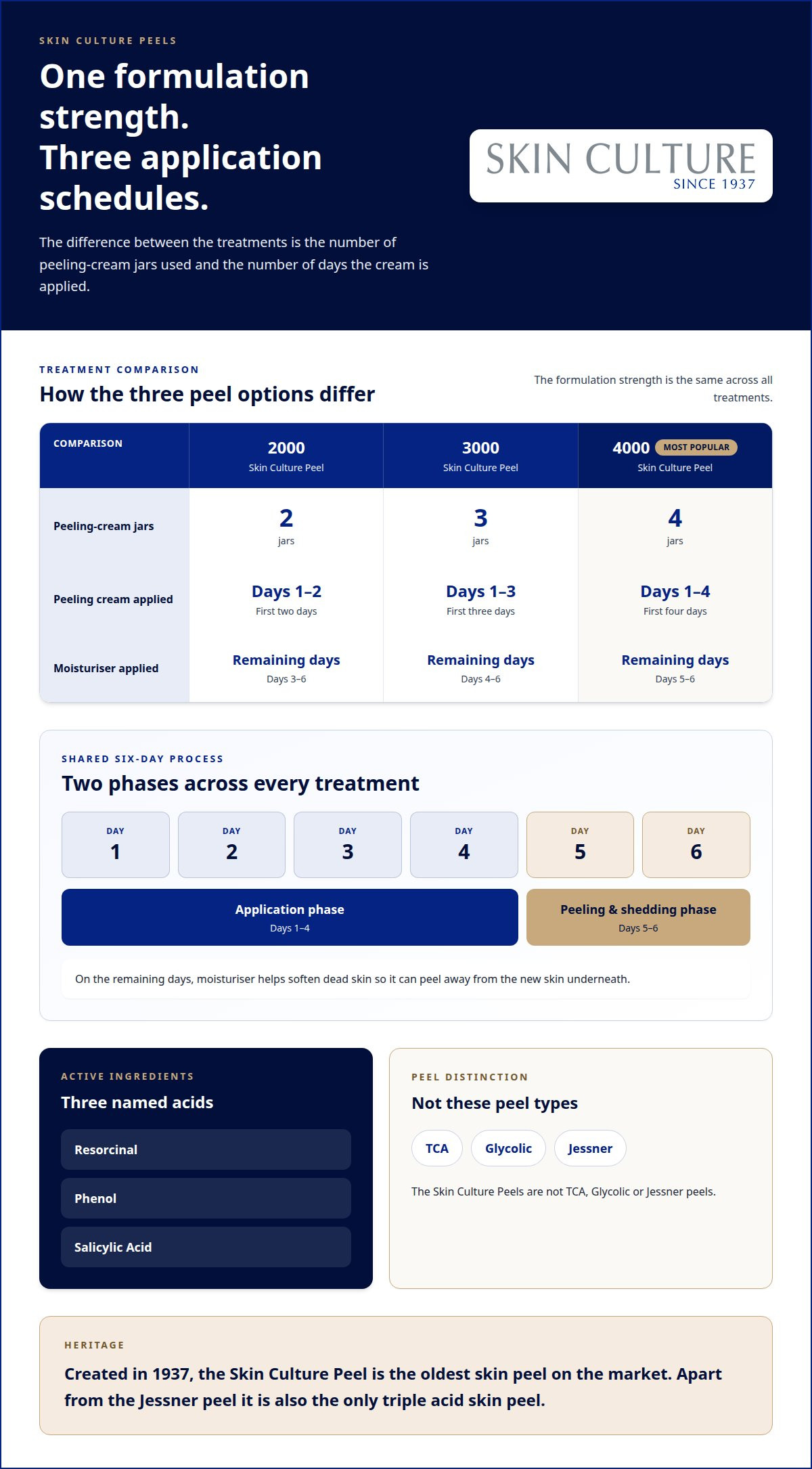
Skin Culture Home Skin Peel offers Skin Peel 4000, Skin Peel 3000, and Skin Peel 2000 for at-home peeling. Each follows a six-day process: days 1-4 are the application phase, followed by peeling and shedding on days 5-6. During the remaining days, moisturizer softens dead skin so it can peel away from the new skin underneath. Follow the specific application schedule for the peel you choose, and don’t pull at attached skin.
Created in 1937, the Skin Culture Peel is the oldest skin peel on the market. Apart from the Jessner peel, it is also the only triple acid skin peel.
For information about the at-home peel options, contact Skin Culture Home Skin Peel.
Choose your next skin-care step thoughtfully
Let the skin settle before beginning another peeling routine. Understanding what happens if you pick peeling skin can help you make gentler choices during recovery, but persistent or unexplained symptoms deserve medical attention. Once your skin has recovered, consider whether an at-home peel fits your skin-care goals and whether you’re ready to follow its directions carefully.
Skin Culture Home Skin Peel offers Skin Peel 4000, Skin Peel 3000, and Skin Peel 2000. Each is part of its at-home peel range. The right next step is one you can take with care, without rushing healing or forcing skin to shed.
For details about the options and a considered next step, contact Skin Culture Home Skin Peel. Give your skin time, follow a gentle routine, and move forward when you’re ready.
Frequently Asked Questions
What About Loose, Hanging Pieces?
Leave any piece that remains attached to the skin in place. If a flap is completely detached and catching on clothing, trim only the loose part with clean, small scissors. Don’t pull it to find where it separates, since that can tear tender skin. If a sleeve catches a flap, adjust the clothing rather than tugging at the skin.
What is peeling skin?
Peeling skin is the shedding of the epidermis, the skin’s outer layer. After sunburn, the body sheds damaged cells as the surface recovers. Peeling may appear as fine flakes or larger loose areas. Appearance alone doesn’t identify every cause, though. If skin peels without a clear reason, a dermatologist can assess it and help determine what may be happening.
When should I call the doctor?
Contact a healthcare provider if peeling comes with fever or chills, or if you feel sick alongside a sunburn. Severe sunburn pain also warrants medical advice. Don’t wait for loose skin to fall away before seeking help if you have chills. If a sunburn hasn’t improved after seven days, seek professional care rather than continuing to manage it alone.
What happens when you pick or peel loose skin?
Pulling skin that’s still attached can tear the surface and expose tender skin underneath. The new opening can let bacteria enter, while rubbing or exfoliating may add irritation. Lifting a connected edge to make a flaky patch look smoother can leave the area more vulnerable. Allow attached skin to shed naturally instead of trying to speed up the process.
Can picking peeling skin cause bleeding, pain, or infection?
Yes. Pulling attached skin can injure the surface, which may cause pain or bleeding. A break in the skin can also create an opening where bacteria may enter. Fever or chills after picking need medical attention. Avoid further pulling or scrubbing, and contact a healthcare provider if these symptoms appear or you feel sick.
How can you safely care for peeling skin without picking it?
Apply a fragrance-free moisturizer gently, using light touches instead of rubbing. Choose loose clothing that won’t snag flakes, and cover the area outdoors while it heals. After sunburn, use broad-spectrum sunscreen with SPF 30 or higher and reapply approximately every two hours. For example, smooth sunscreen over the area carefully rather than scrubbing it into peeling skin.
When should you see a doctor for picked or peeling skin?
Seek medical advice for unexplained peeling, fever or chills, severe sunburn pain, or feeling sick with a sunburn. A dermatologist can assess the skin and help identify the cause if peeling continues or its appearance concerns you. If a sunburn doesn’t improve after seven days, get professional care. Describe when the peeling began and what symptoms you’ve noticed.
Why is skin peeling, and when is peeling normal?
Peeling after sunburn is the body’s way of shedding damaged skin cells. It may begin about three days after the burn, with peeling commonly occurring during the days that follow. Mild-to-moderate sunburn can heal over several days, though small flakes may remain longer. Peeling without an apparent cause should be assessed, since appearance alone can’t establish why it started.
Disclaimer
Testimonials are the individual experiences of those who have used our skin peels. Individual results may vary.