


A fresh start for your skin begins with gentle consistency, not a harsher routine. If you’re wondering how to get a fresh start for your skin, cleanse with a mild formula, moisturize, use daily sun protection, and introduce active ingredients one at a time. A steady approach makes it easier to see what your skin tolerates.
It’s understandable to want quick change when your skin feels dull, congested, or unsettled. But adding several treatments at once or scrubbing harder can make irritation more difficult to manage. Start with a simple routine, then adjust it thoughtfully according to how your skin responds.
This guide explains how to cleanse without stripping your skin, introduce active ingredients gradually, and exfoliate with care. You’ll also learn how everyday habits can support skin health, how to consider a more intensive peeling treatment, and when persistent or unusual concerns call for medical advice. The goal is a considered reset that respects your skin barrier and gives each step time to work.
Key Takeaways
- Use a mild cleanser and moisturizer to support your skin barrier instead of scrubbing or over-cleansing.
- Introduce one active ingredient at a time, starting gradually so you can observe how your skin responds.
- Make daily sun protection and steady habits around sleep, stress, and diet part of your routine.
- Choose exfoliation carefully and give a new routine time to show visible results.
- Seek medical advice about unusual skin symptoms or a spot that changes, itches, or bleeds.
Introducing active ingredients gradually
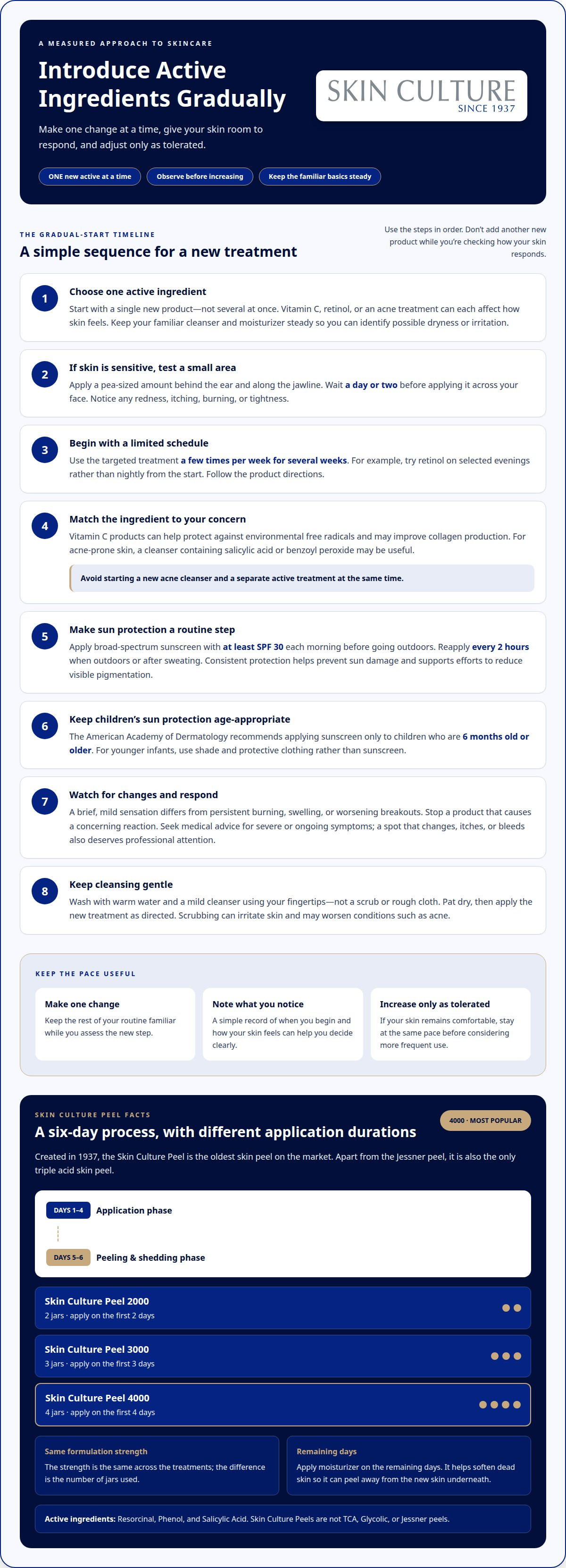
- Start with one new active ingredient, not several at once. A vitamin C serum, retinol cream, or acne treatment can each affect how your skin feels. Introducing products individually helps you identify which may cause dryness or irritation. Keep your familiar cleanser and moisturizer steady while you assess the new step.
- For sensitive skin, test a pea-sized amount behind your ear and along your jawline. Wait a day or two before applying the product across your face. This small-area test gives you a chance to notice redness, itching, burning, or tightness before expanding use.
- Start a targeted treatment with one active ingredient a few times per week for several weeks. Increase application frequency only as your skin tolerates it. For example, introduce retinol on selected evenings rather than using it nightly from the start. Follow the product directions and reduce use if irritation develops.
- Choose an ingredient suited to the concern you want to address. Vitamin C products can help protect skin from environmental free radicals and may improve collagen production. For acne-prone skin, a cleanser containing salicylic acid or benzoyl peroxide may be useful. Avoid starting both a new acne cleanser and a separate active treatment at once.
- Use sunscreen as a routine step when introducing actives. Apply broad-spectrum sunscreen with at least SPF 30 each morning, before going outdoors. Reapply every 2 hours when outdoors or after sweating. Consistent protection helps prevent sun damage and supports efforts to reduce visible pigmentation.
- Keep children’s sun protection age-appropriate. The American Academy of Dermatology recommends applying sunscreen only to children who are 6 months old or older. This age guidance matters when planning a family skincare routine. For younger infants, use shade and protective clothing rather than applying sunscreen.
- Pay attention to changes instead of layering on more products. A brief, mild sensation differs from persistent burning, swelling, or worsening breakouts. Stop using a product that causes a concerning reaction, and seek medical advice for severe or ongoing symptoms. A changing, itching, or bleeding spot also deserves professional attention.
- Keep cleansing gentle as an active ingredient becomes part of your routine. Wash with warm water and a mild cleanser, using your fingertips rather than a scrub or rough cloth. Pat dry, then apply the new treatment as directed. Scrubbing can irritate skin and may worsen conditions such as acne.
A gradual pace also makes it easier to judge whether a change in your skin follows the new treatment or another adjustment. Introduce new skincare products one at a time to help identify potential irritation or dryness. Keep the rest of your routine familiar while you assess how the new step feels, rather than changing your cleanser, moisturizer, and treatment together. A simple note of when you begin and what you notice can help you make a clear decision instead of guessing. If your skin remains comfortable, continue at the same pace before considering more frequent use; there’s no need to rush toward daily application. The goal is a routine you can use consistently without ignoring discomfort.
When starting targeted skincare treatments, begin with 1 active ingredient a few times per week for several weeks and increase use as tolerated. For sensitive skin, dermatologist Shilpi Khetarpal advises testing a pea-sized amount of a new product behind the ear and along the jawline, then waiting a day or two before applying it to the whole face. Treat that waiting period as part of introducing the product, not as a reason to add another new step in the meantime. If the test area becomes uncomfortable, hold off on applying the product more widely. If it feels comfortable, start with the limited schedule and continue to pay attention to how your skin responds. A slower introduction gives you a more useful sense of what your skin accepts and helps you avoid confusing several new changes at once. Keep the approach simple: make one change, observe, and adjust only as your skin tolerates it.
Sleep, stress and diet
- Keep a regular sleep routine and notice how your skin responds. Sleep supports skin health alongside stress management and a well-rounded diet. If your complexion looks more sensitive after disrupted nights, record the change alongside other routine notes. This can help you distinguish a temporary fluctuation from a reaction to a new cleanser or active ingredient.
- Choose a simple stress-management practice you can repeat. A short walk, quiet breathing exercise, or screen-free pause can create a consistent break during a demanding day. Stress can make skin more sensitive and trigger acne breakouts or other skin conditions. Psoriasis and atopic dermatitis can also first appear when someone feels very stressed.
- Notice whether stressful periods coincide with breakouts, itching, or increased sensitivity. Write down the symptom and its timing rather than adding several skincare products at once. For example, if redness appears during a difficult week, keep your routine steady while you observe it. Persistent or unusual symptoms warrant medical advice.
- Build meals around a healthy, well-rounded mix of foods. The 5-a-day guidance offers a practical starting point for including fruit and vegetables. Add produce to meals you already eat, such as berries with breakfast or vegetables with lunch. A varied diet supports overall health, which is one part of a skin-supportive routine.
- Choose variety instead of relying on one “skin food” or vitamin supplement. Include different fruits and vegetables in your meals, and consider how your overall eating pattern feels. Vitamin-rich foods can be part of balanced nutrition, but no single ingredient replaces gentle cleansing, moisturizer, or sun protection in your skincare routine.
- Track your water intake for one week if you want to see whether a change affects your complexion. Keep the rest of your skincare and eating habits steady during that observation. Note visible changes, such as dryness or dullness, without assuming water alone caused them. This short trial helps you observe your routine, but it doesn’t promise a particular result.
- Make morning habits easy to repeat. Pair breakfast with a glass of water and a piece of fruit, then follow your established skincare steps. In the evening, prepare for sleep by setting aside screens and keeping your regular products together. A reliable sequence is easier to maintain than a complicated schedule that changes each day.
- Adjust gently if a habit or product seems to aggravate sensitive skin. Keep a brief record of sleep, stress, meals, and symptoms so patterns are easier to recognize. A consistent skincare routine can work alongside these everyday habits; a considered approach to skincare keeps daily care focused and manageable.
Chemical exfoliation
- Choose an exfoliant for a specific concern, such as rough texture or uneven tone. Chemical exfoliants loosen bonds between surface cells, helping them shed without gritty particles. Alpha hydroxy acids, including glycolic acid, may help brighten skin and reduce pigmentation. People in their 30s or 40s may choose an alpha hydroxy acid cleanser for these goals.
- Match the product format to your routine. A cleanser is rinsed away, while a leave-on liquid or cream stays on facial skin longer. Read the label for the active ingredient, directions, and intended use. Products with similar names may work differently, so don’t assume they have the same strength or application instructions.
- Use the product exactly as directed. Apply it to clean, dry skin if the label instructs, and avoid the eyes, lips, and broken areas. Rinse a cleansing exfoliant completely. Don’t apply extra product because makeup or dead skin remains visible after one use. A careful routine is a useful part of how to get a fresh start for your skin.
- Skip abrasive scrubs while using an acid exfoliant. Grainy particles, cleansing brushes, and rough washcloths add friction that can irritate skin. For example, use clean fingertips to spread a leave-on formula rather than rubbing forcefully. Gentle handling helps avoid combining mechanical abrasion with chemical exfoliation in the same routine.
- Keep other skincare steps familiar on exfoliation days. A mild cleanser and your usual moisturizer provide a simple base. Adding another exfoliant or a new active ingredient can make irritation harder to trace. Avoid applying acids over freshly shaved or visibly irritated skin. If persistent burning, swelling, or marked redness develops, stop use and seek medical advice.
- Watch for signs that a product is too harsh for your skin. Increasing tightness, stinging, redness, or unexpected flaking can signal irritation. Don’t scrub away flakes or add another treatment to counter them. Pause exfoliation and use gentle care while your skin settles. If symptoms continue, seek medical advice instead of restarting the product immediately.
- Protect skin from sun exposure after exfoliation. Apply broad-spectrum sunscreen with SPF 30 or higher each morning, and reapply every 2 hours outdoors or after sweating. Consistent protection helps prevent further sun damage and supports efforts to improve uneven pigmentation. An exfoliant doesn’t replace sunscreen, even if your moisturizer or makeup contains SPF.
- Assess your skin’s comfort and gradual changes rather than expecting immediate peeling. Keep notes on texture, tone, and sensitivity as you follow product directions. If pigmentation persists or a concern worsens, a healthcare professional can help assess its cause. If you’re considering how to get a fresh start for your skin, choosing a tolerable exfoliant matters more than using the strongest formula.
How long does it take for a new skin care routine to show results?
- Give a new routine time to work before judging its effect. Many skincare products take 6 to 12 weeks of regular use to show visible results, especially for acne and anti-aging goals. That timeline is a guide for assessing progress, not a reason to continue a product that causes a concerning reaction.
- Set a start date and keep your routine consistent. Use a calendar to note when you introduce each product, then follow its directions without adding extra applications. If you start a moisturizer on Monday and an acne treatment later, separate those changes. This makes it easier to connect a visible difference with the right step.
- Track the concern you want to improve, not every detail of your complexion. For acne, note how often breakouts occur and where spots appear. For uneven tone, record the areas that concern you. A short weekly note gives you a clearer comparison than checking your reflection repeatedly throughout the day.
- Use consistent lighting for progress photos. Take one image at the beginning, then repeat the same angle and lighting at intervals during the 6 to 12 week period. Keep your expression and distance similar. These simple controls make subtle changes easier to compare and reduce the influence of different lighting or camera settings.
- Change one product at a time as your routine develops. If a cleanser, active ingredient, and moisturizer all change together, you won’t know which step helped or irritated your skin. Keep familiar products steady while assessing a new one. Record dryness, redness, stinging, or increased breakouts alongside visible results.
- Separate early comfort from longer-term goals. A moisturizer can make dry skin feel more comfortable after application, while acne or anti-aging concerns often need regular use over weeks. Don’t treat a temporary sensation as proof that a product has addressed the underlying concern. Judge progress against the goal you recorded at the start.
- Follow product directions rather than increasing frequency to speed up results. Using an active ingredient more often than directed can irritate skin and disrupt your routine. If redness or persistent discomfort develops, stop the new product and seek medical advice if symptoms are severe or continue. A steady, tolerated routine is easier to assess.
- Review your notes after the 6 to 12 week assessment period. Compare your starting photo and written observations, then decide whether the original concern has changed. If your skin is worsening, symptoms persist, or a spot changes, itches, or bleeds, arrange medical advice rather than adding another treatment.
- Once your routine is consistent, choose the next step according to your skin’s response and the concern you want to address. For a structured approach to personal skin care, explore skin care options that fit your routine.
If your skin is worsening, symptoms persist, or you’re unsure whether a product suits your needs, return to the concern you noted at the start and keep your next choice focused. Choose skincare products formulated for your skin type and condition. Consider both when comparing options: a product should suit your skin type as well as address the condition you want to improve. Focusing on that concern can help you avoid changing several parts of your routine at once, which would make it harder to judge what is helping.
For nighttime skincare, a vitamin A-based cream containing tretinoin, retinol, bakuchiol, or adapalene may help build collagen and rehydrate skin. Consider this option in relation to the goal you’re tracking, rather than expecting an immediate visible change. Continue to assess your routine against your observations and the product directions. If you use a self-tanner, remember that it doesn’t remove the need to protect your skin from the sun. Keep that protection in mind when assessing your routine; a change in skin appearance doesn’t replace sun protection.
Skin Culture Home Skin Peel
Skin Culture Home Skin Peel offers a structured at-home peeling option for readers seeking a more intensive step than everyday skincare. Created in 1937, the Skin Culture Peel is the oldest skin peel on the market. Apart from the Jessner peel, it is also the only triple acid skin peel. Its active ingredients are Resorcinal, Phenol, and Salicylic Acid.
The six-day process includes an application phase on days 1-4, followed by peeling and shedding on days 5-6. Skin Peel 2000, Skin Peel 3000, and Skin Peel 4000 use the same formulation strength; the difference is the number of jars applied during the first days. Choose this route when a structured peeling process suits your goals, rather than simply adding another daily active. Contact Skin Culture Home Skin Peel to discuss the options.
Choose a Skin-Care Next Step That Fits
A fresh start doesn’t require changing everything at once. Let your skin’s response guide the next decision: keep the routine that feels comfortable, adjust steps that cause irritation, and seek medical advice for concerns that persist or change. That measured approach is a practical way to decide how to get a fresh start for your skin without chasing every new trend.
If you’re considering a structured at-home peel as a next step, Skin Culture Home Skin Peel offers Skin Peel 4000, Skin Peel 3000, and Skin Peel 2000. Consider whether a dedicated peeling process suits your goals and routine before choosing. Skin care is personal, and the most useful next step is one you can approach thoughtfully.
Contact Skin Culture Home Skin Peel to discuss the options. A clear plan can help you move forward with care and confidence.
Frequently Asked Questions
What does a skin care reset or fresh start for your skin involve?
A reset means reviewing your routine and keeping the steps that support your skin without causing discomfort. Start by noting your main concern, such as dryness or recurring blemishes, then remove unnecessary or irritating steps. A useful reset isn’t a cleanse or a sudden switch to several new products. It’s a way to make your routine easier to assess and maintain.
How can I identify my skin type and common skin concerns?
Cleanse your face, leave it bare, and assess how it looks and feels after 30 minutes. Tightness may suggest dryness; shine across the face may point to oiliness, while shine mainly around the forehead, nose, and chin can indicate combination skin. Note concerns separately, such as redness, clogged pores, or uneven tone. Skin can be sensitive even when it’s oily or dry.
How often should I exfoliate, and which exfoliants are best for different skin types?
There isn’t one exfoliation schedule that suits every skin type or formula. Follow the product directions and consider whether your skin is dry, oily, or sensitive. A leave-on acid and a rinse-off exfoliating cleanser have different instructions, so don’t treat them as interchangeable. If your skin becomes persistently sore or irritated, stop exfoliating rather than increasing use.
What are the risks of over-exfoliating or changing too many products at once?
Over-exfoliating can leave skin irritated, tight, red, or stinging, and scrubbing may aggravate acne. Introducing several new products together also makes it difficult to identify which one caused a reaction. For example, if a new cleanser, serum, and exfoliant all begin on the same day, you won’t know which to pause. Add changes individually, and seek medical advice for severe or persistent symptoms.
Disclaimer
Testimonials are the individual experiences of those who have used our skin peels. Individual results may vary.