


To fix uneven skin tone on your face, build a consistent routine around daily broad-spectrum sunscreen with SPF 30 or higher, targeted brightening care, and gentle exfoliation. How to fix uneven skin tone on your face also depends on recognizing what you’re seeing: darker patches, lingering marks, or an overall lack of uniformity can have different causes. Sun exposure, hormonal changes, aging, and marks left after inflammation can all contribute.
It can be frustrating when discoloration persists, especially when adding more products seems like the obvious solution. A measured routine is a better starting point. This guide explains what uneven tone can look like, what may cause it, and how to layer brightening ingredients, dark-spot treatments, moisturizer, and sunscreen. You’ll also learn how to use exfoliation gently and why steady care matters more than an aggressive approach.
Key Takeaways
- Learn to distinguish scattered dark marks from broader patches or an overall lack of evenness, so you can choose care that fits the concern.
- Find out how brightening ingredients such as vitamin C and niacinamide can fit into a routine without layering too many active products at once.
- Understand how sun exposure, hormonal changes, aging, and marks left after inflammation may contribute to uneven tone.
- Use gentle exfoliation thoughtfully, and follow a clear order for cleansing, serum, moisturizer, and daytime sun protection.
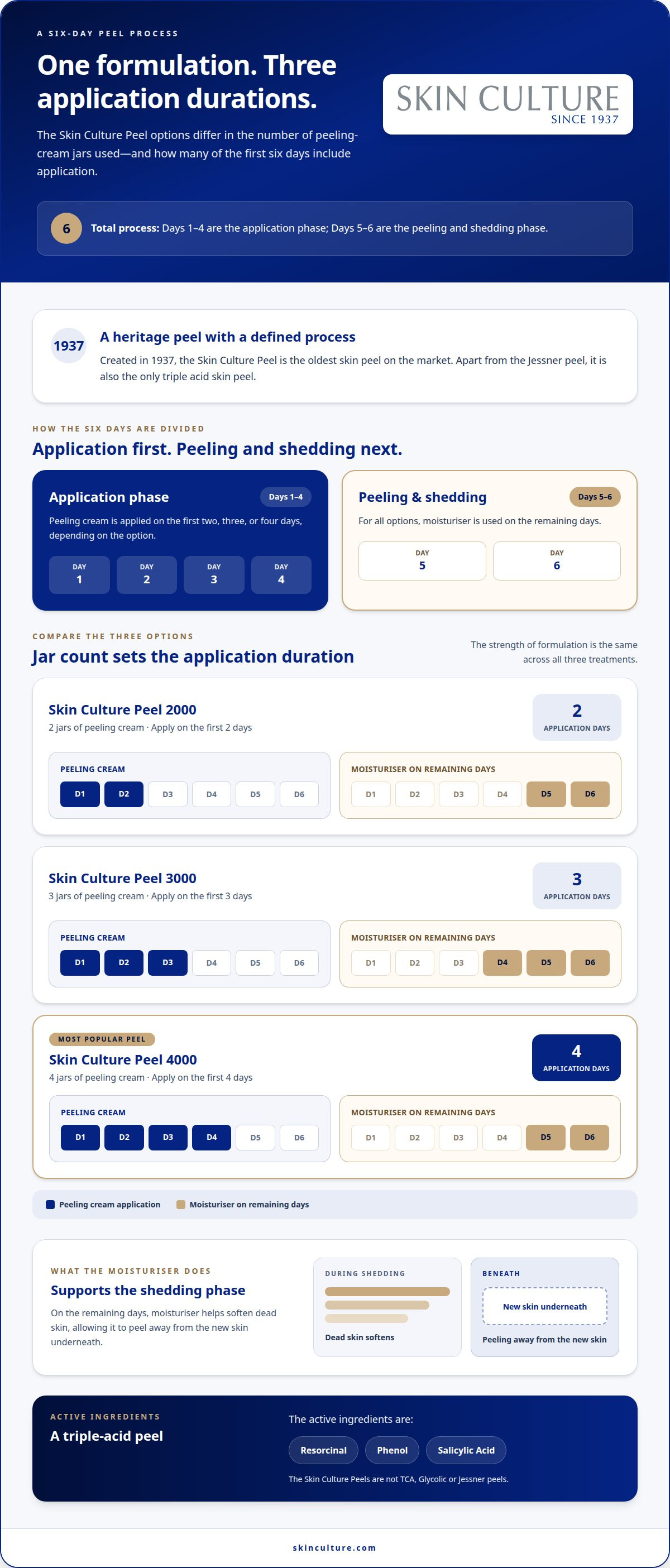
- Explore the Skin Culture Peel’s six-day process and how its three options differ in the number of application days.
What is uneven skin tone?
Uneven skin tone describes visible variation in skin color, such as scattered dark marks, broader patches, or an overall lack of uniformity. A useful daily routine combines cleansing, moisturizer, targeted treatments, and broad-spectrum sunscreen. See a dermatologist if discoloration shows no improvement after consistently following a routine for 8 to 12 weeks. Dermatologists may consider prescription retinoids; retinoids can encourage faster cell turnover, and a specialist can assess whether one suits your skin concern.
- Cleanse gently morning and evening. Wash your face twice a day to remove sweat, oil, makeup, and environmental residue. Use a mild cleanser and lukewarm water, then pat your skin dry instead of rubbing. A gentle start helps keep the surface smooth without adding unnecessary friction. If your skin feels tight after cleansing, review the cleanser before adding more active treatments.
- Apply a moisturizer that supports your skin barrier. Choose a daily moisturizer with hyaluronic acid or glycerin to hydrate skin and support barrier function. In the morning, a moisturizer with broad-spectrum SPF 30 or higher can combine hydration and sun protection in one step. If you use separate products, apply moisturizer before sunscreen so the protective layer goes on last.
- Use broad-spectrum sunscreen every day. Daily sun protection helps prevent further discoloration from UV exposure. Choose SPF 30 or higher, and include sunscreen in your routine year-round, even on overcast days or during colder months. Protective clothing and shade add practical support; limit direct exposure between 10am and 4pm, when UV exposure is strongest.
- Keep exfoliation gentle and measured. Gentle chemical exfoliation can help address discoloration, but over-exfoliating can irritate skin. If you exfoliate, start with a gentle approach and avoid stacking several exfoliating treatments in one routine. Follow product directions and maintain sunscreen use. When using an AHA cleanser, pair it with protective clothing, limit sun exposure during use and for a week afterward.
- Layer treatments in a clear order. A practical morning sequence is gentle cleanser, brightening serum, moisturizer, then SPF. Vitamin C and niacinamide are common brightening ingredients; hyaluronic acid can add hydration. Keep the routine consistent rather than introducing multiple new treatments at once. This makes it easier to notice irritation and identify which step needs adjustment.
A simple sequence makes daily care easier to follow: cleanse gently, use an alcohol-free toner, apply a brightening serum, moisturize, and finish with SPF. Keep the steps in the same order and introduce products gradually. That makes it easier to notice changes in skin comfort and identify what may be causing irritation.
The page recommends cleansing the skin twice a day, in the morning and before bed. The page recommends using sunscreen daily throughout the year, including colder months and overcast days. In a home-in-use test with 120 respondents, 99% reported improved skin clarity and boosted radiance after 2 weeks of regular use of the cleanser. Together, these points provide a consistent foundation for pursuing a more even-looking complexion without assuming every product will work the same for everyone.
Brightening ingredients and dark-spot treatments
Choose ingredients for a specific purpose, then give your routine time to work. Vitamin C and niacinamide are commonly used to address dark spots and support a more even-looking complexion. Hyaluronic acid has a different role: it hydrates skin and supports its barrier, helping your routine feel comfortable as you introduce targeted care.
In the United States, professional treatment costs depend on the treatment selected, the area treated, and the number of sessions needed. A clinician’s assessment of the cause and extent of discoloration also helps shape the treatment plan.
A brightening routine generally needs 8 to 12 weeks of consistent daily use, alongside sunscreen, before a visible difference may appear. Some brightening goals can take longer; achieving 75 percent skin brightening can take up to four months.
- Start with one targeted ingredient. Choose a serum containing vitamin C or niacinamide rather than adding several new active ingredients together. Vitamin C is used in daytime skincare to address dark spots and help prevent future discoloration. Niacinamide is another brightening ingredient to consider. Introduce one product at a time, following its label directions, so you can identify which ingredient your skin tolerates.
- Match each product to its role. A brightening serum targets discoloration, while hyaluronic acid helps hydrate. These ingredients aren’t interchangeable. If a serum already combines brightening ingredients, avoid duplicating the same actives across multiple products without a clear reason. A shorter routine can make application consistent and help you notice irritation sooner.
- Apply products in a practical sequence. After cleansing, apply your brightening serum, then moisturizer. In the morning, finish with broad-spectrum sunscreen. This order places lightweight treatment before moisturizer and keeps sun protection as the final skincare step. Use products as directed, and avoid applying more serum simply because a dark spot remains visible.
- Protect progress from further sun exposure. Daily sunscreen supports dark-spot care by helping prevent additional discoloration. Use broad-spectrum SPF 30 or higher, as discussed in the previous section. Apply it after moisturizer and make it a regular part of your morning routine, even when you’re also using a targeted brightening treatment.
- Assess consistency before changing the plan. Give a routine 8 to 12 weeks of regular use before judging its effect. Note whether marks appear lighter, whether new discoloration develops, and whether products cause irritation. Persistent or changing pigmentation deserves medical assessment, since the cause influences which treatment is appropriate.
Causes of uneven skin tone
Uneven tone can follow sun exposure, inflammation, hormonal changes, aging, or lifestyle factors. More than one cause may affect the same area. Note when marks appear and where they develop. These patterns can help you identify factors that may affect your complexion and guide a suitable routine.
- Notice patterns linked to sun exposure. Ultraviolet exposure can contribute to dark spots and broader patches of discoloration. Americans receive about 23 percent of their sun damage by age 18, and accumulate about 10 percent more with each decade after age 18. These figures underline why sun exposure over time matters. Record whether marks become more noticeable after outdoor time, then keep sunscreen as a consistent part of your routine.
- Consider marks left after inflammation. Post-inflammatory hyperpigmentation can develop after skin inflammation, including acne. A spot may remain darker after a blemish has settled, so the discoloration can outlast the original trigger. Avoid picking at blemishes, which can worsen irritation, and keep cleansing gentle. If new marks repeatedly follow breakouts, address the acne and the discoloration as related concerns.
- Recognize that hormonal changes can affect pigmentation. Melasma is one example of uneven tone associated with hormonal factors. It often appears as patches rather than isolated marks, and its prevalence varies by population. Estimates range from 1.5% to 33% of people. That wide range reflects differences between populations, not a personal prediction. A pattern of persistent patches deserves assessment, particularly when it changes over time.
- Account for aging and accumulated exposure. Skin changes with age, while earlier and ongoing environmental exposure may contribute to visible discoloration. A mark that develops gradually can have different contributing factors from a spot that follows inflammation. Note where it appears, when you first observed it, and whether it changes. This simple record helps distinguish a stable pattern from one needing medical attention.
- Adapt care to your skin type and the likely trigger. A routine should support the skin barrier while addressing the concern. For example, niacinamide is a brightening ingredient used in skincare, while sunscreen helps limit further sun-related discoloration. Avoid adding several strong treatments at once, especially if your skin is sensitive or easily irritated. Identify one change at a time; this helps reveal what your skin tolerates and what may help restore a more even-looking complexion.
Melasma affects many people, but that general context cannot identify the cause of an individual patch or determine the right approach. Note changes in pigmentation’s appearance and location, and discuss persistent or changing patterns with a qualified health professional. A measured approach keeps the focus on possible triggers, skin tolerance, and whether your care plan needs reconsidering.
Gentle exfoliation and product layering
Abrasive scrubs, strong acids, and layering several active treatments can irritate skin. Irritation may contribute to post-inflammatory discoloration, particularly for skin prone to dark marks after inflammation.
- Cleanse before applying treatments. Use a gentle cleanser to lift away oil, makeup, and surface residue without scrubbing. Pat skin dry, then apply leave-on products in a deliberate order. Clean skin gives serums and moisturizers direct contact with the surface, while a soft towel reduces friction. Avoid cleansing brushes if they leave your face feeling tender or tight.
- Choose one exfoliation method at a time. Physical exfoliation uses particles or tools to loosen dead skin through friction. Chemical exfoliation uses ingredients that help shed surface cells without scrubbing. Either approach can irritate skin if used too aggressively. For discoloration, gentle chemical exfoliation is an option, but don’t combine it with a rough scrub in the same routine.
- Keep exfoliation measured and observe your skin. The guidance recommends exfoliating twice weekly to address discoloration. Start gently, follow the product’s directions, and reduce use if you notice persistent redness, stinging, or dryness. Over-exfoliation can damage the skin barrier and provoke irritation. Allow your skin to settle before introducing another exfoliant or brightening treatment.
- Layer products from lightest to richest. After cleansing, apply a brightening serum, such as one containing vitamin C or niacinamide. Follow with moisturizer to support hydration. In the morning, finish with sunscreen to protect skin from further sun-related discoloration. Avoid applying several new active products together; a simple sequence makes it easier to identify what causes irritation.
- Treat chemical peels as exfoliating treatments. Chemical peels remove upper skin layers to reveal fresher-looking skin beneath. They’re not interchangeable with daily cleansers or moisturizers, and their intensity can vary. Don’t layer a peel with another exfoliant in the same routine. Follow the directions for the treatment, keep other steps gentle, and protect freshly treated skin from sun exposure.
- Prioritize a calm, consistent routine. Exfoliation should support a smoother, more radiant appearance, not leave skin raw. Pair a gentle cleanser with moisturizer, and avoid picking at flaking dead skin. If a product causes burning or lasting irritation, stop using it and simplify your routine. Skin that feels comfortable is easier to protect while addressing uneven tone.
What uneven skin tone looks like
Uneven tone can appear as isolated marks, larger patches, or an overall difference in facial color. Before choosing care, compare the location, shape, and texture of the affected areas to understand the visible pattern.
Recognizing visible discoloration
Start by observing your face in natural light. Check whether darker areas are distinct spots, connected patches, or broader changes across the cheeks or forehead. Note any texture differences, such as roughness around a mark. Compare both sides of your face and record changes over time instead of relying on a single mirror check.
- Map the visible pattern. Note where each mark appears, such as the cheek, forehead, or chin. Separate individual spots from patches that cover a wider area. This description helps you explain the appearance clearly during a skin assessment.
- Look at color and texture separately. Discoloration changes skin color, while texture describes its surface. A flat brown mark and a rough, raised area are different observations. Record both features, and avoid treating every change as a pigment concern.
Distinguishing common pigment patterns
Compare where discoloration appears and what may have preceded it. Melasma typically appears as broader, often symmetrical patches, commonly across the cheeks or forehead. Sun spots tend to be distinct marks associated with sun exposure. Post-inflammatory hyperpigmentation appears where inflammation occurred, such as the site of a previous acne blemish.
- Check whether patches form a broader pattern. Melasma commonly affects areas such as both cheeks or the forehead. Note whether the patches look similar on each side, rather than appearing as scattered individual spots. Hormonal changes can be among its contributing factors.
- Look for discrete marks in sun-exposed areas. Sun spots are often separate, defined areas rather than connected patches. Their location and a history of sun exposure can offer useful clues. Record whether the marks cluster on exposed areas of the face.
- Connect marks with earlier inflammation. Post-inflammatory hyperpigmentation can remain after acne or another inflamed spot settles. Check whether discoloration follows the shape or location of an earlier blemish. The timing and location help distinguish this pattern from broader patches.
These visual differences can help you describe the concern and discuss suitable care. For a closer look at options for addressing uneven tone, explore skin brightening care.
Skin Culture Home Skin Peel
Skin Culture Home Skin Peel offers a structured home peel process for people addressing concerns such as uneven tone and sun damage. Created in 1937, the Skin Culture Peel is the oldest skin peel on the market. Apart from the Jessner peel, it is also the only triple acid skin peel. Its active ingredients are Resorcinal, Phenol, and Salicylic Acid.
The six-day process has an application phase on days 1-4, followed by peeling and shedding on days 5-6. Skin Peel 2000 uses two jars over the first two days, Skin Peel 3000 uses three jars over the first three days, and Skin Peel 4000 uses four jars over the first four days. The formulation strength is the same across these options; the number of application days differs. Moisturizer is used on the remaining days to soften dead skin as it sheds. Contact Skin Culture Home Skin Peel to discuss the options.
Make your next step deliberate
A useful plan for how to fix uneven skin tone on your face starts with observation, not another product. Note which areas concern you, how they change over time, and how your skin responds to your current routine. This record can help you make considered adjustments instead of layering treatments without a clear purpose.
Keep your approach steady and protect your skin as you pursue a more even-looking complexion. If you’re considering a structured home peel, choose a next step that fits your concern and comfort with the process. Skin care is personal, and a clear conversation can help you understand the options before deciding what to do.
Start a conversation about your skin peel options. A measured plan can help you move forward with confidence.
Frequently Asked Questions
What causes uneven skin tone on the face?
Uneven tone can develop from sun exposure, hormonal changes, aging, lifestyle factors, or pigmentation left after inflammation. Causes may overlap, so you might have both individual sun spots and marks following acne. Note when discoloration first appeared and whether it follows a breakout or occurs in sun-exposed areas. This context can help you understand how to fix uneven skin tone on your face, though appearance alone can’t establish a diagnosis.
Which ingredients help fade facial hyperpigmentation, and how should they be used?
Vitamin C and niacinamide are brightening ingredients used to address dark spots, while hyaluronic acid helps hydrate skin. For example, introduce a vitamin C serum after cleansing, then apply moisturizer and daytime sunscreen. Add one new product at a time rather than combining several unfamiliar actives. Consistent use matters: a brightening routine may need 8 to 12 weeks before a visible difference appears.
How does sunscreen prevent uneven skin tone, and what SPF should you use?
Daily broad-spectrum sunscreen with SPF 30 or higher helps prevent further discoloration associated with sun exposure. Use it throughout the year, including on overcast days and during colder months. Protective clothing and shade can add another layer of sun protection. Make sunscreen the last step in your morning skincare routine, after moisturizer, so it remains a consistent part of your daily care.
Are chemical peels, lasers, or microneedling effective for facial pigmentation, and what are the risks?
Chemical peels remove upper skin layers, while microneedling stimulates the body’s healing process and collagen production; it may help reduce pigmentation and improve tone. If you’re considering a procedure to fix uneven skin tone on your face, the pigmentation pattern and treatment approach matter. Irritation can contribute to further discoloration, so discuss suitability and potential risks with a dermatologist.
What prescription treatments do dermatologists use for uneven skin tone?
Dermatologists may consider prescription retinoids, which can encourage faster cell turnover. A specialist can assess whether they suit your skin concern.
What skincare ingredients or treatments can worsen pigmentation, especially on darker skin?
Abrasive scrubs, strong acids, over-exfoliation, and layering several active treatments can irritate skin. Irritation may contribute to post-inflammatory discoloration, especially for skin prone to developing dark marks after inflammation.
Disclaimer
Testimonials are the individual experiences of those who have used our skin peels. Individual results may vary.