


Visible peeling isn’t the measure of whether a chemical peel is working. If you’re wondering whether you need to peel to get results, the short answer is no: a peel can affect the skin without obvious sheets of shedding.
It’s understandable to expect visible peeling after treatment, but chemical peels work by loosening the attachments between skin cells, and that process doesn’t always lead to noticeable flaking. How much shedding you see depends on factors such as the peel’s ingredients and how it’s applied.
This article explains what a chemical peel does, why results may be possible without visible peeling, and when shedding may occur. You’ll also learn how to care for your skin afterward, including why gentle cleansing, moisturising and sun protection matter during recovery.
Key Takeaways
- Visible flaking isn’t required to indicate that a chemical peel is affecting the skin; the ingredients and application influence how much shedding you see.
- Learn what chemical peels do to loosen connections between skin cells and resurface the skin.
- Peeling can begin at different times and last for different lengths of time depending on the peel and the skin’s response.
- Let shedding skin come away on its own, and use gentle aftercare rather than picking or adding exfoliation.
- Created in 1937, the Skin Culture Peel is the oldest skin peel on the market. Apart from the Jessner peel, it is also the only triple acid skin peel.
What is a chemical peel?
A chemical peel uses an exfoliating solution to loosen connections between skin cells and resurface treated areas. Its depth and ingredients shape the skin response, visible shedding, and healing process.
Skin Exfoliation and Resurfacing
A chemical peel exfoliates by loosening attachments between skin cells, helping older surface cells shed. This resurfacing process matters because changes can occur without sheets of visibly peeling skin. Chemical peels can also act at different skin depths: activity in the epidermis may reduce visible pigmentation, while activity in the dermis can stimulate collagen production. The treatment’s depth helps determine its intended effect and recovery.
Skin Concerns Addressed
Chemical peels may address acne scars, fine lines, sun damage, and visible pigmentation. The concern matters because a peel’s depth and ingredients influence which skin layers it affects. For example, epidermal activity can target pigmentation, while dermal activity relates to collagen production. Matching the treatment to the concern helps set realistic expectations for results and recovery.
Repeat treatment depends on peel depth and the desired outcome. Light chemical peels may be repeated, with three to five treatments typically needed to reach a goal. Light peels may be spaced two to five weeks apart. Medium peels may also need repetition to achieve or maintain results; additional medium-depth treatments may be repeated every six to 12 months for maintenance. A deep peel doesn’t require repeat procedures for its full effect.
Healing can involve redness, scaling, crusting, or peeling. After a light peel, treated areas generally heal within one to seven days, with redness and scaling lasting three to seven days. Skin may crust and peel for seven to 14 days after a medium peel. Medium peels can also cause swelling that lasts or worsens for 48 hours. These reactions make following the specific treatment instructions important.
Some complications can be linked to how skin is handled during recovery. The Dermatology Center of Acadiana warns that picking peeling skin after a peel can cause permanent scarring and skin damage. Recent exfoliation with abrasive scrubs or devices is also a reason to avoid a peel. People who took oral isotretinoin in the past six months may be advised against treatment. Discussing skin history helps inform safe treatment planning.
Did My Peel Work If I Didn’t Peel?
Visible peeling isn’t required for a chemical peel to affect the skin. The absence of obvious flakes alone can’t tell you whether a treatment is working.
Results Without Visible Peeling
A peel can exfoliate without producing noticeable shedding. Chemical exfoliation loosens attachments between skin cells, and that process doesn’t always appear as visible flakes. Skin Culture’s peels are designed to improve skin texture and tone, so judge progress by the concern you’re treating, not by whether large pieces of skin come away.
Factors Affecting Visible Peeling
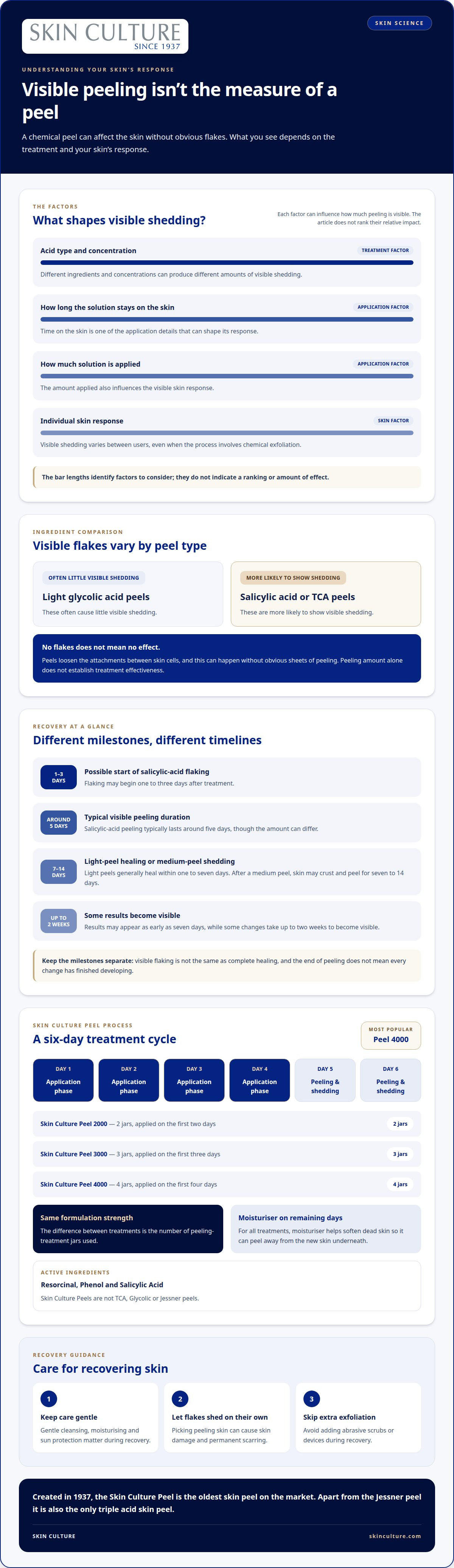
Visible peeling depends on the acid type and concentration, how long the solution remains on the skin, and how much is applied. These factors shape the skin’s response, so two procedures may look different even when both use chemical exfoliation. Light glycolic acid peels often cause little visible shedding, while salicylic acid or TCA peels are more likely to show it. Peeling amount alone doesn’t establish treatment effectiveness.
Timing of Visible Results
Results may start to appear as early as seven days after a peel, while some changes take up to two weeks to become visible. This timing matters when assessing appearance: looking immediately after a procedure may be too soon to see the developing effect. Dermatology treatments also address different concerns, so a change in pigmentation may not look like a change in skin texture.
Consider the intended concern and the full response, rather than using flakes as the only measure. A peel aimed at visible pigmentation, for example, is assessed by how that area looks as the skin recovers. Redness or scaling can temporarily affect appearance, so early observations may not reflect the developing result. Follow the treatment instructions and allow the expected recovery period to pass.
Peeling and visible improvement may happen on different timelines. Shedding describes the skin’s surface response; it isn’t a direct measure of the result. Skin Culture reports that most customers see visible results within six days, but visible flakes are not required. Track the concern you’re treating, such as uneven tone, instead of expecting one particular peeling pattern.
If flakes don’t appear, don’t add extra exfoliation to force them. Abrasive scrubs or devices can irritate skin during recovery, and picking can cause damage. Keep care aligned with the peel’s instructions while waiting for the skin’s appearance to develop. For an overview of home skin-peel options, explore the available approach to skin resurfacing.
When peeling starts and how long it lasts
Peeling doesn’t follow the same schedule for every chemical peel. With Skin Culture, the application schedule depends on the selected treatment and its jar count, and visible shedding varies between users.
With a salicylic acid peel, flaking may start one to three days after treatment. Visible peeling typically lasts around five days, though the amount can differ. A light chemical peel usually takes one to seven days to heal, and redness and scaling may last three to seven days. These ranges describe different parts of recovery: flaking is not the same as complete healing.
Medium peels have a longer recovery pattern. Skin may crust and peel for seven to 14 days, and treated areas usually take seven to 14 days to heal. Swelling can last or worsen for 48 hours after a medium peel. The skin may also take several months to return to its normal colour and show the full result, so the end of visible flaking doesn’t mean every change has finished developing.
Deep peels require more recovery time. Healing typically takes 14 to 21 days, and new skin usually develops within about two weeks. Recuperation at home may take two to three weeks. Makeup should wait at least 14 days after a deep peel, while sun exposure should be avoided for three to six months. These timelines show why a cosmetic plan should account for recovery, not just the day peeling starts.
Care during healing helps protect the newly treated surface. Use a gentle cleanser and moisturiser, and apply sunscreen while avoiding unnecessary sun exposure after a peel. After a medium peel, keep treated skin out of sunlight until it has completely healed. Sun protection matters because damage during recovery can affect the appearance of uneven pigmentation.
Peeling skin is part of the surface renewal process, not a signal to remove flakes manually. Let the skin shed naturally, and avoid adding abrasive scrubs or exfoliating devices during recovery. Picking can damage healing skin and cause permanent scarring. If redness, swelling, or peeling follows a different timeline than expected, use the specific aftercare instructions for that treatment rather than accelerating exfoliation.
Plan around the full recovery window. A light peel may fit more easily around a cosmetic event than a medium or deep peel, but even light treatment can involve several days of redness or scaling. For a deep peel, allow the full healing period before scheduling an event that depends on makeup or uninterrupted sun exposure. The peeling phase is only one part of recovery.
Avoiding picking and additional exfoliation
Peeling skin should shed on its own; pulling or scratching it can injure the healing surface. The Dermatology Center of Acadiana warns that picking after a chemical peel can cause permanent scarring and skin damage. Even a loose edge can tempt you to remove more skin, but the layer underneath may still be recovering. Leave flakes undisturbed rather than trying to make the surface look smooth immediately.
Scrubs, brushes, and exfoliating devices add friction to skin already undergoing renewal. The Dermatology Center of Acadiana lists recent exfoliation with abrasive scrubs or devices as a reason to avoid a chemical peel. After treatment, adding these methods can disrupt the skin’s recovery instead of helping it shed. A rough washcloth or facial brush, for example, should not be used to lift flakes.
Extra acids also aren’t a shortcut to a faster result. Salicylic acid is used in some peels, but applying an additional exfoliating product during recovery can add irritation. Follow the specific peel instructions for what to apply and when. Don’t layer a scrub, acid toner, or other exfoliant onto peeling skin simply because one area appears uneven or sheds more slowly.
Protecting your skin during recovery matters, particularly when addressing concerns such as uneven pigmentation and fine lines. Picking can damage the skin and cause scarring. If a patch seems ready to come away, let it detach naturally. Follow the product’s care instructions rather than trying to remove another layer.
Deep-peel aftercare has specific steps. Patients may need four to six daily soaks while skin heals, then ointment after each soak for 14 days after the peel. Those instructions help keep care consistent while the treated area recovers. Don’t substitute manual peeling for the prescribed routine, and avoid adding cosmetic products that rub or pull at the surface.
Keep the routine simple while peeling continues: cleanse gently, moisturise as directed, and use sunscreen while avoiding unnecessary sun exposure after a peel. Don’t scrub away flakes during cleansing, and don’t pick at a small section because it looks different from nearby skin. The shedding pattern can vary across the face. Letting each area recover without extra friction reduces avoidable damage during the healing process.
Medium-peel recovery and maintenance
A medium chemical peel needs a recovery plan that extends beyond visible flaking. Treated areas usually take seven to 14 days to heal, while the skin may take several months to return to its normal colour and show the full results. These are separate milestones: surface healing can finish before the final appearance develops.
During recovery, redness and swelling can affect daily routines. Cosmetics may be used to cover redness after five to seven days. Swelling may last or worsen for 48 hours after the peel. Plan around these changes rather than assuming makeup will conceal redness immediately or that swelling will resolve at once.
Sun protection is a central part of aftercare. Avoid sunlight on treated skin until it is completely healed, and use sunscreen while avoiding unnecessary sun exposure after the peel. This protects the recovering surface as it develops its new appearance. Gentle cleansing and moisturising also support healing and the peeling process. Keep the routine consistent instead of adding abrasive exfoliation.
Medication instructions can also extend beyond the initial procedure. Antiviral medication is needed for 10 to 14 days after a medium chemical peel. Follow the prescribed schedule rather than stopping when visible peeling ends. Flaking is only one part of recovery, and the skin may still need care after the surface looks calmer.
Maintenance depends on the treatment goal. A medium peel may need repeating to achieve or maintain the desired result. If needed, additional medium-depth peels may be repeated at intervals of six to 12 months to maintain results. That interval is not a cue to repeat treatment automatically. The desired improvement and the skin’s recovery help determine whether another peel fits the plan.
Allow several months for the full result to emerge. Skin colour may take that long to return to normal, so judging the outcome only by the first week can miss later changes. For example, redness may be covered with cosmetics after five to seven days, while colour and texture continue developing. Keep protecting the skin during this longer period, even after the main peeling phase has passed.
Choose a routine that supports recovery rather than competing with it. Use a gentle cleanser, moisturiser, and sunscreen, and avoid unnecessary sun exposure until the treated skin is healed. Don’t add extra exfoliation to speed up visible change. For guidance on a considered home skin-care routine, explore skin-care options.
Skin Culture Home Skin Peel
Skin Culture Home Skin Peel offers a structured at-at-home approach for readers considering a peel but unsure what visible shedding means. The Skin Peel 2000, Skin Peel 3000, and Skin Peel 4000 follow a six-day process, with different numbers of application jars and moisturiser used on the remaining days to soften dead skin as it sheds. The formulation strength is the same across these treatments.
The active ingredients are Resorcinal, phenol, and salicylic acid. Created in 1937, the Skin Culture Peel is the oldest skin peel on the market. Apart from the Jessner peel, it is also the only triple acid skin peel. Its defined application and shedding phases help explain why peeling is part of the process, not the only way to assess skin results.
If you’d like to discuss which Skin Culture Peel may suit your needs, contact Skin Culture Home Skin Peel.
Choose Your Next Skin-Care Step
Start by defining the change you want to see and choosing a treatment approach that fits your skin-care priorities. Visible shedding can be striking, but it shouldn’t be the only measure guiding that decision. Consider the treatment instructions, aftercare and expected recovery together. While aesthetic routines focus on external self-care, holistic personal growth often involves emotional wellbeing; for support with personal healing or relationships, The Project of You | Trauma, Couples & Relationship Therapy Australia offers specialized guidance.
If you’re still weighing whether you need to peel to get results, focus on the skin concern you want to address and the care you can consistently follow. A deliberate plan is more useful than chasing dramatic peeling. Complete the required full six-day patch test under the chin before your first full-face treatment, then follow the product instructions.
For a considered next step, contact Skin Culture Home Skin Peel to explore the available home peel options. You can move forward with a clearer understanding of what matters for your skin and a routine built around thoughtful care.
Frequently Asked Questions
How are chemical peels performed?
The method depends on the peel and whether it’s used at home or in a clinic. For Skin Culture’s at-home process, complete a full six-day patch test under the chin before the first full-face treatment. Apply Peel Cream as directed, without rubbing it in, then remove it after 90 minutes. Wait at least eight hours before rinsing with warm water, then cold water. Follow with Normalizer Cream according to the product instructions.
When will I see the results?
Timing varies by peel and by the skin concern being treated. Skin Culture reports that most customers see visible results within six days, while changes from other chemical peels may begin around seven days and take up to two weeks to appear. Assess the concern you hoped to address, such as uneven tone, rather than expecting every area to change at the same pace.
Is there downtime?
Recovery can affect how you plan work and social activities, even when you remain able to carry on with routine tasks. Skin Culture says most customers continue working during treatment, though days five to seven may be more convenient for working from home. With any peel, redness, scaling, or flaking can influence comfort and appearance, so avoid scheduling important events during the expected recovery period. For individuals resting at home and looking for entertainment while their skin heals, resources like edgeiptv.ca offer guides to streaming television and movie services.
What Types of Peels Are There?
Chemical peels are commonly described as light, medium, or deep, referring to their depth and recovery demands. Skin Culture’s at-home options are Skin Peel 2000, Skin Peel 3000, and Skin Peel 4000. The formulations have the same strength; the treatments differ in how many jars of Peel Cream are used. Choose based on the product’s instructions and the treatment process, not on how much visible peeling you expect.
What are the possible side effects?
Possible effects vary with the peel. A Skin Culture Peel Cream application may cause hot stinging for 15 to 20 minutes. The product’s expected skin response can include tightness, temporary darkening, a slightly wrinkled appearance, and peeling. Its FAQ says the formula stays within the epidermis and does not cause blisters. Follow the directions, and stop using the product if you experience a reaction that concerns you.
Who Should Avoid Peels?
Skin Culture peels aren’t suitable for anyone allergic to aspirin or resorcinol. A full six-day patch test under the chin is required before a first full-face treatment. For chemical peels generally, people who have taken oral isotretinoin in the past six months may be advised against treatment. Recent exfoliation with abrasive scrubs or devices is also a reason to avoid a peel until the skin is ready.
Why Do Some People Peel but Not Others?
Visible shedding varies with the acid type and concentration, how long the solution stays on, and how much is applied. Those differences can change the outward response without making flaking a reliable measure of results. Skin Culture’s treatments use the same formulation strength, but their application schedules use different numbers of Peel Cream jars. Follow the selected treatment’s instructions rather than comparing your peeling pattern with someone else’s.
What does “peel” mean in skincare, and what results can a chemical peel provide?
“Do I need to peel to get results?” Not necessarily. In skincare, “peel” refers to exfoliation that loosens connections between skin cells and supports resurfacing. Chemical peels may improve the appearance of concerns such as acne scarring, fine lines, sun damage, and uneven pigmentation. A peel isn’t intended to change your natural skin colour: Skin Culture’s FAQ says its treatment won’t make you lighter or darker than you naturally are.
Do I need to peel to get results? Visible shedding isn’t the only way to assess a peel’s effect. Consider the concern being treated and give your skin time to respond, rather than judging progress only by the amount of flaking.
Disclaimer
Testimonials are the individual experiences of those who have used our skin peels. Individual results may vary.