


The strongest peel isn't automatically the best starting point. At home skin peels vary in their ingredients and intensity, and a beginner-friendly choice depends on your skin concerns and how much recovery time you can manage.
It’s understandable to want smoother, brighter-looking skin without unnecessary irritation. At-home skin peels vary in formula and strength, so choose one that suits your concern and follow its directions and aftercare carefully. Knowing how options differ can help you make a more informed choice.
This guide explains how common peel types work, what to consider when choosing a beginner-friendly option, and how at-home treatments compare with professional peels. Created in 1937, the Skin Culture Peel is the oldest skin peel on the market. Apart from the Jessner peel, it is also the only triple-acid skin peel.
Key Takeaways
- Choose a peel based on your skin concern, the ingredients, and the level of intensity you can comfortably manage.
- Learn how exfoliating acids and other peel ingredients work, and why their effects depend on the formulation and application.
- Patch test first and follow the product’s directions closely instead of extending application time or frequency.
- Compare home treatments with professional peels by considering treatment intensity, recovery, and the support you need.
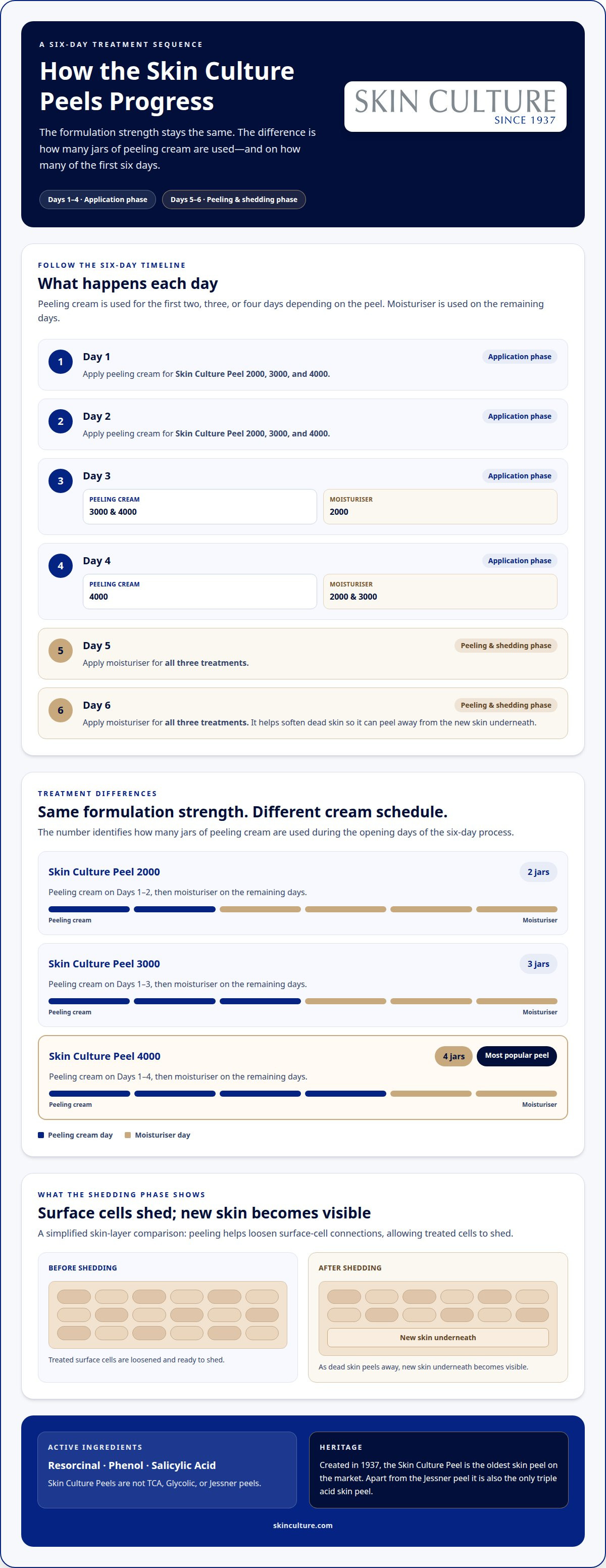
- Skin Culture Peels use the same formulation strength; the 2000, 3000, and 4000 differ in the number of jars applied during the six-day process.
What is the best chemical peel for beginners?
A beginner-friendly chemical peel should match your main concern and have clear directions. Ingredient, formula strength, and expected recovery matter more than choosing the strongest treatment.
Glycolic and Lactic Peels
Glycolic and lactic acids are alpha hydroxy acids (AHAs) that exfoliate the skin’s surface. Glycolic acid is commonly used for uneven texture or dullness; lactic acid may suit someone seeking a gentler introduction. The FDA cites consumer-use AHA products with concentrations of 10% or less as safe. This doesn’t eliminate irritation, so follow the product label.
Mandelic acid is an alpha hydroxy acid, while salicylic acid is oil-soluble and often used in acne products. Azelaic acid appears in formulas for a range of skin concerns. TCA and Jessner’s are different types of peel; vitamin A treatments, including retinoid-based formulas, work differently from acid exfoliants.
| Option | Common focus | Beginner consideration |
|---|---|---|
| Glycolic or lactic acid | Texture and dullness | Check AHA strength and directions |
| Mandelic acid | Surface exfoliation | Choose a clearly labeled formula |
| Salicylic acid | Acne-prone skin | Check the product type and concentration |
| Azelaic acid or vitamin A | Tone or texture concerns | Follow ingredient-specific directions |
| TCA or Jessner’s | Peel treatments | Don’t assume they suit beginners |
Choose based on your skin concern, response, and experience, not the ingredient name alone.
Choosing and Using At-Home Peels
For a first at-home chemical peel, choose a product designed for home use and follow its instructions. Sensitive skin may react more readily, and irritation can contribute to pigment changes in darker skin tones. Skin tone alone does not determine suitability. The FDA reports adverse experiences that include chemical burns, irritation, pigmentary changes, and increased sunburn.
Use particular caution if you have sensitive skin or darker skin, and consider professional guidance before peeling. If severe irritation or a suspected chemical burn occurs, stop using the product, rinse gently, and seek prompt medical care.
Match the ingredient to the concern: texture may point toward an AHA, while acne-prone skin may lead you to consider salicylic acid. Don’t combine exfoliating actives unless the product directions support it. These peel treatment options illustrate how to compare treatments by their stated ingredients and application details.
How do chemical peels work?
A chemical peel uses exfoliating ingredients to loosen connections between surface skin cells, helping them shed so fresher-looking skin becomes more visible. The depth of exfoliation depends on the formula, its concentration, how long it stays on the skin, and your skin type. That’s why at-home skin peels with similar-sounding ingredients can still differ in their effects and potential for irritation.
Alpha hydroxy acids, including glycolic and lactic acid, act mainly at the skin’s surface. Salicylic acid is oil-soluble, so products containing it are often chosen for oily or acne-prone skin. Other products use retinoids, which affect skin-cell turnover through a different mechanism. An ingredient name alone does not reveal how a product will perform: the complete formula and its directions matter.
Dermatologists consider the skin concern, skin type, sensitivity, medical history, and intended peel depth before recommending treatment. Persistent redness or a history of irritation, for example, can affect whether exfoliation is appropriate. A dermatologist can also distinguish surface discoloration from concerns that may need a different approach. These factors show why a professional treatment plan is not interchangeable with choosing a product based on one active ingredient.
At-home chemical peels are formulated for consumer use, while peels performed in a doctor’s office generally use higher ingredient concentrations. A gentler formula may cause little visible peeling; a stronger one may bring more redness, flaking, or sensitivity. These reactions do not reliably indicate effectiveness. Follow the label’s application and removal directions instead of trying to intensify the treatment.
- AHAs: Glycolic and lactic acids exfoliate the skin’s surface.
- BHA: Salicylic acid is oil-soluble and often used in acne-focused formulas.
- Retinoids: Vitamin A derivatives affect cell turnover through a different pathway.
- Combination formulas: Multiple actives can target different concerns, but require careful use.
Think of the process as a sequence: the active ingredients loosen surface-cell bonds, treated cells shed, and new surface cells become visible. The amount of peeling varies by formula and individual response, so visible shedding isn’t required for a product to exfoliate. Consistent, directed use matters more than seeking an intense reaction. For a broader view of ingredient-led skin care, explore this skin-care approach.
Patch testing and product-specific directions
A patch test helps you see how your skin responds before applying a peel to your face. Follow the product’s patch-test instructions, including where to apply it and how long to wait. Watch for discomfort, redness, or swelling. A calm result cannot predict every reaction, but patch testing is an important first step before facial exfoliation.
Read the ingredient list before testing. Lactic acid and glycolic acid are alpha hydroxy acids; salicylic acid is commonly used in acne-focused products. An exfoliating cleanser, leave-on serum, mask, and peel may all contain acids, but their contact time and intended use differ. Do not treat products as interchangeable just because the same ingredient appears on each label. The full formula and directions clarify how each product is meant to be used.
Application time is product-specific. If a peel’s directions limit the first application to 30 seconds, follow that limit rather than extending contact for a stronger effect. Use the stated application method, removal instructions, and frequency. Milder at-home peels can generally be used once a week, but that broad schedule doesn’t replace the directions for a particular formula. Never assume a rinse-off mask follows the schedule of a leave-on product.
- Read the full label, including active ingredients, warnings, and removal directions.
- Patch test a small area and wait a day before facial application.
- Apply only as directed, including any stated first-use time limit.
- Use the specified aftercare, such as gentle cleanser, moisturizer, and sunscreen.
For example, a product labelled “rinse after application” should not be left on like a leave-on exfoliating serum. Combining it with another acid product can also increase irritation. Pause other exfoliating ingredients around the peel unless its instructions explain how to combine them. Follow any stated schedule; do not increase frequency because your complexion has not changed immediately. Using more product or leaving it on longer does not make the routine safer.
Compare price and container size separately, then consider how much product the directions require for each treatment. A larger package is not automatically better value if the formula expires before you finish it or requires more product per use. Look for clearly stated volume, application steps, and intended frequency. These details help you compare facial products without assuming different sizes contain equivalent formulas or provide the same number of applications.
After exfoliation, keep care simple. Use a gentle cleanser, moisturizer, and broad-spectrum sunscreen with SPF 30 or higher. The FDA reports adverse experiences with chemical exfoliating products, including burns, irritation, pigmentary changes, and increased sunburn. Stop using a peel if concerning irritation develops; severe symptoms or a suspected chemical burn need prompt medical attention.
Claims about improving skin tone, lines, acne, and scars
A peel’s likely benefit depends on the skin concern and how deeply the formula exfoliates. Distinguish surface texture, discoloration, active acne, and established scars before weighing a product’s claims.
Peels for Acne and Fine Lines
For acne-prone skin, a salicylic acid product may suit concerns linked to clogged pores, while fine lines involve a different skin change. Do not expect a home peel to treat every cause of acne or erase lines. Compare the ingredient, intended use, and directions. Persistent or painful breakouts call for more than simply increasing exfoliation.
Fine lines and acne marks are different concerns, too. A peel may help refine the look of surface texture, but visible peeling does not prove that deeper lines have changed. A gentle formula used as directed, for example, is not the same as applying a strong peel for longer. Match the treatment claim to your concern, not just the words “anti-aging” on the packaging.
Peels for Uneven Tone and Dark Spots
Uneven skin tone and dark spots are common reasons to consider exfoliating skincare. Lactic acid and glycolic acid are examples of ingredients used for surface exfoliation; a product may help mild uneven tone look more even over time. Results can take several treatments, and dark spots can have different causes. Follow the product directions instead of applying it more often to speed fading.
Sun exposure matters when addressing discoloration. After a peel, broad-spectrum sunscreen with SPF 30 or higher is recommended. Without consistent sun protection, existing spots can remain noticeable or deepen. A practical routine pairs the peel’s stated schedule with daily sunscreen, rather than layering multiple acids or extending contact time.
Peels for Dullness and Scars
A peel can help dull-looking skin by removing some surface cells, which may make the complexion look smoother. That surface effect is different from changing an indented or raised acne scar. A mild peel may address rough texture, for example, but a structural scar is not simply dead skin that exfoliation can remove.
Set expectations by identifying what you see: diffuse dullness, a flat dark mark, or a scar that changes the skin’s contour. These concerns are not interchangeable. A home peel is most relevant to surface texture and mild discoloration; persistent or more pronounced concerns need a different assessment. Follow the labelled directions, and stop if irritation develops.
At-home versus professional peels
The main difference is treatment intensity and oversight. At-home peels generally use lower ingredient concentrations than peels performed in a doctor’s office. This distinction matters when choosing between gradual exfoliation for mild concerns and a treatment that requires individual assessment.
Use a home formula containing glycolic, mandelic, or salicylic acid according to its label. You may need several treatments before smoother texture or faded dark spots become noticeable. A professional can assess your skin type, sensitivity, and concern before selecting an office-based peel. Greater intensity is not automatically better for every complexion.
Start with your specific goal. Mild surface dullness or uneven texture may make a carefully directed home product a reasonable option. Persistent discoloration, pronounced fine lines, or concerns that have not improved with routine skincare may warrant professional assessment. A peel is not a substitute for evaluating a skin condition or its underlying cause.
| Criterion | At-home peel | Professional peel |
|---|---|---|
| Formulation | Generally lower ingredient concentrations | Generally higher ingredient concentrations |
| How it’s selected | Choose by label, ingredients, and directions | Selected after assessment of skin and concern |
| Typical approach | Follow product directions; several treatments may be needed | Professional determines the treatment approach |
| Useful for | Directed exfoliation for suitable surface concerns | Concerns needing individualized evaluation |
Recovery is another factor in your decision. Chemical peels can cause redness, flaking, peeling, or sensitivity, depending on their strength. A deeper office treatment may involve more visible peeling than a lower-strength home product. Plan for the expected recovery and follow the specific aftercare instructions rather than judging treatment by how dramatically your skin sheds.
- Consider home use when the concern is mild, the product is clearly directed, and you can follow its schedule.
- Seek professional assessment for persistent or complex concerns, or when you’re unsure which treatment suits your skin.
- Don’t escalate strength simply because a lower-intensity product hasn’t produced immediate change.
For example, if you want to address mild dullness, compare a clearly labelled acid product with your existing routine. If you have persistent dark spots, consider your skin history and the possibility that irritation could worsen discoloration. The key factors are your concern, the formula, your skin’s response, and your ability to follow the aftercare.
Choose the least intensive approach that fits your concern and experience, and prioritize clear directions over promises of rapid change. A consistent skin care approach can help you make that decision deliberately.
Skin Culture Home Skin Peel
Skin Culture Home Skin Peel offers a structured at-home option for readers considering a dedicated peeling treatment. Skin Peel 2000, Skin Peel 3000, and Skin Peel 4000 use the same formulation strength, with different numbers of peeling-cream jars. Skin Peel 4000 is the most popular peel.
The process lasts six days, with application during days 1-4 and peeling and shedding during days 5-6. Skin Peel 2000 uses two jars on days 1-2, Skin Peel 3000 uses three jars on days 1-3, and Skin Peel 4000 uses four jars on days 1-4. Apply moisturizer on each treatment’s remaining days to soften dead skin as it sheds.
Make Your Next Skin-Care Choice Deliberately
Choosing at-home skin peels is not about pursuing the strongest formula or the most dramatic shedding. It’s about finding an approach that suits your skin concerns and experience, and following its directions and aftercare. Give your skin time to respond, and do not treat irritation as evidence that a peel is working.
If you’re considering Skin Culture Home Skin Peel, the available options are Skin Peel 4000, Skin Peel 3000, and Skin Peel 2000. Review their details with your goals in mind, then decide whether this structured home treatment suits your next step. A measured choice is more useful than rushing into a treatment because of a bold claim.
For a conversation about the options, contact Skin Culture Home Skin Peel. Take your time, prioritize careful use, and choose the path that feels right for your skin.
Frequently Asked Questions
What does aftercare look like post-peel?
Keep post-peel care simple: use gentle cleansing, moisturizer, and sun protection. For Skin Culture peels, apply SPF 30 or higher for at least 30 days after treatment. Avoid adding exfoliating products while your skin is peeling or feels irritated. Let peeling skin shed without picking or pulling it; if loose edges need attention, the product instructions allow gentle trimming with nail scissors.
What are at-home chemical peels and how do they work?
At-home skin peels are topical treatments that use exfoliating ingredients to loosen surface skin cells and help them shed. The formula and its directions determine the treatment’s intensity. An alpha hydroxy acid product, for example, works differently from a salicylic acid formula. Peeling varies between products and users, so visible shedding is not a reliable measure of effectiveness.
What ingredients and strengths are common in at-home skin peels?
Common exfoliating ingredients include glycolic and lactic acids, salicylic acid, and retinoids. Formulas vary in concentration and intended use, so compare the label and directions rather than relying on ingredient names alone. The FDA sets a maximum concentration of 2% salicylic acid for over-the-counter acne drug products in the United States. Skin Culture’s formula uses Resorcinol, Salicylic Acid, and 2% Phenol.
How do at-home peels compare with professional chemical peels?
At-home peels generally use lower ingredient concentrations than peels performed in a doctor’s office. Home products are applied according to their labels, while office treatments can be selected for an individual’s skin and concern. Several home treatments may be needed before smoother texture or faded dark spots become noticeable. A professional assessment can help with persistent concerns or if you are unsure which approach suits your skin.
How do you safely apply an at-home peel step by step?
Read the full label, patch test as directed, then apply and remove the product exactly as instructed. Don’t extend contact time or combine it with other exfoliants unless the directions allow this. Skin Culture requires a six-day patch test under the chin before treatment. During application, use the supplied applicator and leave Peel Cream undisturbed for 90 minutes. Those allergic to aspirin or Resorcinol shouldn’t use it.
How often can you use an at-home chemical peel?
Use a peel only as often as its directions allow; schedules vary by formula and strength. Do not repeat an application within a single treatment course or increase frequency to chase faster results. Skin Culture peels are designed as a six-day course, and deeper concerns are typically treated about once a month. Allow your skin to recover between courses.
What should you do before and after an at-home peel, including sunscreen and skincare products?
Before using a peel, follow its patch-test directions and avoid tanning or sun exposure for about two weeks beforehand. Afterward, keep skincare gentle and use broad-spectrum sunscreen with SPF 30 or higher. Skin Culture specifies SPF 30 or higher for at least 30 days after treatment. Don’t layer acids or retinoids onto freshly treated skin unless the product directions explain how to do so.
How much do at-home skin peel products cost in the United States?
There isn’t one standard cost for every at-home peel; product prices depend on the formula, package size, and what the kit includes. Compare the amount supplied and the treatment directions, not just the upfront price. Skin Culture lists Skin Peel 4000, Skin Peel 3000, and Skin Peel 2000 at different prices, with promotions affecting checkout totals. Review the current product listing for the applicable amount.
Disclaimer
Testimonials are the individual experiences of those who have used our skin peels. Individual results may vary.