


A laser isn't the only route to visible skin renewal. If you’re weighing alternatives to expensive laser treatments for the face, options include chemical peels, microneedling and radiofrequency microneedling. Each addresses different concerns, such as uneven texture, scars or signs of ageing.
Compare more than the treatment itself: consider your skin concern and tone, recovery time, and the change you want. Peels exfoliate the surface to improve texture and tone. Radiofrequency microneedling combines tiny needles with energy to stimulate collagen and address texture and scars. Results and downtime vary, so compare the method with your goal rather than simply choosing the most intensive option.
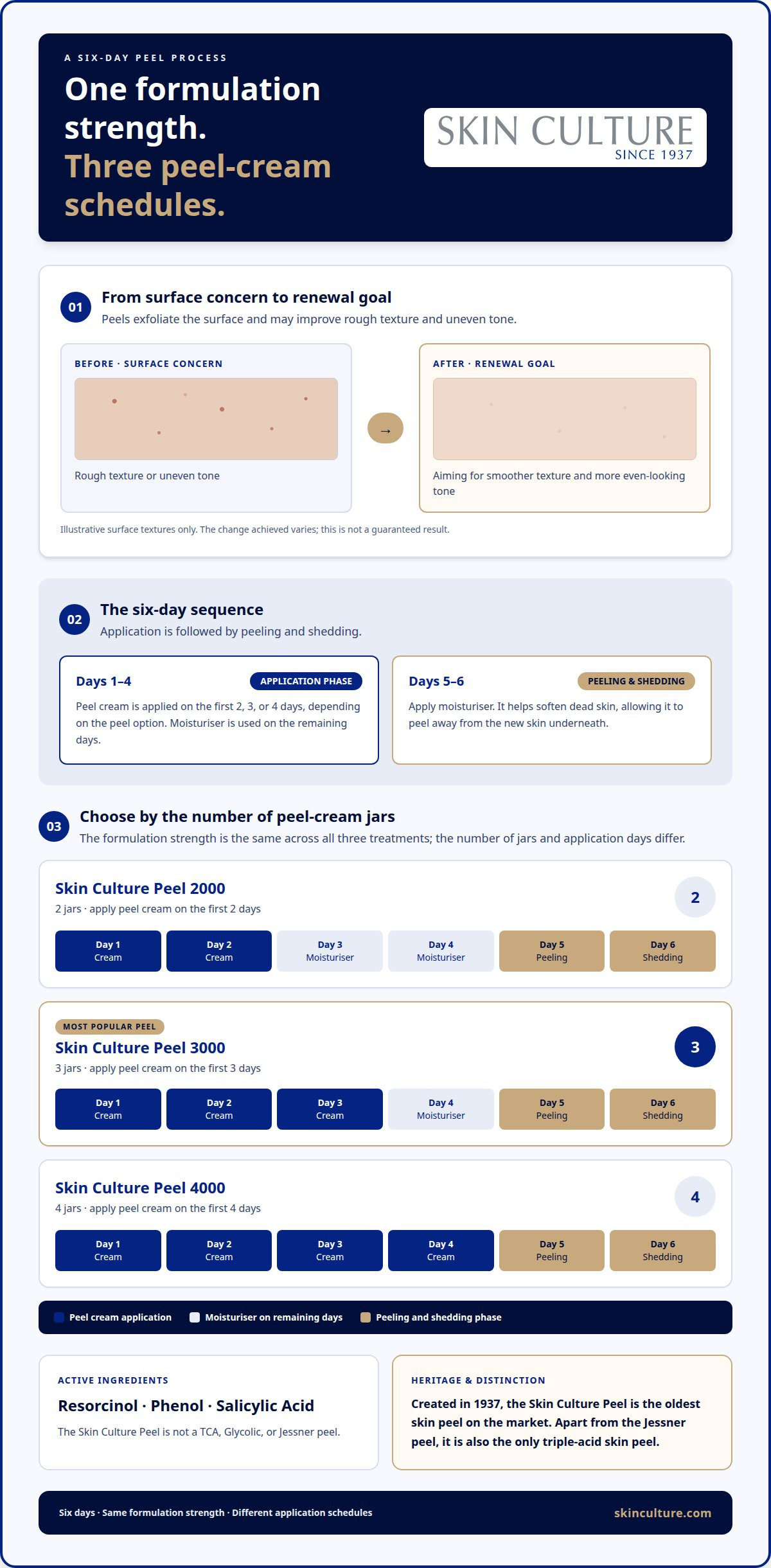
Created in 1937, the Skin Culture Peel is the oldest skin peel on the market. Apart from the Jessner peel, it is also the only triple-acid skin peel. This article compares peels, microneedling, and radiofrequency microneedling by concern, skin tone, recovery, and realistic results, so you can better understand where a peel may fit in your skin-renewal plan.
Key Takeaways
- Match the treatment to your main concern: peels can address roughness and uneven tone, while microneedling approaches texture and scars differently.
- Skin tone matters when weighing resurfacing options, as aggressive laser treatments carry a higher risk of discoloration or scarring for darker skin.
- Compare recovery as carefully as treatment intensity: lighter approaches may involve less downtime, while deeper resurfacing can require a longer recovery.
- Set expectations around gradual change; collagen-related firming can develop over several months, and alternatives may not produce results identical to lasers.
- Consider a peel as an option for improving tone and texture, then weigh its process and recovery against your goals.
Treatment choices for different skin concerns and skin tones
Choose a treatment by matching the skin concern to the depth and type of change it can address. Laser skin resurfacing can target sun damage, uneven texture, wrinkles, and some acne scars. A carbon dioxide (CO2) laser is ablative: it vaporizes outer skin layers, making it a more intensive resurfacing option. Fractionated CO2 treatment targets small sections and leaves nearby skin untouched, which can help the treated area heal faster.
For dark spots, IPL is another option: treated spots may flake off after a few days. Ultrasound and radiofrequency approaches are generally considered for tightening and firming, rather than surface resurfacing. Radiofrequency microneedling uses tiny needles and radiofrequency energy to stimulate collagen and address texture and scars. In short, IPL may suit dark spots, ultrasound or radiofrequency may suit firming goals, and radiofrequency microneedling may target texture and scars.
Skin tone is central to the choice. People with darker skin have a higher risk of discoloration or scarring from aggressive laser treatments, and CO2 treatment requires the most caution across skin tones. That does not make every laser unsuitable, but it makes the specific concern, treatment depth, and skin response important considerations. For example, a surface pigment concern and a deep wrinkle call for different approaches and risk assessments.
Recovery also varies by method. Skin-tightening and firming effects can develop over several months, so radiofrequency or ultrasound approaches are not immediate substitutes for resurfacing. A person seeking smoother acne-scar texture may consider radiofrequency microneedling, while someone focused on sun damage may compare resurfacing options. Active acne may need to be controlled before CO2 resurfacing, because treating scars while breakouts continue can complicate the treatment plan.
Surgery addresses a different level of concern. When advanced skin laxity or structural changes are the main issue, surgery may be considered instead of a surface treatment intended to create a lifting effect. It is not interchangeable with laser resurfacing: resurfacing targets skin texture and visible surface changes, while surgery changes underlying tissue. Someone focused on deep laxity, for example, has a different goal from someone treating sun spots.
Use the concern as the first decision point, then consider skin tone, treatment depth, and recovery. For pigmentation, IPL or a peel may be relevant; for scars and texture, radiofrequency microneedling offers a collagen-stimulating approach. For wrinkles or pronounced sun damage, laser resurfacing can offer deeper treatment, but CO2 needs particular caution across skin tones. The most suitable alternatives to expensive laser treatments for the face depend on whether the priority is pigment, texture, scars, or firmness.
Chemical peels as an alternative first step
Chemical peels exfoliate the skin and may improve rough texture, uneven tone and some pigmentation concerns. Depth and recovery vary, so begin by identifying the skin change you want to address.
Peels for Texture and Pigmentation
A chemical peel removes surface skin cells to encourage cell turnover and improve texture. Exfoliation may help with roughness and uneven tone, while peels intended for pigmentation concerns can lighten dark spots. A treatment for superficial discoloration is not automatically suited to deeper wrinkles or more pronounced texture changes.
When considering sun spots or other pigment concerns, take skin tone and the depth of discoloration into account. A consultation can help determine whether a peel’s intended effect matches your concern, rather than treating all marks as the same problem. Formulation and depth also affect flaking, redness and recovery.
Light and Medium Peel Options
Light peels exfoliate more superficially, while medium-depth peels act more deeply and can cause flaking and redness for a few days. Consider this difference when balancing texture or pigmentation goals with the time you can allow for visible peeling. Your choice should reflect the concern, skin tone and degree of surface renewal sought.
Skin resurfacing treatments may take 30-90 minutes, and topical anesthesia may be used as needed. For pigmentation and sun-spot treatments, one to five days of redness or peeling is listed as typical downtime. These ranges describe treatment and recovery, not the amount of change in wrinkles or pigmentation; depth and treatment area influence what the process involves.
Comparing Peels With Laser Treatments
Peels and lasers both address visible skin changes, but they work differently. A peel exfoliates chemically, while ablative laser resurfacing removes outer skin layers using concentrated light. This distinction matters for wrinkles: a peel may suit surface roughness or uneven tone, while deeper resurfacing targets more substantial changes.
For pigmentation, peels designed for dark spots can lighten discoloration and even skin tone. Laser treatment is another resurfacing approach, but its intensity and recovery depend on the technique and treatment area. A consultation can compare options based on the concern, its depth, skin tone and acceptable downtime, rather than assuming one method suits every face.
For readers in the United States, there is no useful average cost across chemical peels, microneedling and IPL: treatment depth, area, number of sessions and clinical setting all affect the total. Compare the full treatment plan and recovery demands, not just the treatment name. This helps you judge affordability against the outcome and process you need.
Before choosing, identify whether texture, pigmentation or wrinkles are your priority. Then weigh peel depth against expected redness or peeling, including the one-to-five-day window listed for pigmentation treatments. A lighter approach may suit surface concerns; a deeper option involves a different recovery trade-off. Matching the method to the concern is more useful than choosing by intensity alone.
Choosing a treatment based on goals and recovery time
Start with your skin concern, then consider how much downtime fits your schedule. Light peels may involve one to three days before returning to work, while ablative lasers may require one to two weeks. These are work-return estimates, not complete recovery periods. Surface texture treatments have a different recovery profile from deeper resurfacing for pronounced wrinkles or sun damage.
Ablative resurfacing removes outer skin layers, so recovery takes longer than with nonablative treatment. New skin usually covers the treated area in 7 to 10 days, while full recovery after ablative laser resurfacing takes at least a month. Skin may remain inflamed for several months after treatment. Planning around those stages helps distinguish visible healing from the longer recovery process.
Nonablative resurfacing causes less extensive surface injury, but temporary effects can still occur. Skin may swell or change colour for a few hours after nonablative laser resurfacing. Common short-term effects of nonsurgical treatments typically resolve within days. This distinction matters if an event or work commitment leaves little room for visible redness or swelling.
CO2 laser resurfacing needs particular planning because its intensity affects downtime. At the highest setting, skin may remain red or scabbed for a month. Nonfractionated CO2 covers the full skin surface and provides the most dramatic results; ablative resurfacing without a fractional laser usually requires one treatment. The broader treatment area and depth help explain why recovery can be more demanding.
Match the method to the priority. If acne-scar treatment is the goal, mild recovery may last two to five days; deeper resurfacing may require several days of downtime. For redness or rosacea treatments, slight redness is listed for 24 to 48 hours. These examples show why “recovery time” should account for both the concern being treated and the expected visible effects.
Sun protection is part of planning after laser resurfacing: daily sunscreen with an SPF of at least 30 is advised. For a procedure involving ablative treatment, allow for the 7-to-10-day skin coverage period, the month-long minimum for full recovery, and possible inflammation lasting several months. A lighter option may fit a tighter schedule, while a deeper treatment involves a longer commitment and more visible healing.
Before choosing, write down the main concern, acceptable downtime, and any upcoming commitments. For example, someone with a work event in a few days may prioritize a shorter recovery over deeper resurfacing. Someone seeking more substantial correction may need to plan around the longer healing stages associated with ablative CO2. The practical choice balances the desired change against the time available for recovery.
Realistic results and treatment expectations
Set expectations by distinguishing visible surface changes from gradual skin rejuvenation. A cosmetic treatment may improve a specific concern without reproducing every effect of laser skin resurfacing. For example, a peel can target uneven tone, while microneedling focuses on stimulating collagen and improving texture. Alternatives to laser treatments may produce similar results, but not always identical ones. First define your main goal, such as softening acne-scar texture or reducing dark spots, then compare methods against it.
The number of sessions depends on the treatment. Nonablative laser treatment and fractional Er:YAG resurfacing commonly involve 2 to 4 treatments scheduled over weeks or months. Fractional nonablative and fractional ablative laser procedures also commonly require 2 to 4 treatments for noticeable results. This means a single appointment may not represent the full plan. Include the spacing between sessions when considering the time commitment and when improvement may become visible.
Radiofrequency microneedling combines controlled needle channels with radiofrequency energy to stimulate collagen and address scars or texture. Collagen-related firming can develop over several months, so the early appearance may not show the full change. Someone targeting acne-scar texture, for example, should distinguish the intended improvement from immediate post-treatment redness. Smoother texture, firmer-looking skin and lighter pigmentation are different outcomes, not interchangeable measures of success.
Different treatments also produce different visible signs. Dark spots treated with IPL flake off after a few days, while pulsed dye laser treatments address a different range of concerns. For redness or rosacea treatments, slight redness is listed for 24 to 48 hours. These examples help frame what a person may notice soon after treatment, but temporary flaking or redness is not the same as the final skin rejuvenation result.
Maintenance may be part of a longer-term plan. Depending on the approach and treatment goal, skin rejuvenation visits may be scheduled every few months. When comparing options, consider both the initial series and whether follow-up sessions are part of the intended routine. A plan to maintain refreshed tone, for example, differs from a one-time effort to soften a particular scar.
Judge progress against the original concern, not against an imagined flawless finish. For sun damage, track whether discoloration appears more even; for texture, observe whether scars or roughness look softer. Keep the same focus across the treatment series, including the 2 to 4 sessions used in fractional laser approaches. This makes comparisons more meaningful and helps distinguish gradual collagen production from short-term effects such as redness or peeling.
Before selecting a method, list the desired change, expected number of sessions, recovery signs and possible maintenance. Someone prioritising dark spots may compare IPL or a peel; someone focused on scars may consider microneedling or fractional resurfacing. Each option has a distinct mechanism and timeline. A clear goal helps you assess whether the result fits the time and ongoing care involved.
How do chemical peels compare with laser treatments for wrinkles and pigmentation?
Chemical peels and laser resurfacing can both improve visible skin concerns, but they act differently. A peel exfoliates the skin and promotes cell turnover; a laser directs energy into selected areas or removes outer layers. This distinction matters when comparing dark spots with wrinkles. Peels may suit uneven tone and surface roughness, while ablative CO2 resurfacing is used for resurfacing and wrinkle reduction.
For pigmentation, chemical peels designed for dark spots can lighten discoloration and even skin tone. Results depend on matching the peel’s depth to the concern: surface-level uneven tone differs from deeper or persistent discoloration. Someone focused on sun spots may prioritise pigment improvement, while another person may be more concerned with rough texture. These goals call for different comparisons.
Laser treatment also varies by technique. Ablative CO2 lasers vaporize outer skin layers, while fractionated CO2 targets small sections and leaves nearby skin untouched to help healing. Nonfractionated CO2 treats the full surface and can produce more dramatic results. That broader resurfacing approach may be considered for pronounced wrinkles, but its intensity and recovery differ from a peel.
Downtime offers another practical point of comparison. Medium-depth peels can cause flaking and redness for a few days, while pigmentation and sun-spot treatments list one to five days of redness or peeling. Skin resurfacing treatments may take 30-90 minutes. The appointment duration does not indicate how quickly skin will look settled, so consider both treatment time and visible recovery.
A peel may be a reasonable first consideration when your main goal is improving surface texture or uneven pigmentation. Laser resurfacing may be considered for deeper wrinkles or more substantial surface damage. The outcomes are not interchangeable: improving tone does not necessarily change a wrinkle, and treating wrinkles does not automatically resolve dark spots. Start by identifying which visible concern matters most.
Skin tone also belongs in the decision. Aggressive laser treatments carry a higher risk of discoloration or scarring for darker skin, and CO2 treatments require particular caution across skin tones. This does not establish that a peel is suitable for every person; treatment depth, the pigment concern, and the skin’s response still matter. A careful comparison weighs the target area and recovery, not just the method’s name.
For either approach, set a specific goal before judging the result. Compare whether dark spots appear lighter, tone looks more even, or roughness feels smoother, rather than expecting one treatment to address every concern. Peels and lasers may produce related improvements, but results are not always identical. To explore a peel-based approach to skin renewal, view skin peel options.
Skin Culture Home Skin Peel
Skin Culture Home Skin Peel offers an at-home peeling option for readers considering skin renewal without laser resurfacing. Skin Peel 2000, Skin Peel 3000, and Skin Peel 4000 use the same formulation strength; they differ in the number of peeling-cream jars and application days. Skin Peel 2000 uses 2 jars on the first two days, Skin Peel 3000 uses 3 jars on the first three days, and the most popular, Skin Peel 4000, uses 4 jars on the first four days of the six-day process.
On the other days of each treatment, apply moisturiser to soften dead skin so it can peel away from the new skin underneath. The active ingredients are Resorcinol, Phenol and Salicylic Acid. These peels are not TCA, glycolic or Jessner peels, so they offer a different option for people considering a peel rather than laser resurfacing.
Contact Skin Culture Home Skin Peel to discuss whether a peel suits your skin-renewal goals.
Choose a Next Step That Fits Your Skin Goals
The next step is to decide which concern matters most and what kind of treatment process feels manageable. If you’re considering alternatives to expensive laser treatments for the face, a home peel may suit goals focused on skin renewal rather than laser resurfacing. Skin Culture Home Skin Peel offers Skin Peel 4000, Skin Peel 3000, and Skin Peel 2000, giving you options to consider within its peel range.
Keep your priorities specific. Decide whether you want to address uneven tone, rough texture or another visible concern, then weigh it against the treatment process and recovery you can accommodate. A clear goal helps you choose a direction without expecting one approach to address every skin concern.
Contact Skin Culture Home Skin Peel to discuss your skin-renewal goals and explore whether one of its peels may fit. A considered choice is a practical place to begin.
Frequently Asked Questions
How can a chemical peel help improve my skin?
A chemical peel can refresh uneven-looking skin by encouraging surface cells to shed. If discoloration and roughness are your main concerns, for example, a peel designed for pigmentation may be more relevant than a treatment focused on deeper wrinkles. Peel depth affects the process and visible recovery, so consider your priority and tolerance for flaking when comparing options.
Is There a Laser Alternative for Your Skin Needs?
Yes. The alternative depends on your concern: IPL can address dark spots, peels can improve tone and texture, and radiofrequency microneedling can target scars and texture. Ultrasound and radiofrequency approaches may suit firming goals. These methods work differently, so a treatment chosen for pigmentation may not address laxity or acne scars in the same way.
What is skin resurfacing?
Skin resurfacing refers to treatments that improve the visible surface by addressing roughness, uneven tone or wrinkles. A chemical peel exfoliates the skin, while laser resurfacing uses light energy and may remove outer layers. Someone focused on surface discoloration, for instance, can compare a peel with a deeper resurfacing method, considering both the target concern and recovery.
What are the best non-laser alternatives for facial skin rejuvenation?
There is no single best option for every rejuvenation goal. Peels may suit uneven tone or roughness, IPL can address dark spots, and microneedling or radiofrequency microneedling may suit texture and scar concerns. Ultrasound and radiofrequency are options for firming. Identify the change you want most, then compare how each method works toward that outcome.
How effective are microneedling and radiofrequency microneedling compared with facial laser treatments?
Microneedling and laser treatments use different methods, so their results are not directly interchangeable. Radiofrequency microneedling combines needle channels with energy to stimulate collagen and address texture and scars. Fractional laser procedures commonly use a series of treatments for noticeable results. Compare the concern, method and expected course rather than assuming one option will reproduce another’s effects.
Can retinoids, vitamin C, or other skincare products improve concerns treated by lasers?
Skincare products and resurfacing procedures play different roles. A topical routine may support ongoing care, while a peel or laser treatment acts directly on the skin’s surface or targeted areas. Someone addressing uneven tone, for example, can distinguish daily product use from a procedure intended to exfoliate or resurface. Do not assume a serum or cream will provide the same kind of change as a procedure.
What are the risks, side effects, and recovery times of non-laser facial treatments?
Recovery varies by treatment and depth. A medium-depth peel can cause flaking and redness for a few days, while dark spots treated with IPL may flake after a few days. Microneedling treatments can involve short-term effects, and deeper resurfacing may require several days of downtime. Consider visible peeling or redness alongside your schedule: treatment duration alone does not describe recovery.
Are non-laser treatments safe for darker skin tones, and which options have the lowest risk of pigmentation changes?
No non-laser method should be assumed to carry the lowest pigmentation risk for every darker skin tone. Aggressive laser treatments have a higher risk of discoloration or scarring, and CO2 resurfacing requires particular caution across skin tones. For any option, compare treatment depth and the concern being addressed. A peel, IPL, or microneedling approach still needs to be considered on its specific method and intended use.
Disclaimer
Testimonials are the individual experiences of those who have used our skin peels. Individual results may vary.