


Uneven skin texture can have several causes, so there is no single fix. To learn how to smooth uneven skin texture at home, first identify what you’re seeing: roughness, enlarged-looking pores, small bumps, post-acne marks, or fine lines. Then choose a routine that fits the concern, with gentle cleansing, hydration, and sun protection as its foundation.
If your skin feels persistently rough or looks less even than you’d like, it can be tempting to reach for strong exfoliants or layer several active ingredients. That can irritate the skin and make a simple routine harder to manage. This guide explains what skin texture means, explores five common types and their possible causes, and shares practical home-care tips for choosing gentle serums and moisturizers while avoiding harsh ingredients. You’ll also learn why gradual, consistent care is a steadier starting point than aggressive scrubbing or an overloaded routine.
Key Takeaways
- Learn how roughness, bumps, visible pores, post-acne marks, and fine lines can show up as different skin-texture concerns.
- Understand how factors such as sun exposure, hormonal changes, and inflammation may affect the skin’s surface.
- Build a gentler care routine by choosing suitable serums and moisturizers and avoiding overly harsh ingredients.
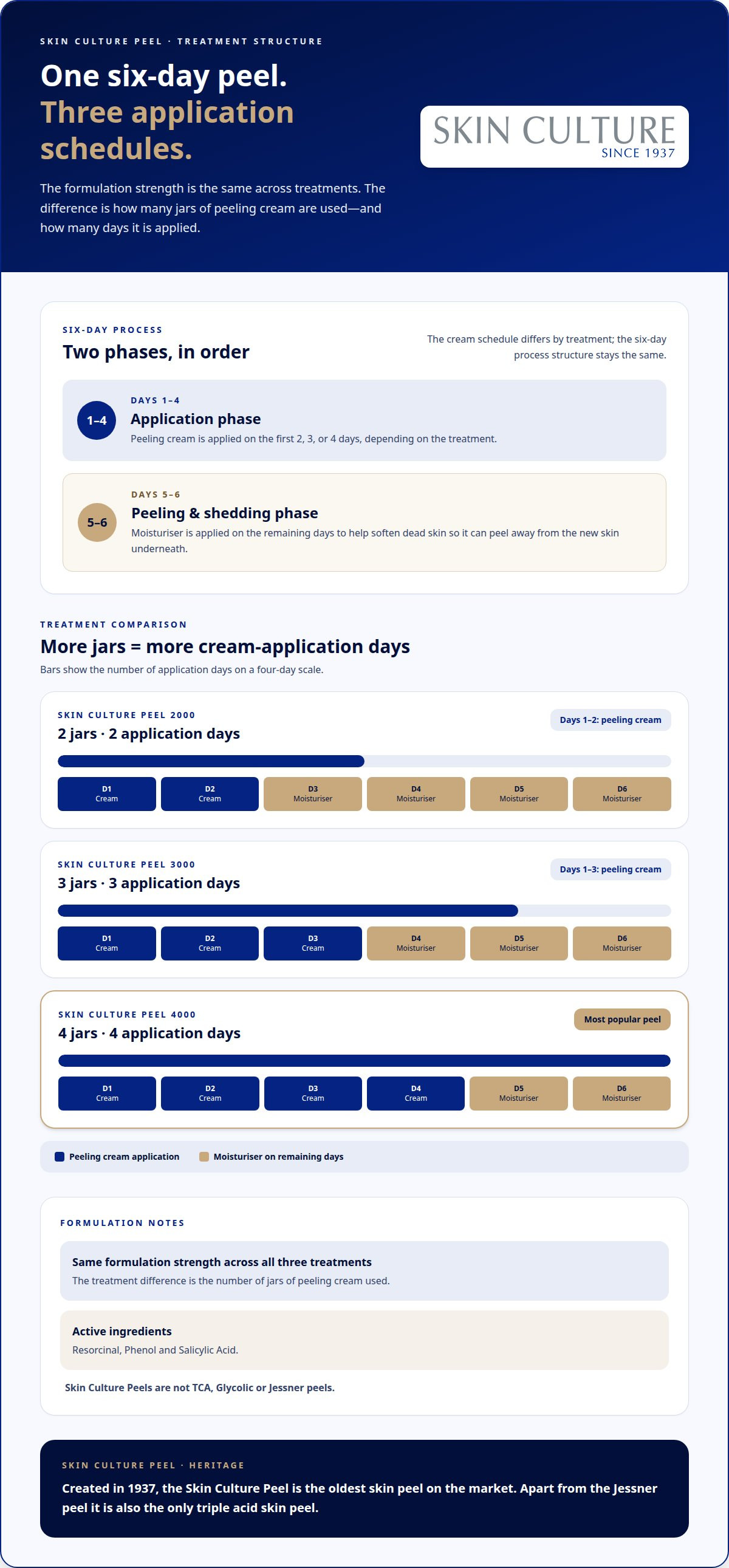
- Created in 1937, the Skin Culture Peel is the oldest skin peel on the market.
- Discover how the Skin Culture Peel’s six-day process is structured, including the application phase and the peeling and shedding phase.
1. What is skin texture?
Skin texture describes how the surface looks and feels. Rough patches, clogged-looking pores, tiny bumps, shallow acne marks, and fine lines can all make it appear less even. Dead skin cells shed naturally, but buildup may leave skin feeling coarse or looking dull. The right approach depends on whether the concern is buildup, congestion, dryness, or lingering marks.
Chemical exfoliants use acids or retinoids to support skin renewal, while physical scrubs rely on particles and friction. A gentle chemical exfoliant can be easier to apply evenly than a gritty scrub. If you use a scrub, keep the pressure light and stop if your skin stings or turns red. Don’t use a scrub and an exfoliating acid in the same routine.
Alpha hydroxy acids (AHAs), such as glycolic acid, work on the skin’s surface. Beta hydroxy acid (BHA), including salicylic acid, can help clear oil and debris from pores. Polyhydroxy acids (PHAs) are another exfoliating option. Retinol is a skincare active that may irritate skin, so introduce it gradually. Introduce it gradually, and avoid layering it with multiple exfoliants at first.
Glycolic acid may suit rough, dull-looking surface texture, while salicylic acid is often chosen for oily or congested areas. Start with one active ingredient and follow its label. Exfoliating 2 to 3 times a week is a commonly suggested routine, but sensitive skin may need less. Don’t increase use simply because results aren’t immediate.
You don’t need to scrub aggressively to remove dead skin cells. Gentle cleansing, moisturizer, and a single exfoliant can form a more comfortable routine. Apply moisturizer after cleansing to help limit dryness, and avoid rough cloths or abrasive tools if your skin feels tender. Consistency matters more than combining several strong ingredients.
Changes tend to develop gradually with regular care, and the timeline depends on the concern and products used. Keep your routine simple and observe whether roughness or bumps ease over time. If irritation develops, pause exfoliating products and use a gentle cleanser and moisturizer until your skin feels comfortable again.
Over-exfoliation can leave skin tight, flaky, stinging, or unusually sensitive. If these signs appear, stop using acids, retinol, and scrubs. Keep to gentle cleansing and a plain moisturizer while your skin recovers. Avoid adding another active treatment in the meantime, as repeated irritation can make the surface feel rougher.
Sunscreen helps protect skin from sun exposure that can worsen uneven tone and visible damage. Choose broad-spectrum SPF 30 or higher each morning, including on days spent mostly indoors near windows. Sun protection is crucial when using exfoliating acids, and outdoor exposure calls for reapplication every few hours, especially after swimming or perspiring.
2. Common causes of uneven skin texture
Uneven texture can result from congestion, inflammation, dryness, or changes in skin tone. Clogged pores, for instance, may feel like small bumps, while acne scars can leave shallow indentations. Notice whether the area feels rough, raised, or uneven in color. These observations help distinguish concerns that can look similar but may need different care.
Sun exposure can contribute to hyperpigmentation and a less even complexion. Hormonal changes may affect oil production, while acne-related inflammation can leave discoloration or scars after blemishes heal. These factors can overlap: you might notice clogged pores alongside dark marks. To decide how to smooth uneven skin texture at home, start by identifying your most noticeable concern rather than treating them all alike.
Dryness can make skin feel tight, flaky, or rough, and look less smooth even without bumps or scars. Consider whether it began after a new cleanser, a change in weather, or frequent exfoliation. If dryness seems to be the main concern, use a gentle cleanser and moisturizer for comfort, and pause products that may be irritating.
Where and when a change appears can offer useful clues. Small bumps on the forehead or cheeks may be consistent with congestion, while rough patches that develop after starting an active ingredient may signal irritation. Marks left after blemishes heal may be discoloration or scarring. These clues don’t diagnose a condition, but they can help you describe what you see and choose an appropriate next step.
Inflammation can affect both skin’s surface and color. Active acne may cause tender bumps; after blemishes heal, darker marks or shallow indentations may remain. Avoid picking at spots, which can aggravate the surrounding skin. Note where changes appear and when they began. That context can help distinguish a recurring pattern from a reaction to a recently introduced product.
Choose a home routine based on the likely cause. For example, adding an exfoliant to already irritated skin may increase discomfort, while focusing on hydration may better suit dryness. Persistent bumps, scars, or roughness may need closer assessment, particularly if the affected area changes or becomes tender.
See a dermatologist if bumps, acne scars, or roughness persist despite gentle care, or if symptoms worsen. Seek prompt assessment if a spot changes rapidly, bleeds, or becomes painful. A dermatologist can assess its appearance and symptoms and recommend an approach for the specific concern. Describing the pattern clearly can make that discussion more useful.
3. Avoiding harsh skincare ingredients
A crowded skincare routine can make it difficult to identify what is causing irritation. Combining an exfoliating acid, retinol, and a scrub, for example, may lead to redness or stinging without making the trigger clear. Keep your routine focused: gentle cleanser, one targeted treatment, moisturizer, and sunscreen. Introduce new ingredients one at a time so you can observe your skin’s response.
Cleanse gently twice a day with lukewarm water and your fingertips, not a rough cloth or cleansing brush. If washing leaves your skin tight or burning, your cleanser or technique may be too aggressive. Choose a formula that leaves skin comfortable, then apply moisturizer. Avoid repeated washing to remove oil, as frequent cleansing can leave skin dry.
Use active ingredients thoughtfully. Glycolic acid, salicylic acid, and retinol serve different skincare purposes, but layering them can overwhelm a beginner routine. Choose one product for your main concern and follow its label. Don’t add another active until your skin tolerates the first without persistent discomfort. Avoid strong exfoliants on skin that is already irritated.
Check the ingredient list before adding a treatment. If a product contains several exfoliating ingredients, don’t pair it with another acid or retinol in the same routine. For example, choose one leave-on exfoliant rather than combining it with a peeling mask and abrasive scrub. This reduces overlap and makes it easier to identify an ingredient that may be causing problems.
For sensitive skin, choose a sunscreen with zinc oxide or titanium dioxide, which are less likely to irritate sensitive skin. Use broad-spectrum SPF 30 or higher to help protect against UVA and UVB rays. Sun protection is especially important when your routine includes exfoliating acids, which can increase sensitivity to sunlight. Reapply sunscreen every few hours outdoors, especially after swimming or perspiring.
If your skin becomes red, flaky, or sore, pause exfoliating products and retinol. Keep your routine simple with gentle cleansing, moisturizer, and sunscreen while the skin settles. Don’t try to counter irritation with another active ingredient or a scrub. Persistent discomfort, swelling, or worsening symptoms calls for medical advice rather than another change to your routine.
Keep a beginner skincare routine consistent before making it more complex. In the morning, cleanse gently, moisturize, and apply sunscreen. In the evening, cleanse and moisturize, adding one targeted treatment only as directed. Note which product you use and any reaction. This helps you identify ingredients that suit your skin and those to avoid.
4. Serums and moisturizers for skin texture
A serum targets a specific concern, while moisturizer supports hydration and comfort. For a simple routine, apply a water-based serum after cleansing, then use moisturizer. Hyaluronic acid attracts water to the skin’s surface, while glycerin helps reduce moisture loss. Ceramides support the skin barrier and may suit skin that feels rough as well as dry or tight.
To smooth uneven skin texture at home, choose products for your main concern instead of buying a long lineup. A basic drugstore routine in the United States can include a gentle cleanser, fragrance-free moisturizer, and broad-spectrum sunscreen. If dehydration is the concern, consider a hyaluronic acid serum. Vitamin C is another option for uneven-looking tone.
Read product labels before combining formulas. A moisturizer with ceramides or glycerin can complement a serum without adding another exfoliating active. If you choose a retinoid or peptide-based cream for nighttime use, start with it as your only targeted treatment. These ingredients are used to support skin renewal and collagen, but combining several active formulas may increase dryness or irritation.
Apply products in a consistent order: cleanse, then pat your skin dry. Spread a small amount of serum over your face, avoiding the eye area unless the label says it can be used there. Follow with moisturizer. In the morning, apply sunscreen as the final step. This order helps you use products correctly and keep hydration in your daily routine.
If cleansing leaves your skin feeling tight, focus on hydration before trying a stronger serum. Apply a moisturizer with glycerin, ceramides, or hyaluronic acid while your skin is slightly damp. If your skin is oily, try a lighter lotion rather than skipping moisturizer. Dryness can make texture more noticeable, so comfort and consistency matter when choosing products.
Introduce one new product at a time and follow its directions. Keep your cleanser and moisturizer familiar, then note any stinging, redness, or flaking after adding a serum. Stop using the new product if irritation persists. This approach helps you identify which ingredients suit your skin and prevents multiple simultaneous changes from obscuring the cause of a reaction.
For a practical approach to smoothing uneven skin texture at home, choose a few compatible products and use them consistently. A mild cleanser, moisturizer with glycerin or ceramides, and sunscreen make a straightforward foundation. Add a serum only for a clear purpose, such as addressing dehydration or uneven pigmentation. Assess your skin’s response before changing the routine again.
5. Common types of skin texture
Texture concerns can look similar in a mirror but feel different to the touch. Noting how each one appears can help you choose a suitable response. Check whether the surface is rough, dotted, raised, indented, or lined, and whether the change affects your whole face or one area. These clues help distinguish five common patterns without treating every concern as the same problem.
Rough or flaky patches feel dry, uneven, or tight, particularly around the cheeks or nose. They may be more noticeable after cleansing or in dry weather. Rather than scrubbing, look for visible flakes and focus on gentle cleansing and moisturizer. If the roughness started after a new product, pause it and see whether the surface settles.
Visible pores and small bumps create a dotted or pebbled appearance, often across the forehead, nose, or chin. Bumps may feel smooth or slightly raised, unlike flakes that lift from the surface. Notice whether they cluster in oily areas. A consistent routine can help you assess the pattern. Avoid squeezing bumps, which can irritate nearby skin.
Post-acne marks and shallow indentations can remain after blemishes heal. A flat brown or red mark changes the skin’s appearance, while an indentation changes its contour. These are distinct concerns, even when both follow acne. Compare the area in natural light and avoid picking active blemishes, which can add to inflammation and further marks.
Fine lines appear as narrow creases, often around the eyes or mouth. They may be more visible when skin looks dry, so check whether moisturizer changes their appearance. Lines differ from rough patches because they follow a crease rather than appearing as scattered flakes or bumps. Gentle care and daily sun protection support a more even-looking surface.
Uneven tone means areas of discoloration rather than a change in how the skin feels. For example, post-blemish pigmentation may look like spots while the skin remains smooth to the touch. Check the area in consistent lighting and note any changes in color or texture. Vitamin C may be an option for tone; introduce one targeted ingredient at a time.
Before choosing a treatment, describe what you see and feel, where it appears, and whether it changes after cleansing or moisturizing. A radiant, glowing appearance isn’t a skin type; it’s an outcome people may seek. Focus instead on the visible pattern, because a strong exfoliant won’t address every mark, line, or dry patch.
Identify your main texture pattern first, then choose gentle care that fits it. For concerns that call for a more structured approach, review the at-home skin care options and consider how they align with your texture goals.
Skin Culture Home Skin Peel
Skin Culture Home Skin Peel offers a structured at-home peeling treatment for readers seeking to address uneven texture, acne marks, fine lines, or sun damage.
The process takes six days: days 1–4 are the application phase, followed by peeling and shedding on days 5–6. Skin Peel 2000, Skin Peel 3000, and Skin Peel 4000 use the same formulation strength; they differ in the number of peeling-cream jars applied during the first days. A moisturizer is used on the remaining days to soften dead skin as it sheds. The active ingredients are Resorcinal, Phenol, and Salicylic Acid.
If you’d like to explore whether this at-home peel approach suits your skin-texture goals, contact Skin Culture Home Skin Peel.
Build a Routine You Can Sustain
Let your skin guide the pace. Keep a simple record of new products, application days, and changes in comfort or appearance. This can help you spot patterns and make deliberate adjustments instead of adding several treatments at once. If a concern persists or changes, use your notes to describe what you’ve observed when speaking with a skin professional.
A considered approach to smoothing uneven skin texture at home means choosing care you can follow consistently and giving each change time to assess. Avoid chasing a glowing complexion with an aggressive routine. Skin can respond differently to the same ingredients, so comfort and steady habits are useful guides as you decide what belongs in your routine.
For a next step tailored to your skin-texture goals, start a conversation with Skin Culture Home Skin Peel. Take it one thoughtful step at a time; a calm, consistent routine is a strong foundation.
Frequently Asked Questions
What is skin texture?
Skin texture is the surface quality you can see or feel, including smoothness, dryness, bumps, or shallow marks. To describe a concern clearly, look at your face in natural light and note whether the change is raised, indented, flaky, or mainly a difference in color. This can help distinguish a surface issue from a change in tone.
What Can You Do About It?
Choose care based on the pattern you notice, then keep your routine consistent. If dryness is the concern, for example, focus on comfortable cleansing and moisturizer rather than adding an exfoliant. If bumps or marks persist, avoid picking and track where they appear. A dermatologist can assess concerns that are painful, worsening, or resistant to gentle home care.
What Lifestyle Changes Can You Make To Promote More Even Skin?
Protect your skin from avoidable irritation and choose daily habits you can sustain. Aim for seven to nine hours of quality sleep each night, and avoid picking blemishes or rubbing your face with rough fabrics. If you exercise, cleanse away sweat afterward without scrubbing. These habits support a consistent skincare routine but don’t replace care for a specific skin condition.
What causes uneven skin texture on the face?
Facial texture can reflect overlapping factors, including acne-related inflammation, sun exposure, dryness, or a reaction to skincare ingredients. For example, burning and flaking after starting a new active product may point to irritation. Note when the change began, where it appears, and which products changed. That timeline is useful when choosing care or discussing symptoms.
How to build a beginner skincare routine for rough or bumpy skin?
Start with a short routine you can follow: cleanse gently, apply moisturizer, and use sunscreen in the morning. At night, cleanse and moisturize again. If you add a targeted product, introduce one at a time and follow its directions. Keep the other steps familiar while observing your skin, so it’s easier to connect any new irritation to its cause.
Are retinoids effective for improving uneven skin texture, and how should beginners use them?
Retinoids can support skin renewal, but beginners should choose a lower-concentration product and follow its label. Use it as directed and avoid adding several new active ingredients at once. If dryness or persistent irritation develops, stop using it and simplify your routine. Retinoids aren’t suitable for every skin concern, so seek medical guidance for persistent or worsening symptoms.
Disclaimer
Testimonials are the individual experiences of those who have used our skin peels. Individual results may vary.