


The most intense stage of your 6-day transformation often looks like a cause for alarm, even when your skin is behaving exactly as it should. You've followed the methodical application phase from Days 1 to 4, but as the shedding begins on Day 5, the sight of deep inflammation can trigger immediate anxiety about permanent scarring. It's natural to feel protective of your complexion during this vulnerable period of resurfacing. Since 1937, we've guided thousands through this precise process, and we understand that distinguishing between healthy cellular turnover and genuine signs of infection after chemical peel is vital for your peace of mind.
Our original formulation, which utilizes a potent blend of Resorcinol, Phenol, and Salicylic Acid rather than standard TCA or Glycolic acids, requires a disciplined approach to recovery. You'll learn how to monitor your skin's reaction to the Peel 4000 or your chosen treatment tier with clinical clarity. This article provides a definitive safety checklist to help you identify when to use your moisturizer to soften dead tissue and when to seek professional advice. We'll outline exactly what to expect during the final 48 hours of your journey so you can reach your goal of radiant, rejuvenated skin without unnecessary fear.
Key Takeaways
- Distinguish between the expected inflammatory response of the Skin Peel 4000 and actual complications to ensure your resurfacing journey remains on track.
- Utilize our rapid-fire checklist to identify the 5 critical signs of infection after chemical peel, separating localized irritation from systemic risks.
- Understand the heightened vulnerability of your epidermis during the Days 5-6 "Shedding Phase" and the specific behaviors that lead to secondary infections.
- Learn the immediate protocol for suspected complications, including the vital steps of ceasing active application and utilizing sterile cleansing techniques.
- Discover why the Skin Culture legacy-built on a precise blend of Resorcinol, Phenol, and Salicylic Acid since 1937-prioritizes safety over aggressive trends.
Normal Recovery vs. Infection: Understanding the Post-Peel Phase
Undergoing a professional grade skin resurfacing treatment requires a clear understanding of the biological changes your skin will experience. Since 1937, Skin Culture has provided the original 6-Day Skin Peel to help individuals achieve clarity and rejuvenation. Because the process involves a controlled inflammatory response, you must distinguish between expected healing and potential chemical peel complications. While redness and swelling are standard indicators that the formula is working, knowing the signs of infection after chemical peel treatments ensures your safety during the transformation.
The Skin Culture formula utilizes a precise blend of Resorcinol, Phenol, and Salicylic Acid. It's different from standard TCA or Glycolic peels. You'll notice your skin tightening as the application phase progresses. This "mask" feeling is a hallmark of the process. It's vital to recognize that your skin must look worse on Day 4 or 5 before the dramatic reveal on Day 6. A feeling of intense tightness is normal; however, persistent, rhythmic throbbing pain is not. This distinction is the primary way to separate a healthy recovery from a secondary issue.
The 6-Day Transformation Cycle: What is Normal?
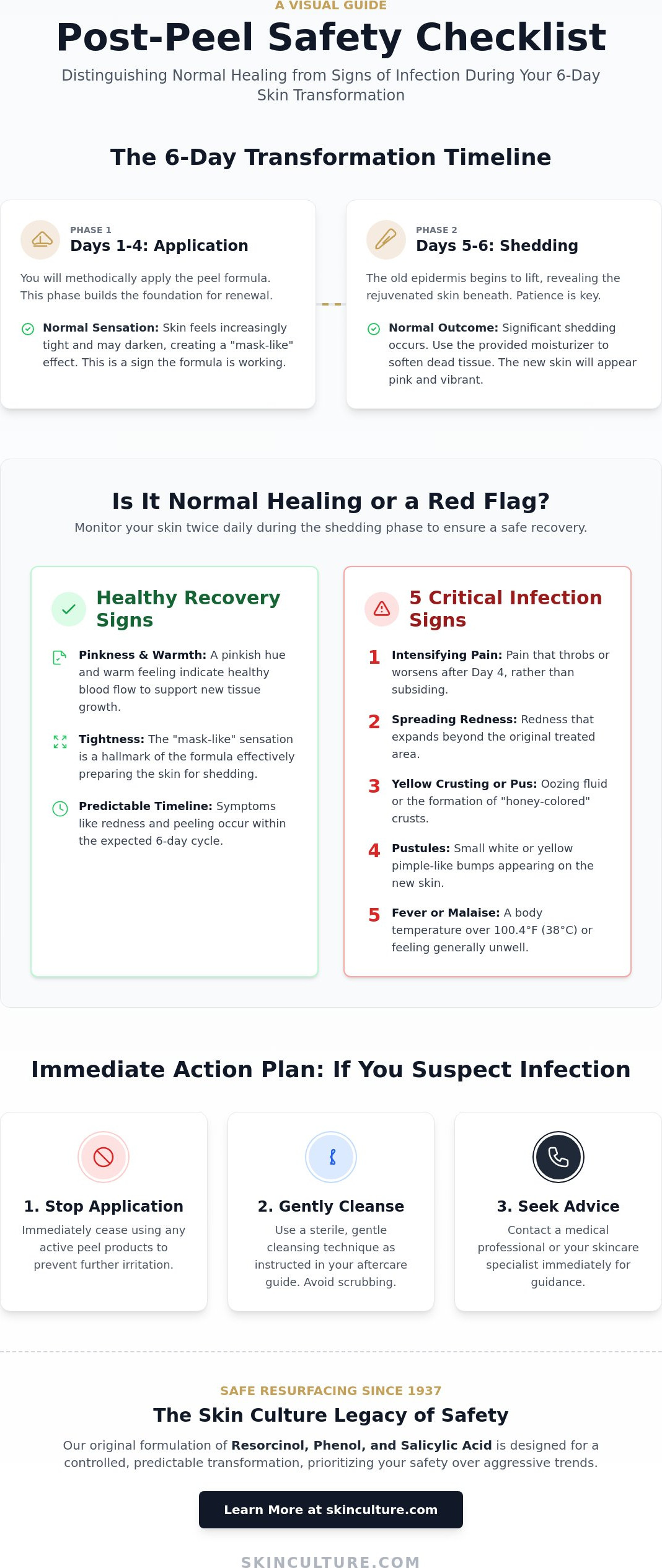
The resurfacing process follows a methodical, sequential timeline. During Days 1-4, you apply the treatment. If you're using the Skin Peel 4000, you'll apply four jars over four days. This is our most popular and intensive treatment. During this application phase, your skin will darken and feel increasingly rigid. By Days 5-6, the old epidermis begins to lift. Heavy shedding isn't a complication; it's the goal. You'll use the supplied moisturizer to soften these dead layers, allowing the new skin to emerge safely.
Why Some Redness is a Sign of Efficacy
The active ingredients, Resorcinol and Phenol, stimulate deep cellular turnover. This process naturally creates a pinkish or reddish hue in the emerging skin. This vibrant color indicates that blood flow is directed to the surface to support new tissue growth. You can refer to the Chemical Peel Before and After guide to see visual benchmarks of this healthy, "new" skin. This pinkness should feel warm but never hot or accompanied by pus, which are key signs of infection after chemical peel procedures. Trust the 80 year heritage of this formulation; the temporary redness is the price of long term radiance.
Checklist: 5 Critical Signs of Infection After a Chemical Peel
Your skin undergoes a structured cellular transformation during the 6-Day Skin Peel. While the application phase from Day 1 to Day 4 involves predictable sensations, you must remain vigilant as your skin begins to shed. True signs of infection after chemical peel typically manifest after this initial period rather than during the first 48 hours. Identifying these signs of infection after chemical peel early allows for prompt professional intervention. Conduct a methodical inspection of the treated area twice daily to ensure your recovery follows the established protocol.
- Pain that intensifies rather than subsiding after Day 4.
- Redness that spreads beyond the original treatment boundaries.
- Yellowish, honey-colored crusting or oozing from the skin.
- Small white or yellow pustules appearing on the treated surface.
- A body temperature exceeding 100.4°F (38°C) or general malaise.
Visual Red Flags: Pus and Expanding Redness
Distinguishing between healthy resurfacing and a developing complication is vital for your safety. During the peeling phase on Days 5 and 6, the epidermis will naturally separate; this is a controlled process. You should look for "honey-colored" crusting, which often indicates a bacterial presence like impetigo. If you notice expanding erythema, which is redness that migrates toward your neck or ears, it's a cause for concern. While our formula containing Resorcinal, Phenol, and Salicylic Acid is designed for deep clarity, any blistering that appears outside the expected peeling pattern requires attention. Understanding the risks of a chemical peel helps you differentiate between standard irritation and a clinical infection that necessitates medical advice.
Sensory Indicators: Heat and Increasing Pain
The "Heat Test" is a reliable method for self-assessment. Place the back of your hand near the treated skin without making direct contact. If the area radiates significant heat compared to your forehead or chest, it may signal localized inflammation. Pain is another primary indicator. You'll feel a stinging sensation during the application of the Skin Peel 4000, but this should diminish as you transition to the moisturizer phase. If discomfort spikes on Day 5, it isn't typical for the normal healing cycle. Systemic signs like swollen lymph nodes in the neck or a sudden fever are clear indicators that the body is fighting a pathogen. We've provided professional-grade resurfacing since 1937, and maintaining a calm, disciplined approach to your post-peel care ensures the best results for your skin health. For those seeking the most comprehensive transformation, our The Original Peel 4000 remains the gold standard for deep rejuvenation.
Common Causes of Post-Peel Complications
Since 1937, Skin Culture has provided a clinical pathway to skin transformation through a formula rooted in dermatological science. Our 6-Day Skin Peel utilizes a precise blend of Resorcinol, Phenol, and Salicylic Acid to trigger cellular renewal. It's important to understand that our treatments, including the flagship Peel 4000, differ significantly from standard TCA peels. While TCA can be unpredictable and carry a higher risk of deep tissue trauma, our original formulation provides a controlled resurfacing experience. Complications rarely stem from the ingredients themselves; instead, they typically arise from environmental factors or a failure to adhere to the strict post-peel protocol.
The most critical window for your skin's safety is the "Shedding Phase," which occurs on Days 5 and 6. During this period, the old epidermis begins to detach as the new, radiant skin emerges. This transitional state leaves the skin temporarily vulnerable to external pathogens. Recognizing the signs of infection after chemical peel is vital during these 48 hours. Whether you're using our Peel 2000, 3000, or 4000, the chemical strength remains identical. Your results depend on the number of jars applied and your discipline in protecting the skin while it heals.
The Danger of Picking and Pulling
You must resist the urge to assist the peeling process. When you manually pull at loose skin, you risk removing layers that aren't ready to detach, creating "raw" spots that serve as entry points for bacteria. Our specialized moisturizer plays a functional role here; it's designed to soften the dead skin so it falls away naturally without tension. Forced peeling is the #1 cause of post-peel scarring.
Environmental Contaminants and Hygiene
Maintaining a sterile environment is paramount during the 6-day transformation. You should avoid touching your face and ensure you sleep on fresh, clean pillowcases every night to prevent bacterial transfer. Common behaviors that lead to signs of infection after chemical peel include:
- Excessive Perspiration: Sweat can trap bacteria under the "peeling mask" before it sheds, leading to irritation or breakouts.
- Unwashed Hands: Touching the face during the application or shedding phase introduces environmental contaminants to the delicate new skin.
- Skipping Protocol: You must follow the Step-by-Step Guide precisely to ensure the skin's barrier is supported throughout the process.
By treating the 6-Day Skin Peel as a serious dermatological procedure, you protect your investment and your health. The Peel 4000 is our most popular treatment because it delivers maximum resurfacing, but its success relies on your commitment to hygiene and patience during the final shedding days.
Immediate Action Plan: What to Do if You Suspect Infection
If you detect signs of infection after chemical peel, you must act with clinical precision to stabilize the epidermis and prevent further cellular distress. Our 6-Day Skin Peel is a controlled resurfacing treatment designed for safety, but any breach in the skin barrier requires immediate attention if abnormal symptoms arise. Follow this sequential protocol to manage the area effectively and protect your results.
- Step 1: Cease application. Stop using the peeling formula immediately. Whether you're on Day 2 or Day 4 of the application phase, don't apply any more of the treatment jars.
- Step 2: Cleanse with sterile water. Gently splash the area with cool, sterile water. You should avoid all soaps, harsh cleansers, or toners, as these chemicals can further irritate the vulnerable skin layers.
- Step 3: Document the site. Take high-resolution photos in clear, natural light. Capture the texture and color changes from multiple angles to provide a factual visual history for professional review.
- Step 4: Monitor systemic health. Check your temperature using a digital thermometer. A fever exceeding 100.4 degrees Fahrenheit often indicates a systemic response that requires urgent medical intervention.
First Aid for Inflamed Skin
Apply cool, damp compresses to the affected area for 10 minute intervals to reduce localized heat and soothe the skin. You must not apply unapproved antibiotic ointments or "healing" creams without specific professional guidance. Many over the counter ointments contain petroleum or fragrances that can trigger contact dermatitis on freshly resurfaced skin. Maintain a clean, dry environment to allow the skin to stabilize. During the shedding phase on Days 5 and 6, our specialized moisturizer is essential for softening dead skin, but pause its use if you see active drainage or pustules.
When to Consult a Dermatologist
The tipping point occurs when normal post-peel discomfort evolves into persistent, throbbing pain or when redness spreads rapidly beyond the treatment area. Our original formulation, containing Resorcinal, Phenol, and Salicylic Acid, has been used safely since 1937 when instructions are followed. However, if you observe yellow crusting, honey-colored scabs, or pus, home care is no longer sufficient. Use the symptom checklist to describe your condition accurately to your healthcare provider. Clarity regarding your specific 6-day timeline and the ingredients used will help them provide the most effective medical care.
Experience the gold standard of skin resurfacing with the Skin Peel 4000, our most popular and effective treatment for a radiant transformation.
Safe Resurfacing: The Skin Culture Legacy of Safety
Since 1937, Skin Culture has provided a reliable path to skin rejuvenation. While modern beauty trends often prioritize speed over safety, we've maintained a formula that has safely transformed millions of complexions over more than 85 years. Our approach relies on a precise, professional-strength blend of Resorcinol, Phenol, and Salicylic Acid. Unlike Glycolic or Jessner peels that can sometimes be unpredictable for home users, this specific combination offers a controlled, deep resurfacing that remains the gold standard for home use.
By following our methodical 6-day process, you significantly reduce the risk of complications. When you follow the instructions precisely, you're unlikely to encounter the common signs of infection after chemical peel, such as spreading inflammation or unusual discharge. The Skin Peel 4000 stands as our most popular treatment because it's been time-tested across generations to deliver a total skin reset with a focus on dermatological integrity.
The Critical Role of the Moisturizer
During the peeling and shedding phase on Days 5 and 6, your skin is at its most vulnerable. The moisturizer included in your kit isn't just for comfort; it's a vital barrier against the environment. This specialized formula protects the new epidermis from bacterial entry while the old layers detach. You should focus on "softening" the dead skin rather than "stripping" it away. Forcing the skin to peel before it's ready can create micro-tears, which are primary entry points for the signs of infection after chemical peel. Using the moisturizer ensures the transition is smooth and secure.
Consistency in Formulation Strengths
We believe in transparency regarding our ingredients. You don't have to guess about "concentrations" because all Skin Culture peels use the exact same professional-strength formula. Safety and efficacy are managed through the duration of the application phase and the quantity of product used. This structured approach allows you to choose the level of resurfacing that matches your needs:
- Peel 2000: Two jars applied over the first two days of the process.
- Peel 3000: Three jars applied over the first three days.
- Peel 4000: Four jars applied over the first four days for the most intensive transformation.
This methodical system removes the guesswork from chemical resurfacing. You apply the treatment during the application phase (Days 1 to 4) and allow the natural shedding process to take over during the final two days. This consistency is why we've remained the industry leader for nearly a century. You can trust in a process that values the biology of your skin above all else.
Start your safe skin transformation with the Original 6-Day Peel.
Secure Your Results With Professional Vigilance
Monitoring for signs of infection after chemical peel procedures is the final step in your journey toward skin clarity. You've learned to distinguish between normal cellular shedding and the clinical indicators that require immediate attention. Since 1937, Skin Culture has prioritized user safety by utilizing a stable formulation of Resorcinol, Phenol, and Salicylic Acid. This original blend avoids the common complications often found in TCA or Glycolic peels. By following our methodical 6-day transformation process, you move safely from the application phase on Days 1 through 4 into the vital shedding phase on Days 5 and 6. Our most popular treatment, the Skin Peel 4000, uses 4 jars of our proven formula to deliver deep resurfacing results that have been trusted for over 8 decades. You don't have to settle for unpredictable beauty trends when you can rely on a clinical legacy of safety. Your path to rejuvenation is clear when you follow a structured, time-tested regimen.
Discover the Original 6-Day Skin Peel 4000 and start your transformation today.
Frequently Asked Questions
Is it normal for my skin to itch during a chemical peel?
Mild itching is a common sensation during the cellular renewal process, especially as you transition from the application phase to the shedding phase. This sensation usually peaks on Day 5 or Day 6 when the dead epidermis begins to lift and detach from the new skin underneath. If itching is accompanied by a 101 degree fever or intense burning, it's no longer a standard part of the 6 day skin transformation.
Can I use Neosporin on an infected chemical peel?
You shouldn't apply Neosporin to a peeling area because it can trap heat and bacteria, potentially worsening the signs of infection after chemical peel. Clinical data indicates that up to 10 percent of the population has a localized allergic reaction to neomycin, which can cause redness that mimics a bacterial issue. Stick to the specialized moisturizer provided in your Skin Culture kit to soften the skin safely.
How do I tell the difference between a cold sore and a peel infection?
Cold sores typically present as localized, tingling clusters of small, fluid filled blisters, while a bacterial infection often manifests as a spreading area of honey colored crusting. If you have a history of the HSV-1 virus, the intense resurfacing process may trigger a breakout in 15 percent of users. Bacterial infections will usually feel hot to the touch and may produce a thick, opaque discharge.
What does an infected chemical peel look like on Day 5?
An infected peel on Day 5 looks angry, excessively swollen, or may show 5mm or larger pustules rather than the clean shedding expected during the final stages. While the Skin Peel 4000 causes significant peeling by this point, the skin revealed should be pink and healthy. If you see greenish drainage or streaks of red extending from the treatment area, these are clinical indicators of a complication.
Will an infection after a peel cause permanent scarring?
Untreated infections can lead to permanent atrophic or hypertrophic scarring in approximately 3 percent of severe cases. However, most superficial infections don't result in lasting marks if you treat them within 24 hours of the first symptoms. Following the methodical application of our Resorcinol and Phenol formula ensures the skin remains protected, provided you don't prematurely pick at the shedding layers.
How can I prevent infection while the skin is shedding?
You prevent infection by maintaining a sterile environment and never pulling at the skin during the 6 day process. Change your pillowcase every 24 hours and avoid touching your face with unwashed hands. Our original formulation, which we've refined since 1937, contains Salicylic Acid and Resorcinol to provide natural antiseptic benefits while the moisturizer keeps the skin barrier flexible and intact.
Is yellow crusting always a sign of infection?
Yellow, oozing crusting is a 95 percent certain sign of a staphylococcal infection and requires immediate professional attention. This is distinct from the dry, brownish appearance the skin takes on during the application phase of the Skin Peel 4000 on Days 1 through 4. If the crust is wet, sticky, or emits a foul odor, it's a clear signal that the healing process has been compromised.
When should I call a doctor after an at-home peel?
You should call a doctor if you experience a fever over 100.4 degrees Fahrenheit or notice significant signs of infection after chemical peel like throbbing pain. While our 6 day skin peel is not a TCA or Jessner solution, it's a powerful dermatological treatment that requires strict adherence to instructions. Seek medical advice if swelling prevents you from fully opening your eyes 48 hours after application.