


Why invest in costly clinical treatments when the most reliable biological skin renewal formula was perfected nearly a century ago? Finding a professional face peel at home that actually delivers results shouldn't feel like a gamble with your safety or your budget. You've likely felt the frustration of persistent acne scarring or deep wrinkles that standard retail products simply won't touch. It's exhausting to navigate a market crowded with weak acids that promise much but deliver very little.
The Skin Culture Home Skin Peel offers a disciplined, expert alternative to fleeting beauty trends. You can achieve deep, professional-grade resurfacing by following our time-tested, 6-day biological renewal protocol. This guide explores how the Skin Culture Home Skin Peel, created in 1937 as the oldest skin peel on the market, uses a unique blend of Resorcinal, Phenol, and Salicylic Acid. Apart from the Jessner peel, it's the only triple acid skin peel available today. We'll detail the specific application phase and the critical shedding phase that defines our 6-day process. You'll also learn why the Skin Peel 4000 remains the most popular choice for those seeking a total complexion transformation. By the end of this article, you'll have a clear, safe path to the smoother, healthier skin you've been searching for.
Key Takeaways
- Differentiate biological skin resurfacing from common TCA or Glycolic treatments to understand how a professional face peel at home safely transforms your complexion.
- Explore the benefits of the Resorcinal, Phenol, and Salicylic Acid blend; established in 1937, this is the only triple acid skin peel other than the Jessner peel.
- Master the disciplined six-day protocol, which consists of a four-day application phase followed by a two-day shedding period.
- Understand how to use moisturizer after the application phase to safely soften dead skin and allow it to peel away from the new skin.
- Compare the 2000, 3000, and 4000 systems, including our most popular 4000 kit, to see how jar quantity dictates treatment duration while formula strength remains identical.
What is a Face Peel? Understanding the Science of Skin Resurfacing
A professional face peel at home is much more than a simple exfoliating scrub; it's a controlled biological renewal process designed to resurface the skin's texture. While many people ask, what is a chemical peel, the answer lies in the science of cellular turnover. Unlike superficial retail products that only buff the surface, a professional-grade system penetrates deeper to remove layers of damaged, dead tissue. This process triggers the body's natural healing response, replacing old, scarred, or sun-damaged cells with fresh, healthy skin. This transition requires a period of shedding, which is a necessary and healthy phase of deep skin renewal.
Common Skin Concerns Addressed by Peeling
Individuals often turn to these treatments when daily skincare fails to provide visible results. A deep resurfacing protocol is specifically engineered to address persistent concerns that reside beneath the surface. By removing damaged outer layers, the peel helps fade the appearance of deep blemishes and textural irregularities. It's equally effective at softening fine lines and age-related wrinkles through consistent biological exfoliation. For those struggling with hyperpigmentation or sun damage, the process corrects uneven skin tone by revealing the unblemished, vibrant skin underneath.
The Biology of the Peeling Process
The mechanism behind a professional face peel at home involves breaking the microscopic bonds that hold dead skin cells together. Our unique triple-acid formula, which includes Resorcinal, Phenol, and Salicylic Acid, facilitates this process safely. Since 1937, Skin Culture has relied on this specific combination to stimulate cellular turnover. It's vital to understand that our peels are not TCA, Glycolic, or Jessner peels. Apart from the Jessner peel, this remains the only triple acid skin peel on the market. We've maintained this formula for nearly a century because of its proven efficacy in biological renewal.
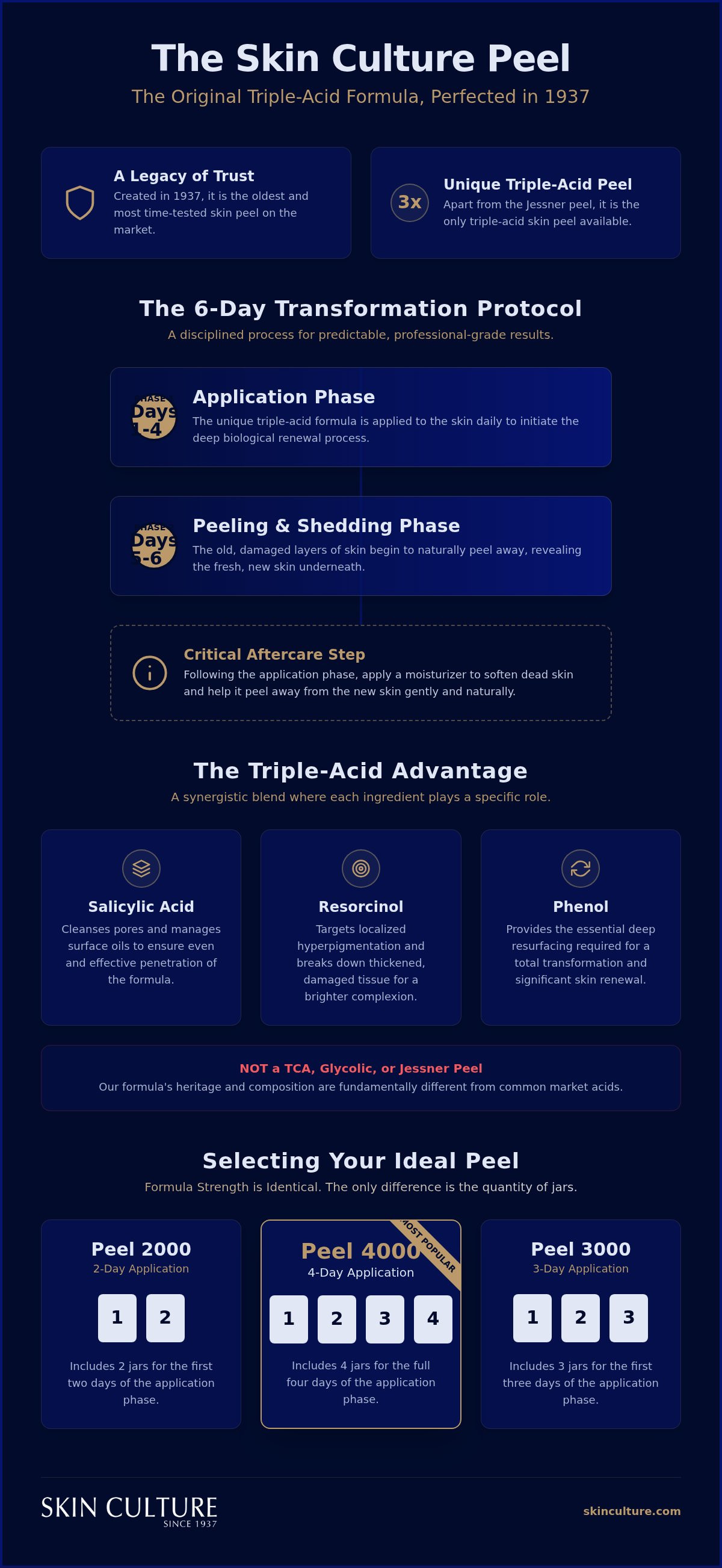
The process follows a strict six-day timeline to ensure optimal safety and results. Days one through four represent the application phase, where the formula is applied to initiate the renewal. During days five and six, the skin enters the peeling and shedding phase. On the remaining days following the application phase, a moisturizer is applied to soften dead skin, allowing it to peel away naturally from the new skin underneath. While we offer different kits, the Skin Peel 4000 is the most popular peel in our line. The strength of the formulation is identical across all treatments; the only difference is the quantity of jars provided for the application days. This methodical sequence ensures that your transformation is both visible and secure.
The Triple-Acid Advantage: Why Formula Composition Matters
Achieving a professional face peel at home requires a formulation that prioritizes chemical balance over raw intensity. While the modern market is saturated with single-acid products, our laboratory has utilized a proprietary synergistic blend since 1937. This historical formula represents the oldest skin peel on the market. Scientific research into the science of skin resurfacing demonstrates that how chemical agents interact determines the overall safety and success of the treatment. Apart from the Jessner peel, this remains the only triple acid skin peel available to the public.
Resorcinal, Phenol, and Salicylic Acid: The Roles They Play
Each ingredient in our 1937 formula performs a specific biological function within the six-day renewal process. Salicylic Acid serves as the initial agent, deeply cleansing pores and managing surface oils to ensure even penetration. Resorcinal follows by targeting localized hyperpigmentation and breaking down the thickened, damaged tissue that creates a dull appearance. Finally, Phenol provides the essential deep resurfacing required for a total complexion transformation. These components work as a unified system, ensuring that the skin is renewed thoroughly without the unpredictability of unblended acids.
Why We Avoid TCA and Glycolic Acids
Our decision to exclude TCA and Glycolic acids is rooted in a heritage of pharmacist-led development that values precision. You can explore the Skin Culture story to understand how our clinical foundation was built. Unlike generic single-acid peels that can often be aggressive or uneven, our synergistic blend is designed for a controlled, sequential shedding of dead cells. It's vital to state that Skin Culture peels are not TCA, Glycolic, or Jessner peels. We provide a specialized path to health that focuses on the long-term integrity of the dermal layers.
Whether you select the 2000, 3000, or our most popular Skin Peel 4000, the strength of the formula remains identical. The distinction lies solely in the quantity of jars provided for the application phase. The Peel 4000 includes four jars for the first four days, providing the most comprehensive coverage for the application phase. Following this period, you'll enter the peeling and shedding phase on days five and six. During the remaining days, applying a moisturizer is necessary to soften the dead skin, allowing it to lift away naturally from the fresh skin underneath. To begin your journey toward a renewed complexion, you can browse our full range of peeling systems.
Face Peel at Home vs. Clinical Treatments: A Comparative Analysis
Choosing between a clinic and a home treatment often comes down to balancing professional results with personal control. Clinical med-spa appointments frequently involve high costs and the inconvenience of traveling while your skin is in a sensitive, visible state of recovery. By opting for a professional face peel at home, you maintain complete authority over your environment. This is especially beneficial during the shedding phase on days five and six. Since 1937, our formula has provided a reliable alternative for those who seek serious transformation without clinical prices. It's the oldest skin peel on the market, offering a level of heritage and reliability that modern, fleeting beauty trends cannot match.
We acknowledge the importance of safety when performing intensive resurfacing. The FDA safety warning on chemical peels highlights the risks of using unverified products without a structured protocol. Skin Culture addresses these concerns through a methodical, pre-measured system. Our triple-acid blend of Resorcinal, Phenol, and Salicylic Acid is the only one of its kind besides the Jessner peel. Because the active ingredients are already balanced in specific jars, you avoid the dangers of mixing individual acids or using unregulated concentrations. It's important to clarify that our peels are not TCA, Glycolic, or Jessner peels; they're proprietary synergistic blends designed for safe, predictable renewal.
Safety Protocols for Home Application
Precision is the hallmark of our process. Unlike retail exfoliants, our professional face peel at home follows a strict six-day biological timeline. You'll complete the application phase during days one through four. On the remaining days following the application, you'll apply a moisturizer to soften dead skin, allowing it to peel away from the new skin underneath. This guided approach ensures you never feel uncertain about the next step in your recovery. By providing a structured regimen, we allow you to achieve clinical results at your own pace in a secure, controlled setting.
Cost and Convenience Factors
The financial benefit of home resurfacing is significant. A single Skin Peel 4000 kit, our most popular offering, provides deep results that would typically require multiple clinical sessions. You can review the full breakdown in our Chemical Peel Price Guide. Beyond the price, the convenience of shedding in the privacy of your own home is invaluable. You won't have to worry about public appearances or clinical scheduling. Whether you use the Peel 2000, 3000, or 4000, the formulation strength remains identical; the only difference is the quantity of jars provided for the application phase. This ensures every user receives the same professional-grade efficacy regardless of the kit they select.
The 6-Day Transformation: What to Expect During the Peeling Process
The Skin Culture protocol is defined by a strict six-day sequence that prioritizes both safety and efficacy. This biological renewal process has remained unchanged since our founding in 1937, establishing it as the oldest skin peel on the market. When you perform a professional face peel at home, adhering to this precise timeline is essential for achieving the smoother skin texture you desire. Our unique triple-acid blend of Resorcinal, Phenol, and Salicylic Acid works methodically to resurface the complexion. It's important to clarify that Skin Culture peels are not TCA, Glycolic, or Jessner peels. Apart from the Jessner peel, this remains the only triple acid skin peel available.
The Application Phase (Days 1 to 4)
The first 96 hours are designated as the application phase. During this period, you apply the formula daily to build the treatment depth required for deep resurfacing. The Skin Peel 4000, our most popular kit, includes 4 jars for the first four days of the process. If you use the Skin Culture Peel 2000, it includes 2 jars for the first two days, while the Skin Culture Peel 3000 includes 3 jars for the first three days.
Regardless of the kit selected, the formulation strength is identical across all treatments. The skin begins to prepare for renewal as the active ingredients penetrate the damaged layers. You'll likely notice your skin becoming tighter, drier, or darker during these initial 96 hours. These are expected signs that the dead cells are readying to shed, paving the way for a fresh complexion.
The Peeling and Shedding Phase (Days 5 to 6)
Visible transformation becomes apparent during the peeling and shedding phase on days five and six. This is the stage where the old, damaged tissue begins to lift. You can consult our Before and After guides to understand what actual shedding looks like for various skin concerns. It's imperative that you never pick, pull, or scratch at the peeling skin.
On the remaining days following application, a moisturizer is applied to soften dead skin and allow it to peel away from the new skin underneath. Forcing the tissue to shed prematurely can lead to irritation or scarring of the vulnerable new skin. This structured aftercare ensures the biological renewal process concludes safely. By following this methodical path, you ensure your results are consistent with the professional standards we've maintained for nearly a century. If you're ready to reveal a clearer complexion, view our professional peeling systems to choose the kit that fits your needs.
Selecting Your Ideal Strength: The Skin Culture Peeling Systems
Choosing a professional face peel at home often feels overwhelming due to the sheer volume of conflicting information in the skincare market. Many brands offer a confusing array of acid percentages, suggesting that a higher concentration is always superior. We take a different, more disciplined approach rooted in our 1937 heritage. It's essential to understand that the formulation strength of our Resorcinal, Phenol, and Salicylic Acid blend is identical across all our treatments. We don't vary the chemical concentration; instead, we vary the duration of the application phase to match the depth of renewal your skin requires. Apart from the Jessner peel, this remains the only triple acid skin peel available, providing a unique synergistic effect that single-acid peels cannot replicate.
Comparing the 2000, 3000, and 4000 Kits
The primary difference between our systems lies in the quantity of jars provided and the number of days you'll spend in the application phase. Each kit follows our strict six-day biological renewal timeline, but the intensity of the initial phase differs:
- Skin Culture Peel 2000: This system includes 2 jars for the first two days of the application phase. It's designed for those seeking a moderate refresh of their complexion.
- Skin Culture Peel 3000: This kit provides 3 jars for the first three days of application, offering a deeper level of resurfacing for more persistent concerns.
- Skin Peel 4000: As the most popular peel in our product line, this system includes 4 jars for the first four days of the process. It's the gold standard for individuals desiring the most significant transformation.
Regardless of which kit you select, the peeling and shedding phase always occurs on days five and six. On the remaining days following your specific application window, you'll apply a moisturizer to soften the dead skin. This critical step allows the old tissue to peel away safely from the vibrant new skin underneath without the need for picking or pulling.
How to Choose the Right Kit for Your Skin
Selecting your kit depends on the severity of the concerns you wish to address. If you're dealing with deep acne scars, advanced sun damage, or significant wrinkles, the Skin Peel 4000 is typically the most effective choice. First-time users frequently opt for this system because they want a total skin reset that addresses multiple layers of damage simultaneously. For those with lighter texture issues or minor blemishes, the 2000 or 3000 systems provide excellent results. It's helpful to remember that our peels are not TCA, Glycolic, or Jessner peels; they're proprietary formulas perfected over nearly 90 years. You can explore Skin Culture Reviews to see how others with similar skin profiles have achieved their desired outcomes. By following our methodical, sequential instructions, you'll secure a professional-grade result in the privacy of your own home.
Achieve Clinical Transformation with Heritage-Backed Science
Restoring your skin's natural vibrancy requires a disciplined approach that respects the biology of renewal. By choosing a professional face peel at home, you're embracing a protocol trusted since 1937. Our unique formula remains the oldest skin peel on the market, utilizing the original triple-acid blend of Resorcinal, Phenol, and Salicylic Acid. Unlike generic single-acid treatments, this synergistic combination is designed for deep, controlled resurfacing that addresses scars and wrinkles at their source. It's important to remember that our peels are not TCA, Glycolic, or Jessner peels; apart from the Jessner peel, this is the only triple-acid system available.
Success depends on following the strict six-day timeline we've perfected over 90 years. You'll complete the application phase during days one through four, followed by the vital peeling and shedding phase on days five and six. Throughout the remaining days, applying moisturizer ensures that dead skin softens and lifts away safely from the fresh, healthy skin underneath. Whether you're a first-time user or seeking a total skin reset, our most popular system provides the clinical results you deserve without the clinical price tag.
Shop the Skin Peel 4000 - Our Most Popular Treatment for Total Renewal
You don't have to settle for persistent skin concerns; a clearer, smoother complexion is well within your reach.
Frequently Asked Questions
Is it safe to perform a professional-grade face peel at home?
Yes, it's safe when you follow our structured, heritage-backed protocol. Our formula has been used by individuals for over 90 years to achieve a professional face peel at home without clinical intervention. The pre-measured jars ensure you don't have to mix chemicals yourself. This disciplined approach minimizes risk while maximizing biological renewal. Safety is our priority, which is why we adhere to a strict sequential timeline.
What are the active ingredients in the Skin Culture face peel?
The active ingredients are Resorcinal, Phenol, and Salicylic Acid. This unique triple-acid blend was created in 1937 and remains the only one of its kind besides the Jessner peel. It's important to clarify that our peels are not TCA, Glycolic, or Jessner peels. These three specific components work in synergy to deeply resurface the skin and trigger cellular turnover for a smoother complexion.
How long does the entire face peeling process take?
The entire biological renewal process takes exactly six days. Days one through four are the application phase, where you apply the formula as directed. Days five and six are the peeling and shedding phase. On the remaining days following the application, you'll apply a moisturizer to soften dead skin. This methodical timeline ensures that the old tissue peels away safely from the fresh new skin underneath.
Can I use a face peel if I have active acne or pimples?
You can use the peel if you have active acne, but you shouldn't apply it to broken or bleeding skin. The Salicylic Acid in our formula is particularly effective for managing oily skin and clearing pores. By removing the damaged outer layers, the treatment helps fade the appearance of blemishes. We recommend waiting until any open sores have fully healed before starting your six-day transformation to ensure safety.
What is the difference between the Skin Peel 2000, 3000, and 4000?
The only difference is the quantity of jars and the number of application days. The strength of the formulation is identical across all kits. The Skin Culture Peel 2000 has 2 jars for two days of application; the 3000 has 3 jars for three days. The Skin Peel 4000, our most popular kit, includes 4 jars for four days. Choosing a professional face peel at home depends on the depth of resurfacing required.
Will my skin actually peel off in sheets during the 6-day process?
Visible shedding is a standard part of the process, though the intensity varies by individual. During days five and six, the dead skin will lift away as the new skin emerges. You must never pick or pull at these peeling sections. Applying moisturizer on the remaining days after application helps soften the dead tissue, allowing it to shed naturally and reveal the rejuvenated complexion underneath.
How often should I repeat a face peel treatment for best results?
Most individuals achieve significant results with a single treatment, but you can repeat the process after your skin has fully recovered. We recommend waiting at least four to six weeks between peels to allow the new skin to mature. Our 1937 formula is designed for deep resurfacing, so frequent applications aren't typically necessary. The Skin Peel 4000 is often chosen for a total skin reset that provides long-lasting benefits.
Can I use other skincare products while performing the 6-day peel?
You should avoid using other active skincare products during the strict six-day timeline. Using retinoids, exfoliating acids, or harsh cleansers can interfere with the biological renewal process and cause irritation. Stick exclusively to the instructions provided in your kit. Once the peeling and shedding phase is complete on day six, you can slowly reintroduce your regular regimen, prioritizing hydration and sun protection for your new skin.
Disclaimer
Testimonials are the individual experiences of those who have used our skin peels. Individual results may vary.