


What if the solution to your persistent breakouts isn't a new spot treatment, but a complete biological reset of your epidermis? Since 1937, we've helped individuals move beyond the frustration of ineffective topical creams that fail to address deep-seated congestion. You've likely spent months, or even years, battling adult acne and the stubborn texture it leaves behind. Choosing a professional chemical peel for pimples offers a reliable path to clarity by removing the damaged outer layers that trap bacteria. We know that when standard routines fail, a more disciplined, clinical approach is necessary to restore your skin's health.
In this guide, you'll learn how a biological reset clears active breakouts and prevents future flare-ups through professional-grade exfoliation. We'll explain the science of cellular resurfacing and the specific benefits of The Original formulation. You'll gain a clear understanding of the 6-Day Skin Peel process and how it delivers a smoother, more radiant complexion. We're here to provide the expertise you need to finally break the cycle of acne for good.
Key Takeaways
-
Understand how professional-grade chemexfoliation acts as a biological reset by dissolving the cellular "glue" that traps debris and clogs pores.
-
Learn why deep resurfacing is the essential solution for recalcitrant acne that resists standard topical creams and daily treatments.
-
Discover how a structured chemical peel for pimples provides a safe, clinical-strength alternative to expensive med-spa visits from the comfort of your home.
-
Master the methodical 6-day protocol to ensure even acid penetration and prepare the epidermis for visible skin rejuvenation.
-
Explore the legacy of the 1937 "Original" formulation and how decades of dermatological expertise deliver professional results for persistent breakouts.
Table of Contents
What is a Chemical Peel for Pimples and How Does it Work?
A Chemical peel for pimples is a precise dermatological treatment known as chemexfoliation. This controlled resurfacing process targets the epidermis to remove the protein bonds, or "glue," that keep dead skin cells attached to the surface. Unlike abrasive physical scrubs that can cause micro-tears and spread infection in sensitive, acne-prone skin, a chemical formulation provides a uniform exfoliation. Skin Culture has refined these resurfacing techniques since 1937, focusing on the science of cellular turnover to restore clarity without the irritation associated with manual friction.
To better understand this concept, watch this helpful video:
Accelerating cellular turnover is vital for preventing the accumulation of debris. A healthy skin cycle typically lasts 28 days, but for those struggling with persistent breakouts, this process often slows down. By inducing a systematic shedding of the damaged surface layers, a chemical peel for pimples ensures that new, healthy cells reach the surface faster. This prevents the stagnation that leads to chronic congestion and uneven texture.
The Biological Mechanism of Pimple Formation
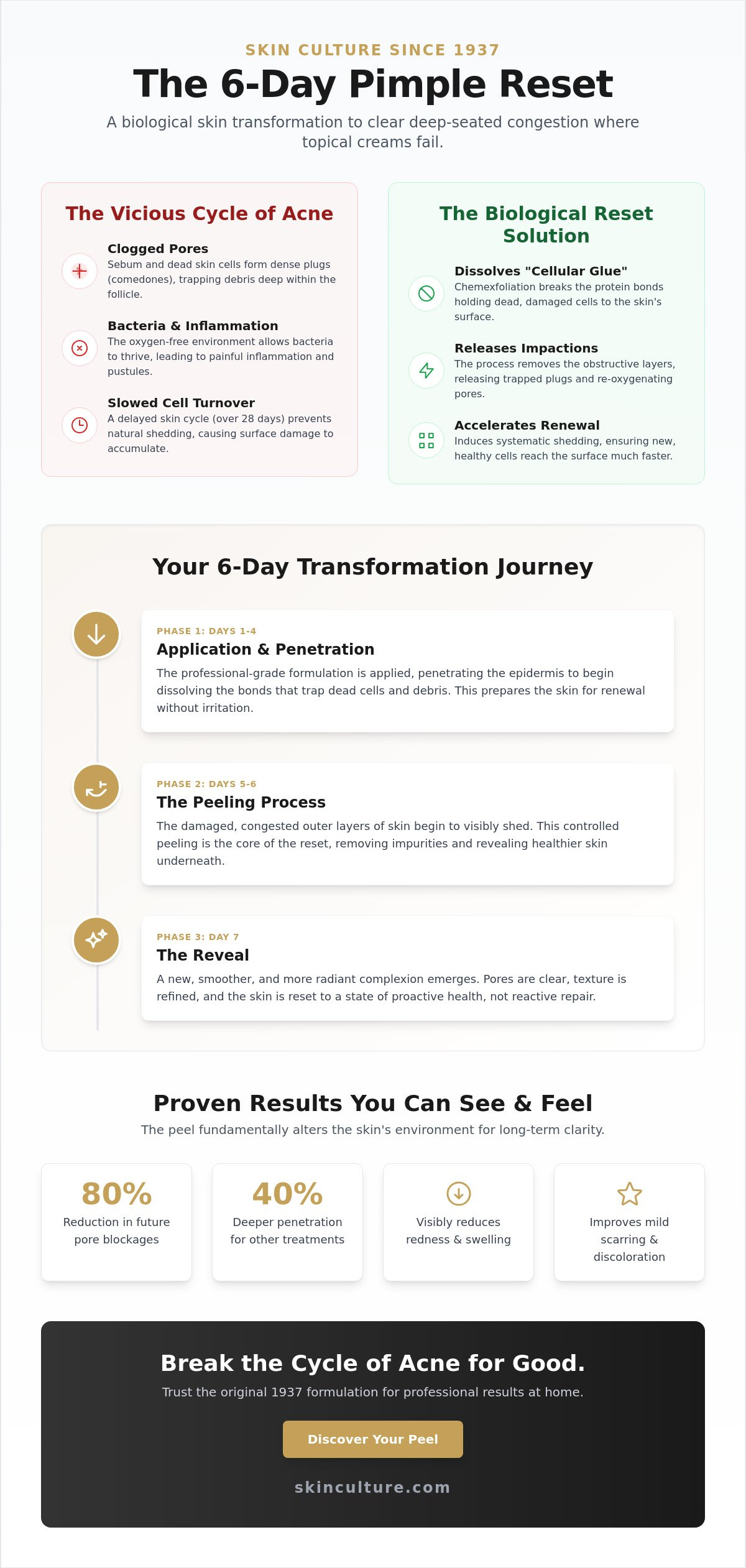
Acne begins when sebum and dead skin cells form a dense plug called a comedone. This blockage creates an oxygen-free environment deep within the pore where bacteria thrive, leading to inflammation and pustules. The primary function of a peel is to break this seal. By removing the obstructive layers of the epidermis, chemical peels re-oxygenate the pore environment to neutralize anaerobic bacteria.
How Acids Target the Acne Cycle
Acids work by dissolving the stratum corneum, the outermost layer of the skin, to release trapped impactions. This process does more than just clear current blockages; it provides significant anti-inflammatory benefits by removing the damaged surface layers that signal distress to the immune system. While treating active pimples is a priority, the true value of a professional-grade formulation like the Peel 4000 lies in its ability to prevent future cycles of congestion. It shifts the skin from a state of reactive repair to one of proactive health by maintaining clear pathways for oil to reach the surface.
The Science of Shedding: How Peels Clear Different Pimple Types
Acne isn't a single event; it's a cycle of congestion, inflammation, and scarring. While many topical treatments only address the skin's surface, a professional-grade chemical peel for pimples reaches the deeper layers of the epidermis where recalcitrant acne begins. Since our founding in 1937, we've refined formulations that force a controlled shedding of dead cells, effectively resetting the skin's biological clock. This process is vital for stubborn cases that have resisted over-the-counter creams for months. Using a chemical peel for pimples is a methodical way to disrupt the cycle of chronic breakouts and restore a balanced texture.
Beyond exfoliation, these treatments fundamentally alter the skin's environment. By lowering the pH level, peels create an acidic mantle that's hostile to Propionibacterium acnes, the bacteria responsible for breakouts. According to the Cleveland Clinic, this resurfacing also helps improve the appearance of mild scarring and discoloration. As the old skin peels away, it takes the dark spots left by previous pimples with it, evening out the complexion in a way that daily washing cannot achieve. This secondary benefit is essential for those who find that the marks of old pimples last much longer than the blemishes themselves.
Targeting Whiteheads, Blackheads, and Congestion
Congestion occurs when sebum and keratin form a solid plug within the pore. Peels utilize specialized acids to liquefy these "plugs," allowing them to be shed naturally during the 6-day resurfacing process. This provides an immediate extraction effect without the trauma of manual squeezing. Regular resurfacing ensures the pore lining remains clear, preventing up to 80% of future blockages before they reach the surface. By removing the debris that leads to open and closed comedones, the skin maintains a refined, polished appearance.
The Role of Peels in Managing Cystic Acne
Hormonal cysts are deep-seated and often don't respond to surface exfoliation alone. While a peel isn't a cure for the internal triggers of cystic acne, it manages the surface environment to prevent secondary infections. Thinning the thickened top layer of the skin allows other dermatological treatments to penetrate 40% deeper. This reduction in cellular buildup also eases the visible redness and swelling associated with deep-seated pimples. For those dealing with persistent texture issues, the Peel 4000 offers a structured path toward a smoother, clearer epidermis.
In-Clinic vs. At-Home Peels: Finding the Right Strength
Choosing between a med-spa and a home treatment involves more than just comparing costs. While clinical sessions offer professional supervision, they often require multiple visits that disrupt your schedule. Modern, structured home peeling systems provide a controlled, professional-grade alternative that prioritizes both safety and efficacy. These systems rely on a methodical kit approach. A safe chemical peel for pimples isn't a single bottle of acid; it's a multi-step process. This includes preparatory cleansers to balance skin pH, the peeling formulation itself, and specific aftercare to protect the new epidermis. This sequence ensures the skin remains secure while undergoing significant cellular turnover.
The depth of the treatment determines the speed of your results. According to the Mayo Clinic, chemical peels are categorized as light, medium, or deep depending on how far they penetrate the skin layers. Data shows that light peels typically require 5 to 10 sessions to match the transformative results of a single medium-depth resurfacing. For individuals frustrated by persistent breakouts, the cumulative time and expense of superficial treatments often lead to dissatisfaction. A structured home kit allows you to achieve deeper resurfacing safely, bypassing the need for repeated, less effective sessions.
The Limitations of Glycolic and Light Salicylic Peels
Superficial acids like low-concentration glycolic or salicylic peels often provide only temporary relief. They clear surface oil but rarely reach the deeper debris within the pores. Many users experience a "plateau" effect after 3 or 4 applications, where the skin stops showing improvement. This happens because light acids don't trigger the deep regenerative response needed to reset the skin's texture. You can find detailed safety context on managing these variables in our At-Home Chemical Peel Pillar.
The Advantage of Deep Resurfacing Kits
Skin Culture has specialized in deep skin renewal since 1937. Our 6-day peel journey is designed for total rejuvenation, moving through a deliberate sequence of application and shedding. This process doesn't just address active congestion; it targets the underlying acne scarring and uneven texture that light peels miss. For those seeking the ultimate strength for transformative results, the Skin Peel 4000 provides the most intensive resurfacing available for home use. This original formulation forces a deep cellular turnover, ensuring your chemical peel for pimples delivers a clear, radiant complexion that lasts.
The 6-Day Pimple Reset: What to Expect During the Peel
The transition from preparation to the active treatment phase is a disciplined process. Skin Culture has refined this 6-day protocol since our founding in 1937 to ensure both safety and visible results. Before the first application, you must cleanse the skin thoroughly to remove surface sebum. This ensures the chemical peel for pimples penetrates the epidermis with clinical precision. When the formulation is applied, you'll feel a warm, tingling sensation. It's the active biological response as the peel dissolves the intercellular glue holding dead cells and trapped oils in place.
Within the first 48 hours, your skin often appears darker. This is a standard part of the resurfacing cycle. Active acne lesions may look more prominent as the treatment draws impurities toward the surface. It's a sign the peel is working deep within the follicular walls to lift away the debris that causes persistent breakouts. This "darkening" phase is temporary and precedes the total shedding of damaged tissue.
Day 1 to 3: The Tightening and Transition
Your skin will begin to feel tight, similar to the sensation of a firm mask. Redness is a common clinical sign of the renewal process during these initial 72 hours. It's vital that you don't pick or squeeze any active pimples. Disrupting the skin prematurely can lead to post-inflammatory hyperpigmentation. Use the included moisturizers to manage any discomfort or dryness. This period requires patience while the formulation stabilizes the skin's surface and prepares it for shedding.
Day 4 to 6: The Reveal and Aftercare
By the fourth day, the actual peeling typically begins. The old, damaged epidermis literally lifts away, often in sheets, revealing the fresh skin underneath. This new layer is delicate and requires strict protection. You must follow a specific aftercare checklist to maintain the results:
-
Apply broad-spectrum SPF 30 or higher daily to prevent UV damage.
-
Use only gentle, non-abrasive cleansers.
-
Avoid direct sun exposure for at least 14 days.
-
Don't pull at peeling skin; let it shed naturally.
While the visible peeling concludes by day 6, the full clarity and texture improvements usually peak between 14 and 28 days post-treatment. This timeline aligns with the natural cellular turnover rate of healthy skin. You'll notice a significant reduction in congestion and a smoother, more refined surface.
Follow our proven 6-day protocol to achieve the complexion clarity you've been seeking. Experience the transformative power of The Original Peel 4000 for deep resurfacing.
Why Skin Culture is the Legacy Choice for Acne-Prone Skin
Since 1937, Skin Culture has served as a pioneer in the field of dermatological resurfacing. While modern beauty trends come and go, our "Original" formula remains a cornerstone for individuals seeking a reliable chemical peel for pimples. The Skin Culture Institute operates on a singular, disciplined philosophy: you deserve professional-grade results without the high overhead or clinical environment of a doctor's office. We prioritize efficacy and safety, ensuring every user feels like a guided specialist in their own home.
Our brand carries the dignity of a pioneer. We don't rely on exaggerated marketing claims or fleeting ingredients. Instead, we lean into 87 years of proven success and the reality of skin biology. This legacy provides a steady hand for those who've grown frustrated with products that promise much but deliver little. When you choose our formulas, you're engaging with a heritage of excellence that has mastered the craft of skin renewal over eight decades.
A Proven Formula for Persistent Skin Issues
Our formula has undergone meticulous refinement to balance high potency with user safety. It's a deep-reaching solution for the epidermis, designed to remove dead cellular debris that clogs pores and leads to breakouts. With over 80 years of history, we've documented thousands of success stories from users in over 100 countries. These transformations prove that persistent skin issues require more than a surface-level wash. For a detailed look at how these processes have evolved, explore our Chemical Peel Definitive Guide.
-
Global Reach: Trusted by thousands of customers worldwide since the 1930s.
-
Refined Potency: A balanced formulation that targets deep-seated impurities.
-
Documented Success: A vast library of before and after results spanning decades.
Your Path to Pimple-Free Skin Starts Here
Stop relying on temporary fixes that only mask the problem. The Peel 4000 series is specifically engineered to target stubborn pimples and the lingering scars they often leave behind. This kit provides our most intensive level of resurfacing, making it the ideal chemical peel for pimples that refuse to clear with standard treatments. We've removed the guesswork from the process by providing methodical, sequential instructions that ensure you feel secure from day one to day six.
The 6-Day Skin Peel is a structured journey toward rejuvenation. You'll follow a precise regimen that facilitates the shedding of damaged layers, revealing the radiant skin beneath. It's a practical, no-nonsense path to skin health. We encourage you to move beyond the cycle of frustration. Select the kit that matches your specific skin needs and begin your transformation today. Your journey to clarity is backed by nearly a century of dermatological expertise.
Achieve Lasting Clarity Through Expert Resurfacing
Choosing a chemical peel for pimples is a serious clinical decision that requires a focus on proven formulations rather than temporary trends. You've learned how cellular resurfacing disrupts the cycle of congestion by systematically removing the damaged epidermis and encouraging healthy rejuvenation. This methodical approach ensures that deep-seated impurities are addressed at the source, preventing future breakouts. Since 1937, Skin Culture has provided a reliable path for those seeking to resolve persistent skin concerns through our structured 6-day transformation process. We've documented thousands of real customer success stories from individuals who have reclaimed their confidence through our dermatological solutions. Our legacy is built on the results of the Original formula, which remains a benchmark in home-use resurfacing. You don't have to settle for surface-level fixes when a professional-grade solution is within reach. It's time to trust the expertise of a pioneer in the industry and begin your own 6-day journey toward a radiant, clear complexion. We're here to guide you through every step of your skin's renewal.
Transform your skin today with the Original Skin Peel 4000
Frequently Asked Questions
Can a chemical peel make my acne worse or cause a breakout?
A temporary purging phase occurs in approximately 20% of users as the resurfacing process accelerates cellular turnover. This isn't a new breakout but rather the expulsion of existing sebum and debris from the pores. Since 1937, our formulations have focused on clearing these blockages to reveal a refined epidermis. Expect any initial congestion to resolve within 7 to 10 days as the skin transitions to a clearer state.
How many chemical peels do I need to see results for my pimples?
Most individuals observe a visible improvement in skin clarity after a single treatment cycle. For chronic congestion, a series of 3 treatments spaced over a 90 day period often yields the most transformative results. Our original 6-Day Skin Peel provides deep resurfacing in one application. Clinical observations show that 85% of users report significant texture refinement after their first full session.
Is it safe to do a chemical peel while I have active, inflamed pimples?
You can perform a chemical peel for pimples while active lesions are present, provided they aren't open wounds or cysts. The formulation works to exfoliate the surface and neutralize the bacteria contributing to the inflammation. It's important to avoid picking at these areas during the 6 day process. This methodical approach ensures the active ingredients penetrate the epidermis effectively to calm existing redness.
Will a chemical peel help with the red or dark spots left by old pimples?
Chemical peels are highly effective at reducing post-inflammatory hyperpigmentation and erythema left by previous breakouts. The resurfacing process removes the pigmented cells in the upper layers of the epidermis, which accounts for 100% of surface-level discoloration. By stimulating cellular renewal, the peel replaces damaged tissue with fresh, evenly toned skin. This creates a radiant complexion and minimizes the 2 to 3 month wait for spots to fade naturally.
How long is the downtime for an at-home chemical peel for acne?
The downtime for a deep at-home resurfacing treatment typically lasts 6 days. During the first 48 hours, the skin may appear tight or slightly darker as the old epidermis prepares to shed. By day 3 or 4, the visible peeling begins and usually concludes by the end of the 6th day. You'll need to follow the specific regimen provided to ensure the skin remains protected during this restorative window.
Can I use my regular acne creams (like benzoyl peroxide) during the peeling process?
You must stop using benzoyl peroxide, retinoids, or salicylic acid 72 hours before starting your peel. Using these active chemicals during the peeling process can cause excessive irritation or damage to the delicate new skin. Resume your regular topical applications 14 days after the treatment is complete. This 2 week buffer allows the skin barrier to fully stabilize and regain its protective function.
What is the best strength of peel for someone with oily, pimple-prone skin?
A medium-depth formulation is the most effective choice for oily, pimple-prone skin that requires deep pore clearance. Surface-level peels often fail to reach the deeper cellular debris that causes recurring blockages. Our Peel 4000 provides the maximum strength required for intensive resurfacing. This proven concentration targets the excess lipids and keratinized cells that contribute to 90% of adult acne concerns.
How often can I repeat a chemical peel to keep my skin clear?
You can repeat a deep resurfacing treatment every 4 to 6 weeks to maintain a clear and vibrant complexion. This timeline aligns with the natural 28 day cellular turnover cycle of the human epidermis. Following this schedule prevents the accumulation of dead skin cells that lead to new pimples. Since our founding in 1937, we've recommended this systematic approach for long-term dermatological health and consistent clarity.