


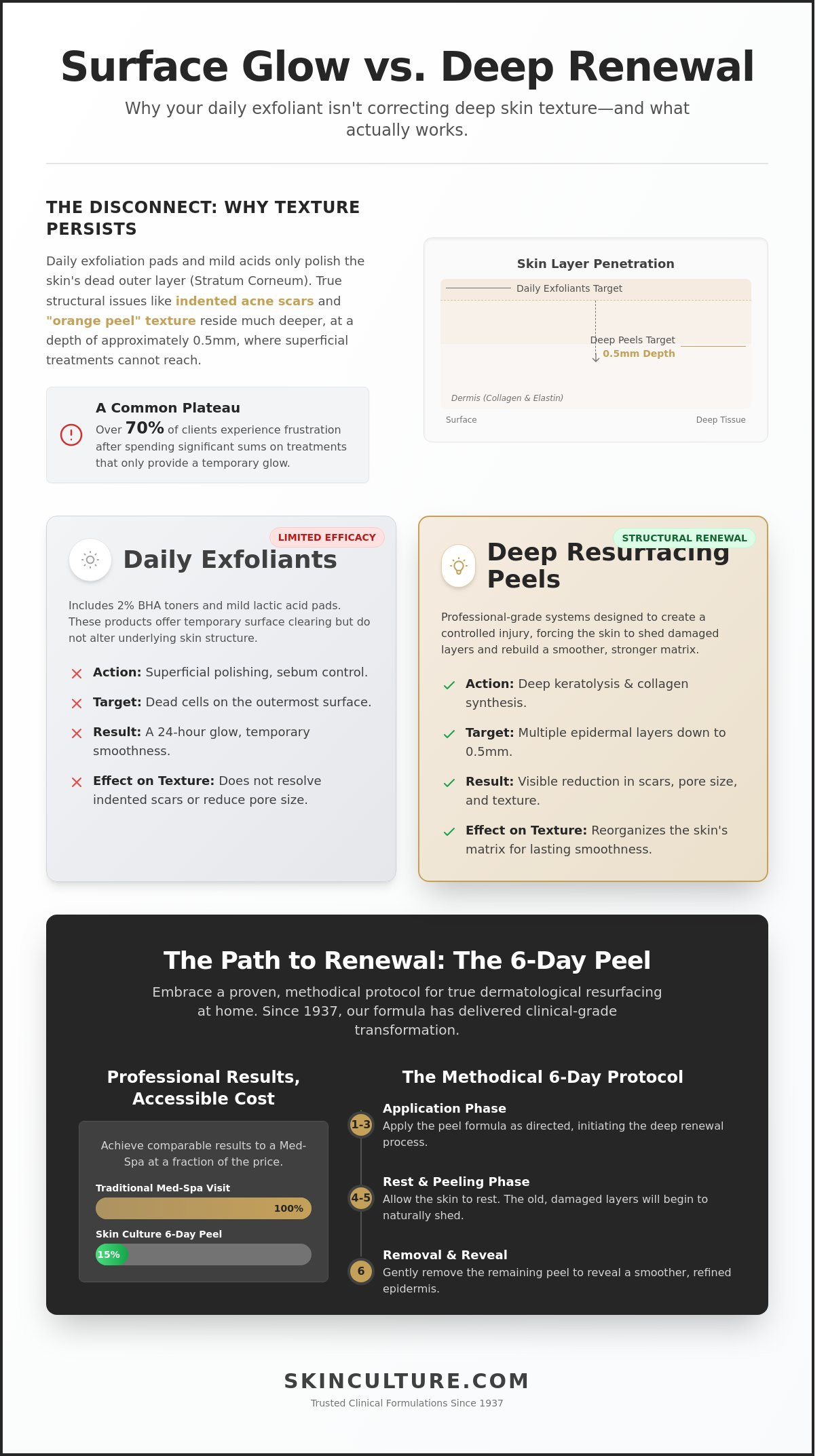
The gentle daily exfoliation pads you've relied on for the last 12 months are likely the very reason your skin's surface remains unchanged. While these products promise clarity, they rarely penetrate deep enough to address the 0.5 millimeter depth where indented acne scarring and persistent "orange peel" texture reside. Finding the best home peel for textured skin requires moving beyond these superficial acids that only touch the surface. You aren't alone in your frustration; over 70% of our clients come to us after wasting significant sums on treatments that offer nothing more than a temporary glow. We understand that when you're dealing with deep-seated texture, you need a solution that prioritizes biology over marketing trends.
It's time to stop settling for surface-level fixes and embrace the science of true dermatological resurfacing. You'll learn how to achieve professional-grade results in 2026 at approximately 15% of the cost of a traditional med-spa visit. Since 1937, Skin Culture has provided a steady hand for those seeking visible transformation through our proven formulations. We'll walk you through the transition from basic skincare to the deep cellular renewal of The Original 6-Day Skin Peel, ensuring your path to a smoother, refined epidermis is both safe and methodical.
Key Takeaways
- Understand the limitations of surface-level exfoliation and how deep-reaching chemical resurfacing triggers the collagen synthesis necessary for true texture correction.
- Discover the scientific criteria for selecting the best home peel for textured skin by analyzing the critical balance between acid concentration and pH levels.
- Compare the efficacy of daily maintenance pads versus professional-grade intensive systems to determine which tier of treatment matches your specific skin goals.
- Learn the non-negotiable safety steps and the methodical 6-day protocol required to transition from superficial brightness to deep dermatological renewal.
- Discover how the original 1937 Skin Culture formula provides a clinical alternative for those seeking to resolve persistent acne scarring and enlarged pores.
Understanding Textured Skin and the Limits of Daily Exfoliation
Textured skin is a complex dermatological concern that involves more than just simple dryness. It's a combination of enlarged pores, persistent acne scarring, and a significant accumulation of dead cellular debris. While many individuals rely on 2% BHA toners or mild lactic acid pads, these "light" treatments only interact with the stratum corneum, the skin's outermost layer. They offer a temporary surface glow but fail to reach the underlying structural issues. To achieve true transformation, you must look for the best home peel for textured skin that facilitates deep resurfacing rather than superficial polishing.
Since our founding in 1937, Skin Culture has recognized that deep-seated texture requires a methodical approach to epidermal renewal. A standard Chemical peel functions differently than a daily exfoliant by penetrating beyond the surface to address the root of the irregularity. While daily acids manage oil, they don't provide the intensive stimulus needed to reorganize the skin's matrix. For those dealing with years of cumulative damage, a more rigorous formulation is necessary to break through the plateau of traditional skincare.
To better understand the biological mechanisms behind skin texture and its treatment, watch this professional overview:
The Anatomy of Uneven Skin Texture
The "orange peel" appearance many people struggle with is often the result of collagen degradation. When the dermal support structure weakens, pores lose their elasticity and appear larger and more prominent. This is often compounded by a process called hyperkeratosis, where dead cells fail to shed properly, creating a rough tactile surface. It's vital to distinguish between surface roughness, which is often temporary, and structural scarring. Structural issues reside deeper in the dermis and require a treatment that can trigger a significant regenerative response. Clinical data suggests that by age 35, natural cellular turnover slows by nearly 30%, making manual intervention essential for maintaining clarity.
Why Your Current Skincare Routine Might Be Plateauing
If you've used the same mild acids for months without seeing a change in your scars or pore size, you've likely encountered the "barrier buffer" effect. The skin is a highly adaptive organ; it eventually thickens its defenses against low-concentration acids, rendering them ineffective for deep repair. To overcome this, you must introduce a controlled injury to the skin. This isn't damage in the traditional sense, but a precise, scientific application of active ingredients that forces the skin to shed its damaged layers. Our Peel 4000 is engineered to provide this level of intensive resurfacing for those who need the best home peel for textured skin. The biological trigger for cellular turnover in deep peels is the induction of a controlled inflammatory response that signals fibroblasts to produce fresh collagen and elastin.
- Daily Pads: Provide a 24-hour glow by removing surface oils.
- 2% BHA: Keeps pores clear of sebum but doesn't alter pore size.
- Resurfacing Peels: Remove multiple layers of the epidermis to reveal new, smoother tissue.
True rejuvenation is a sequential process. It requires moving away from the "instant fix" mentality and embracing a disciplined, clinical regimen that respects the biology of the skin while demanding visible results.
The Science of Resurfacing: How Chemical Peels Rebuild Texture
Chemical resurfacing is a precise dermatological process. It begins with keratolysis. This is the dissolution of the intercellular cement that binds dead skin cells to the epidermis. When these bonds break, the skin sheds its damaged outer layers. This action signals the deeper dermis to initiate collagen synthesis. This biological response is what actually rebuilds the skin's foundation. The efficacy of the best home peel for textured skin depends on the balance of acid concentration and pH levels. A lower pH increases the "free acid" available to penetrate the skin. Since 1937, Skin Culture has refined this balance to ensure maximum transformation with controlled safety. Modern at-home formulations are now engineered to deliver professional results without the risks associated with unbuffered acids.
Key Ingredients for Texture Correction
Trichloroacetic acid (TCA) remains a gold standard for its ability to reach the papillary dermis. Unlike superficial AHAs, TCA facilitates a deeper protein denaturation. We often combine it with specialized resorcinol blends to create a synergistic effect. This combination outperforms generic "acid-in-water" solutions that lack the stability required for deep resurfacing. Professional formulations rely on these complex interactions to address irregularities. Scientific research, such as the Evidence and Considerations in the Application of Chemical Peels, confirms that specific concentrations are vital for treating photodamage and uneven texture. Our formulas don't just sit on the surface; they work at a cellular level to ensure the best home peel for textured skin provides lasting clarity.
The Cellular Journey: From Shedding to New Skin
The process moves from the peeling phase to the rejuvenation phase. First, the treatment causes protein denaturation within the cells. This triggers a healing cascade. Your body rushes to produce fresh, smooth tissue. You might notice flaking, which is the shedding of small scales, or sheeting, where larger sections of the epidermis lift away. Both are normal signs of the resurfacing process. The skin doesn't just shed; it regenerates. This 6-Day Skin Peel process is methodical. It requires patience. By day six, the old, damaged tissue makes way for a vibrant surface. Our Peel 4000 is designed to guide the skin through this transition safely. It's a structured journey from frustration to confidence. The result is a total restoration of clarity and a refined, even surface that feels as healthy as it looks.
Comparing the Best Home Peels for Textured Skin: Pads vs. Kits
Skin Culture has refined the science of epidermal renewal since 1937. Choosing the best home peel for textured skin involves categorizing treatments into three functional tiers: Daily Maintenance, Weekly Boosters, and Intensive Systems. Each serves a specific role in cellular turnover, though their efficacy varies significantly when addressing structural concerns.
Mainstream favorites, often highlighted in beauty publications like Allure, typically fall into the first two tiers. Products such as the Dr. Dennis Gross Alpha Beta Universal Daily Peel or The Ordinary AHA 30% + BHA 2% Peeling Solution utilize mild to moderate acid concentrations. These formulations are effective for surface radiance and clearing minor congestion. However, they lack the clinical depth needed to address deep-seated scarring or chronic, uneven texture that has persisted for years.
Daily Peel Pads and Liquid Exfoliants
Daily pads rely on low-percentage acids to provide a consistent, gentle nudge to the skin's natural exfoliation process. This consistency helps maintain a clear complexion and prevents the buildup of dead cells on the epidermis. While these tools are excellent for preventative care, they have clear limitations. Users with significant acne scarring or deep pitted texture won't see structural changes from these products alone. For a deeper understanding of how these categories function, consult this Skin Peel: A Professional Guide.
Safety is a primary pillar of our philosophy. Understanding Chemical Peel Risks and Safety ensures that users don't compromise their skin barrier while chasing results. High-frequency use of low-level acids can sometimes lead to chronic inflammation if not balanced correctly, which actually hinders the rejuvenation process.
Intensive At-Home Resurfacing Systems
An intensive system, such as the Peel 4000, follows a methodical "kit" approach. This isn't a single bottle of acid; it's a coordinated unit consisting of preparation, the peel application, and specific aftercare. This multi-step system is safer than applying high-strength single acids because it manages the skin's response at every stage of the 6-Day Skin Peel process. The goal is a controlled transition where the old, damaged layers are shed to reveal the fresh skin beneath.
The cost-per-treatment comparison highlights the practicality of home kits. A single professional chemical peel at a med-spa typically costs between $150 and $600. Most texture concerns require a series of three to six sessions, bringing the total investment to over $900. In contrast, a clinical-strength home kit provides comparable resurfacing for approximately 15% to 20% of the cost of a full professional series. This makes the "Original" home peel a disciplined, results-driven choice for those seeking visible transformation without the clinical price tag.
How to Safely Execute a Deep Texture Peel at Home
Safety is the cornerstone of effective resurfacing. Since 1937, Skin Culture has refined the methodology of the 6-Day Skin Peel to ensure professional-grade results within a domestic setting. Before you begin, a patch test is mandatory. You must apply a small amount of the formulation behind the ear or on the inner forearm 48 hours before the full application. This protocol identifies potential sensitivities, ensuring your journey toward a smoother epidermis is secure. When seeking the best home peel for textured skin, following these precise steps prevents complications and maximizes the cellular renewal process.
Preparation and Priming the Skin
Achieving an even peel requires a neutral canvas. Seven days before your treatment, you must discontinue the use of all active topicals, specifically Retinoids, AHAs, and BHAs. These ingredients increase skin sensitivity, which can lead to uneven acid penetration. On the day of application, cleanse the face thoroughly to remove all surface oils and debris that could act as a barrier to the formulation.
- Use a pH-balanced, non-medicated cleanser to avoid irritation.
- Prepare 100% cotton towels that are freshly laundered.
- Ensure your environment is sanitized to prevent bacterial interference during the vulnerable shedding phase.
The 6-Day Transformation Timeline
The 6-Day Skin Peel follows a strict chronological sequence. During days 1 through 3, you'll apply the treatment cream as instructed. Your skin will likely feel tight and may begin to darken slightly; this indicates that the upper layers of the epidermis are preparing to detach. Choosing the best home peel for textured skin requires understanding that the process is a structured medical-grade treatment, not a casual cosmetic application. The darkening is a normal part of the transition as the old skin prepares to lift away.
By day 4, the shedding phase usually begins. This is the most critical period for discipline. You must never pick, pull, or peel the loosening skin. Forcing the exfoliation process can lead to 100% avoidable scarring or post-inflammatory hyperpigmentation. Let the skin fall away naturally to reveal the rejuvenated layers beneath. By day 6, the transition is largely complete, and your focus must shift to preservation.
The new skin is highly vulnerable to UV damage. Applying a broad-spectrum SPF 30+ is required every single morning, regardless of cloud cover. This protective barrier maintains the integrity of your results and prevents premature aging of the delicate new cells. To achieve a comprehensive resurfacing of deep-seated irregularities and stubborn scarring, consider the Peel 4000 treatment, our most intensive formulation for dramatic skin renewal.
The Skin Culture Legacy: Why Our Treatment is the Gold Standard
Since 1937, Skin Culture has maintained a singular focus on the science of skin resurfacing. Our heritage is built upon the "Original" 6-Day Skin Peel, a formula that has served as a benchmark for dermatological excellence for over 80 years. While the beauty industry often chases fleeting trends, we've remained dedicated to a proven, methodical approach to skin health. We don't rely on prescription retinoids that can cause excessive irritation. Instead, our treatment utilizes specialized dermatological blends that work in harmony with your body's natural shedding process. For individuals searching for the best home peel for textured skin, our legacy provides the clinical foundation and reliability required for a safe, visible transformation.
Choosing Your Strength: 2000, 3000, or 4000?
Selecting the appropriate intensity is a critical step in your resurfacing journey. We've developed three distinct concentrations to ensure every user finds a match for their specific concerns and skin history. This tiered system allows for a controlled experience, whether you're addressing minor imperfections or deep-seated irregularities.
- Peel 2000: This formulation is designed for those with minor texture issues or individuals who are new to professional-strength home peels.
- Peel 3000: A mid-level option, this treatment is effective for moderate congestion and unevenness that requires a more robust intervention.
- Peel 4000: This is our most intensive treatment, engineered specifically for those dealing with deep-seated texture and significant scarring.
If you have sensitive skin but require deep resurfacing, we recommend a step-up approach. Start with a milder concentration to build skin resilience before progressing to a stronger formula. It's important to remember that Peel 4000 is our most intensive option for severe texture.
Real Results: Beyond the Surface
The clinical reassurance of a formula used for 87 years offers a level of trust that new products simply cannot match. Since 1937, our 6-day regimen has provided a structured path to rejuvenation, moving beyond the superficial layers of the epidermis. There is a significant psychological benefit to taking control of your skin journey; it replaces frustration with a methodical, results-driven plan. This process isn't about a quick fix. It's a serious dermatological solution that removes dead cellular debris to reveal the clarity and radiance beneath.
By following our precise instructions, you're engaging in a tradition of excellence that has transformed thousands of lives. Our commitment to safety and efficacy ensures that you're using the best home peel for textured skin available today. You don't have to settle for persistent roughness or unevenness when a proven solution is within reach. Transform your skin texture with the Skin Peel 4000 kit today.
Secure Your Path to Refined Skin Clarity
Persistent skin texture often resists standard daily exfoliation because the cellular buildup requires deeper, professional-grade intervention. You've now seen how targeted chemical resurfacing works to remove damaged epidermal layers and stimulate the production of a fresh, healthy epidermis. While basic exfoliating pads offer minor maintenance, a comprehensive kit provides the controlled depth required for a genuine, visible transformation.
Since our founding in 1937, we've provided a professional alternative to expensive clinical treatments that you can perform safely in your own home. Our formula stands as the best home peel for textured skin, utilizing a methodical resurfacing approach perfected over eight decades of dermatological study. The Original 6-Day Skin Peel doesn't just mask surface imperfections; it systematically replaces dull, uneven cells with a radiant and refined surface. We provide worldwide shipping to ensure this legacy treatment is accessible to everyone seeking clinical results. You don't have to settle for persistent roughness when a proven, scientific path to skin clarity is within reach.
Shop the Original Skin Peel 4000 Treatment
Your journey toward a smoother, more confident complexion starts with a single, disciplined step toward rejuvenation.
Frequently Asked Questions
Is a home peel for textured skin safe for all skin tones?
Yes, a professional-grade home peel is safe for all skin tones when the formula is balanced correctly. Since 1937, our 6-Day Skin Peel has been used by individuals across all 6 Fitzpatrick skin types to achieve a smoother complexion. The formulation works by removing the surface epidermis without triggering post-inflammatory hyperpigmentation in darker skin. We recommend a 24-hour patch test to ensure your cellular response is uniform before beginning the full treatment.
How often can I perform an intensive home peel for acne scars?
You should wait at least 30 to 90 days between intensive treatments to allow for full cellular regeneration. The skin's natural renewal cycle takes approximately 28 days; however, deep resurfacing requires additional recovery time to maintain the skin barrier. Performing the 6-Day Skin Peel more than once every 3 months is rarely necessary. Following this 90-day interval ensures the best home peel for textured skin remains effective without causing over-exfoliation.
Will my skin actually peel off in sheets, and is that normal?
Visible peeling in sheets or large flakes is a standard part of the resurfacing process. Between day 3 and day 6 of our original protocol, the old epidermis begins to detach from the healthy tissue underneath. This shedding is the physical manifestation of the formula's efficacy and is completely normal. Don't pull or tear the skin; let it shed naturally to reveal the radiant, rejuvenated layer below.
Can I use a home peel if I have active cystic acne?
You shouldn't apply an intensive peel to active cystic acne or open lesions. The 6-Day Skin Peel is designed for resurfacing scars and texture, not for treating 3 or more active inflammatory cysts. Wait until the infection has subsided for at least 14 days before starting the treatment. Applying the formula to broken skin can lead to irritation or uneven penetration of the active ingredients.
What is the difference between an AHA peel and a TCA peel for texture?
AHAs like glycolic acid only penetrate the topmost layer of the stratum corneum, while TCA provides deeper dermal stimulation. Our formulation uses a proprietary blend that reaches deeper than a standard 10% AHA solution to address stubborn irregularities. While AHAs require weekly application, a single TCA-based treatment often provides more visible clarity. This makes it the best home peel for textured skin for those seeking a comprehensive solution.
How long do the results of a deep home peel last?
Results from a deep resurfacing treatment typically last between 6 and 12 months depending on your post-peel regimen. Since 1937, users have reported that the improvements in clarity and smoothness remain visible for over 300 days. Maintaining these results requires daily SPF 30 application and a consistent hydration routine. The longevity of the transformation depends on protecting the new skin from UV damage and environmental pollutants.
What should I do if my skin feels too tight or itchy during the process?
Apply the designated post-peel moisturizer if you experience tightness or itching on day 4 or 5 of the process. These sensations are normal indicators that the skin is preparing to shed. Avoid scratching or rubbing the area, as this can cause premature peeling and potential scarring. Keeping the skin supple with our clinical-grade lubricants ensures the 6-day process remains comfortable while the old epidermis detaches.
Can I wear makeup during the 6-day peeling process?
You must avoid wearing makeup for the entire 144-hour duration of the 6-Day Skin Peel. Cosmetics contain pigments and chemicals that can interfere with the resurfacing process or cause infection in the newly exposed skin. Once the shedding is 100% complete, usually by day 7, you can resume your normal cosmetic routine. Prioritizing skin health during this 6-day window is essential for achieving a guaranteed, professional result.